300 High Street, Berkhamsted
Berkhamsted
Hertfordshire
HP4 2BX
United Kingdom
Map
Sorry, no records were found. Please adjust your search criteria and try again.
Sorry, unable to load the Maps API.
Description
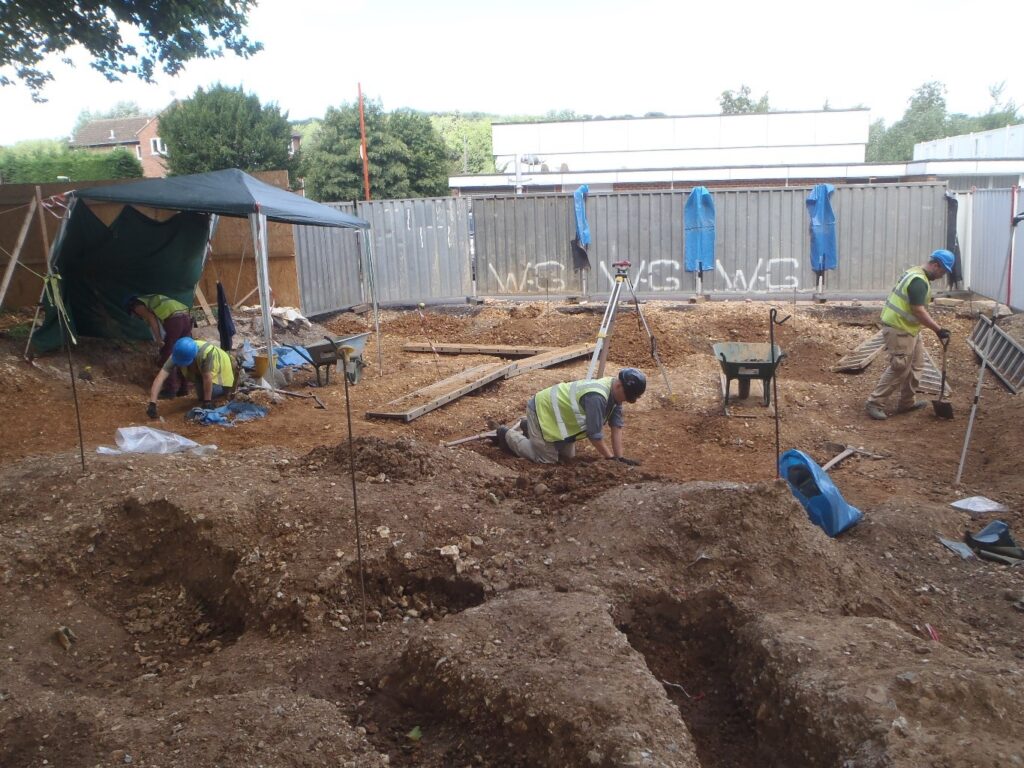
Pre-Construct Archaeology Ltd London undertook three phases of archaeological investigation prior to the site, which was located within a Conservation Area and an Area of Archaeological Significance as defined by Dacorum Borough Council, being developed as a supermarket
The site covered 3.62 hectares and was previously occupied by a Royal Mail Sorting Office the construction of which had created a series of terraces cut into the natural slope.
Following a watching brief on geotechnical test pits, the site was then divided into three areas of investigation for a strip, map and sample exercise all of which lay within the footprints of the proposed new buildings.
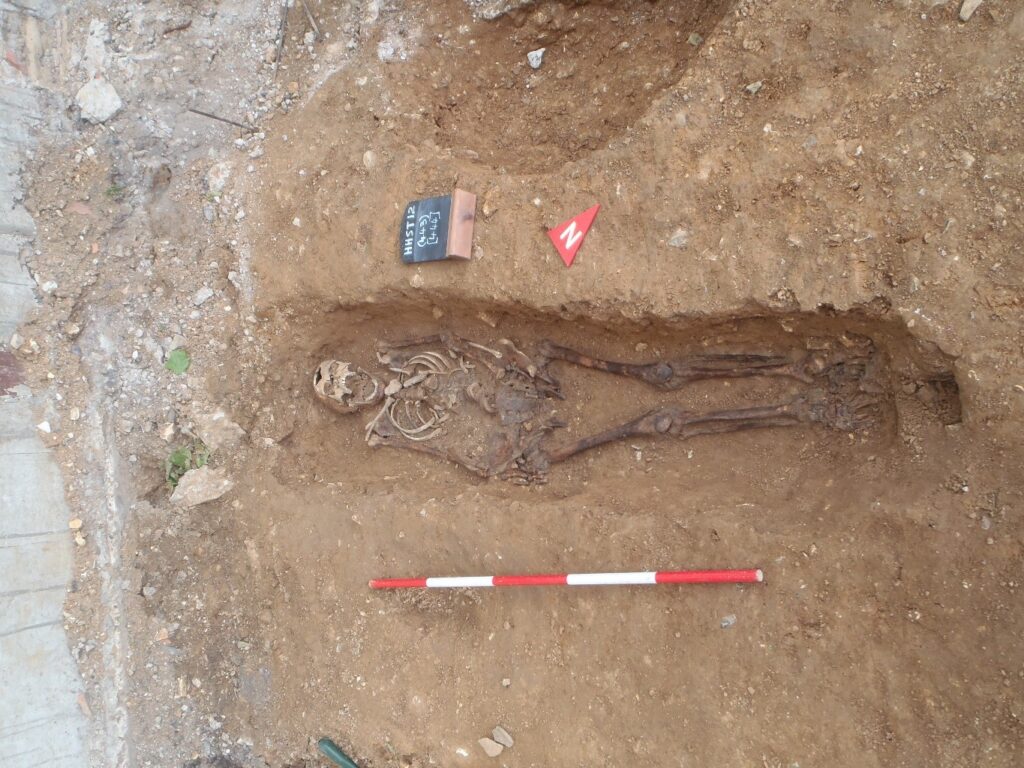
The excavations revealed evidence for a medieval cemetery in two of the areas, from which a total of 256 burials were identified. Of these 235 were lifted, the remainder were left in situ as they lay outside the proposed building footprints. A horse skeleton was also recovered. Only the eastern boundary of the cemetery was encountered, with the other boundaries being outside the excavation limits.
Pottery and ceramic building material recovered from the grave fills suggest that the cemetery was in use between the 11th and 15th centuries and were probably associated with either St James’s Church, founded in the 11th to 12th century or the medieval hospital of St John the Baptist, established before 1213. The precise location of these ecclesiastical institutions is not known but documentary evidence and the presence on site of a substantial number of burials suggests that one or both of them were in close proximity to the site. The cemetery was probably abandoned in the 15th or 16th century.
At the conclusion of the fieldwork, a comprehensive post-excavation assessment report was written with further specialist analysis, and submitted to the Local Planning Archaeologist (LPA) to discharge the planning condition resulting in a publication of the results.