60-70 & 100 The Highway & 110 Pennington Street, Wapping
LB Tower Hamlets
Greater London
E1W 2BX
United Kingdom
Map
Sorry, no records were found. Please adjust your search criteria and try again.
Sorry, unable to load the Maps API.
Description
PCA London was commissioned to undertake an archaeological evaluation at The Highway as a pre-determination investigation prior to a planning application being made for its redevelopment. This planning condition was applied because of the known concentration of Roman and post-medieval archaeology in the immediate vicinity.
The site lies within a Tier 2 Archaeological Priority Area (APA) “The Highway”, with the potential for Roman, Anglo-Saxon and medieval archaeological remains. In addition to “The Highway”, a Tier 1 Archaeological Priority Area, named the “Shadwell Roman Settlement”, lies immediately to the east of the site. The “Shadwell Roman Settlement” APA is centred around the Scheduled Roman bathhouse, excavated by PCA in 2002-3, that lies to the east of Wapping Lane at 172–179 The Highway.
The proposed development is for a new self-storage facility and flexible office/ workspace accommodation on the western part of the site and a residential-led mixed use development in the east.
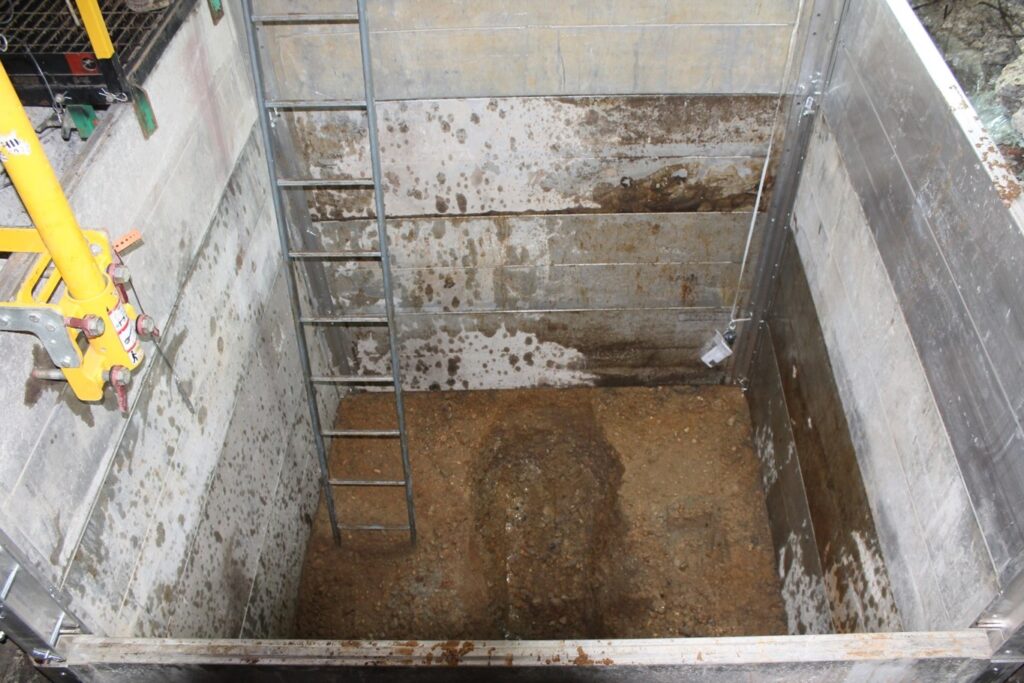
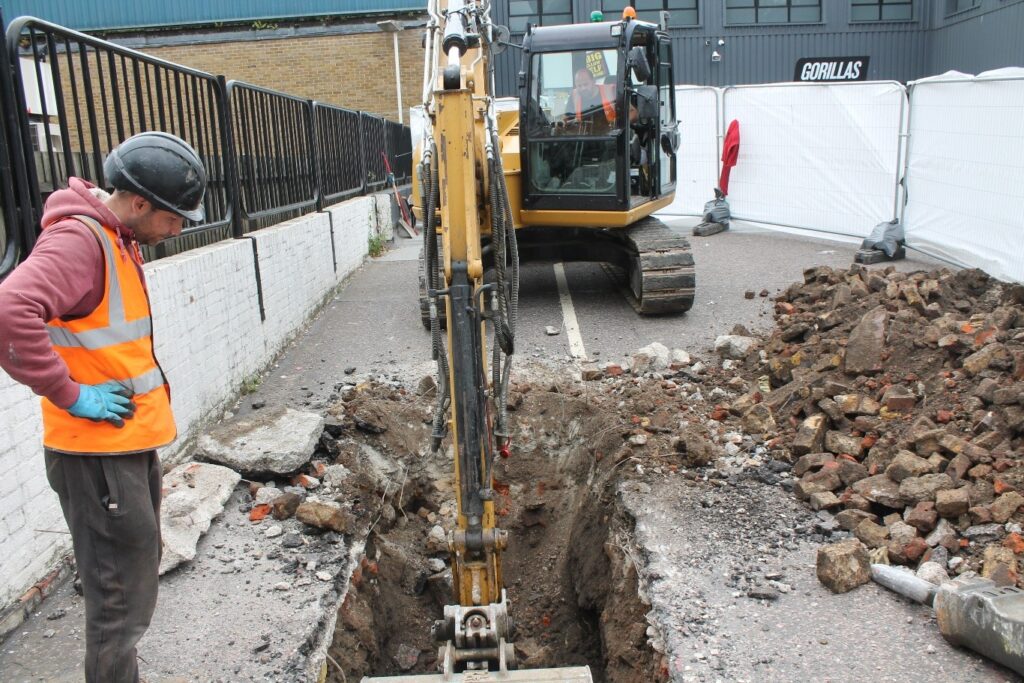
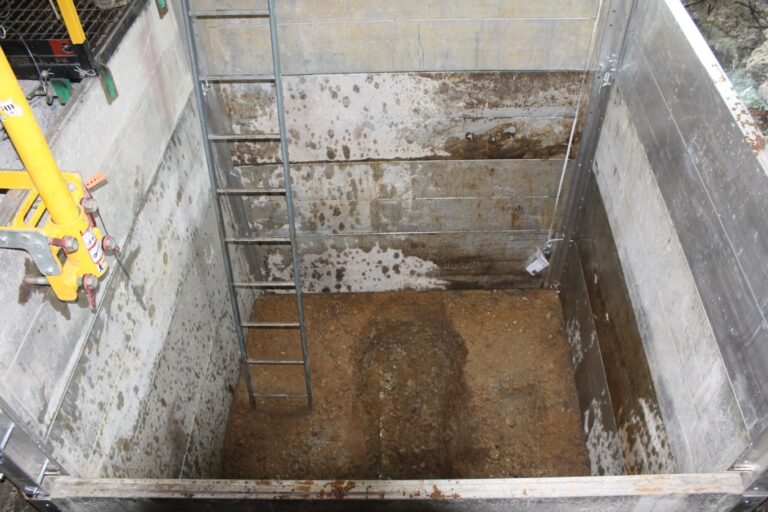
Six trenches measuring c 3m x 1-3m and up to 3.80m deep were excavated, three within the standing building. Because of the depth of archaeological deposits, shoring was required within three of the trenches.
There were no archaeological deposits found during the evaluation which were comparable to the Roman remains found to the east at Tobacco Dock or the Roman bathhouse. The evaluation exposed an archaeological sequence that principally consisted of modern activity sealing post-medieval soil horizons overlying the natural London Clay. A single layer of clay silt that was dated to the Roman period along with a timber stake were the only indications of activity pre-dating the post-medieval period.
The general absence of significant archaeology during the evaluation would suggest that either the site is located away from the known focus of Roman activity to the east, or that previous development has significantly impacted upon it already. The observation of modern ground and basements within two of the trenches attests to this previous impact.
The investigation demonstrated that significant archaeological horizons were not present and characterized the remains sufficiently to allow further mitigation works to be secured by planning conditions attached to planning consent.