Abbey Mead House, Easby Abbey
Richmond
North Yorkshire
DL10 7EU
United Kingdom
Map
Sorry, no records were found. Please adjust your search criteria and try again.
Sorry, unable to load the Maps API.
Description
PCA Durham were commissioned to undertake an archaeological watching brief during the known as Site E of Millfield Village, Northumberland (List Entry 1006520), The archaeological work was undertaken as part of scheduled monuments consent for the work granted by Historic England.
The area of the scheduled monument is the site of an Anglo-Saxon Royal settlement known as Maelmin, the successor to the Royal Palace site of Ad Gefrin at Yeavering. The site was first discovered by aerial photography in 1948 and a plan of the site has been published based on the analysis of several hundred aerial photographs. Cropmarks of the site cover an area of more than 12ha suggesting extensive settlement evidence including Grubenhaus, linear features, pits, and a rectilinear enclosure with buildings which may be an early Christian Church or Dark Age Hall.
In the late 1990s a geophysical survey and trial trenching/excavation work was undertaken in advance of an Archaeological Interpretation facility at Kimmerston Road End just outside of the settlement and c. 320m southeast of the location of the proposed manhole works. The archaeological works recorded pits and part of an Anglo-Saxon building.
In the field directly to the southeast of the proposed manhole works and within the scheduled area is a sub-circular enclosure cropmark consisting of a narrow ditch or palisade trench in polygonal form (c. 65m in diameter) with a number of large pits on the interior (known as Milfield Threefolds North Enclosure). The polygonal form has been taken to indicate an early medieval date, though some Iron Age palisades containing roundhouses also use the same technique. Three trenches excavated at the site recorded three pits and three concentric rings of burnt post-settings from the interior of the cropmark and the perimeter of the enclosure all likely to be of Neolithic date. Further fieldwork recorded a Neolithic occupation or midden deposit as well as a series of intercutting Neolithic pits cut into a lower deposit.
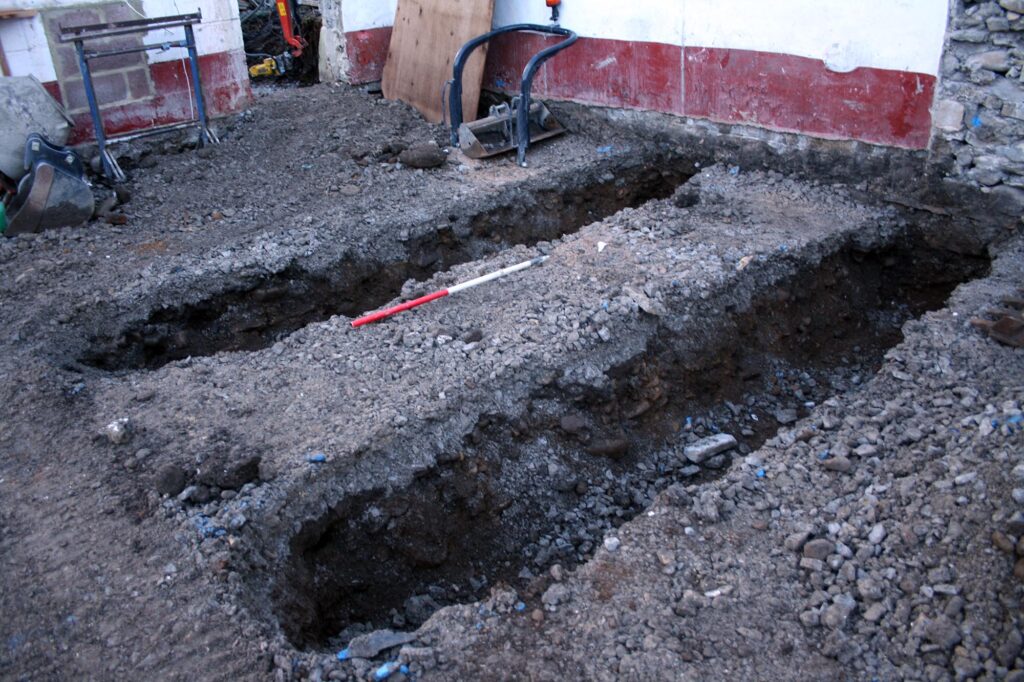
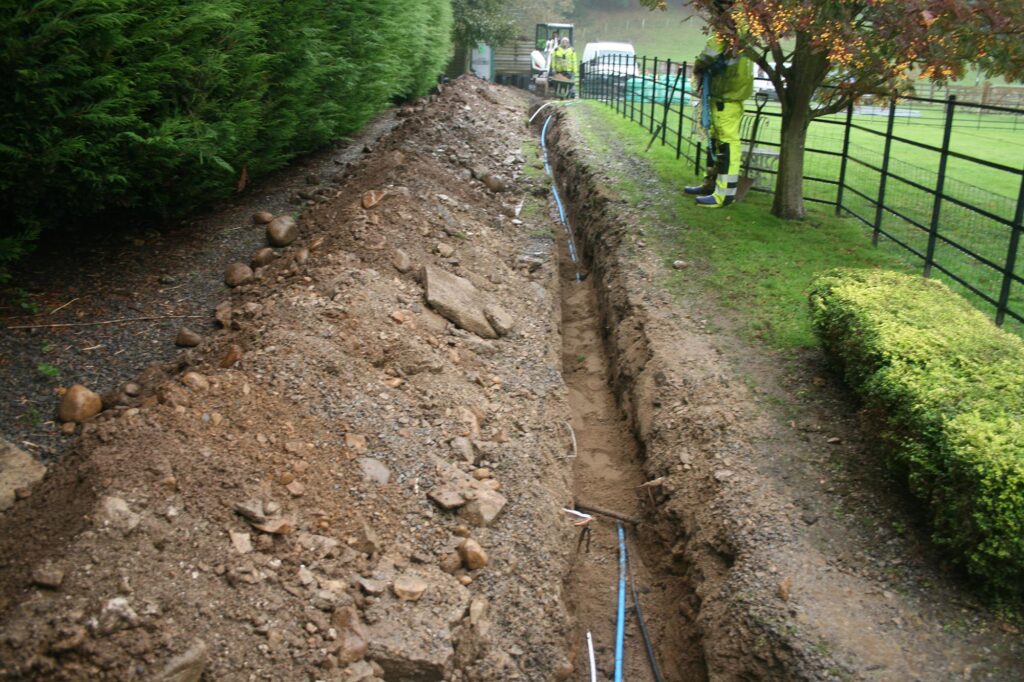
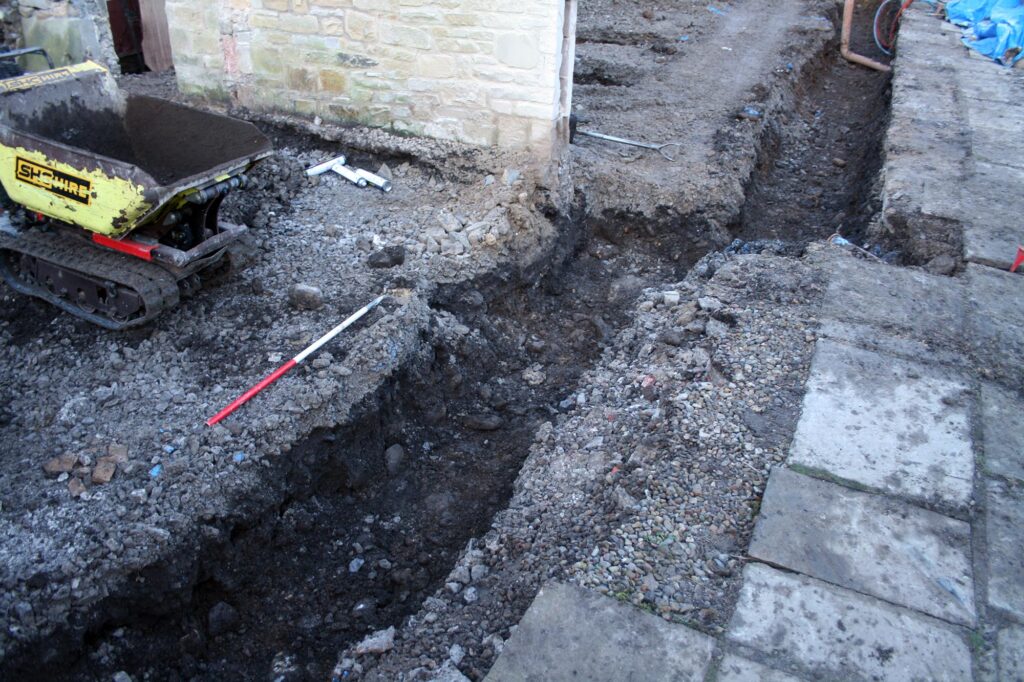
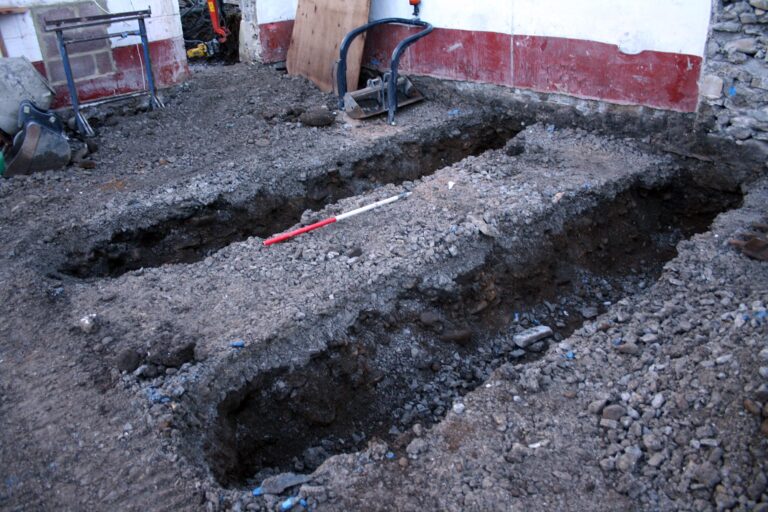
The archaeological watching identified undated deposits and features comprising a ditch containing two fills recorded in section, this was overlain by an alluvial deposit. Modern construction cuts for modern sewers and the existing manhole itself had truncated earlier deposits. No archaeological remains of significance were identified within the manhole excavation area due to the limited exposure at this location and the level of truncation. A report has been produced and the condition discharged in line with planning conditions.