Aquatic Centre, Olympic Park
London
Greater London
E20 2AQ
United Kingdom
Map
Sorry, no records were found. Please adjust your search criteria and try again.
Sorry, unable to load the Maps API.
Description
The Aquatic Centre was a key element of the Olympic Park in Stratford, East London. Its development to provide a world class swimming and diving centre formed part of the wide-ranging redevelopment program to deliver the Park ready for the 2012 Olympic Games.
Pre-Construct Archaeology Ltd London (PCA), in partnership with Museum of London Archaeology Services was engaged in 2005 to carry out archaeological work and recording of Built Heritage Assets across the Olympic Park, including on the site of the Aquatic Centre (Olympic Delivery Site 25) to fulfil planning conditions on the development. An initial evaluation of the site led to a further large-scale mitigation excavation.
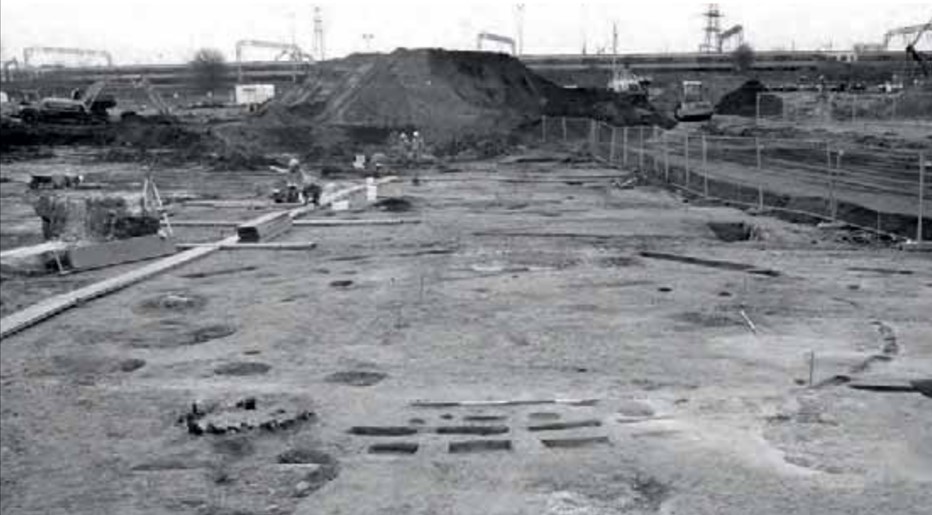
All archaeological excavation and monitoring work at Site 25 was undertaken by a joint PCA / MoLAS team. Initially ten large evaluation trenches were excavated. It was conjectured, based on archaeological evidence to the west of the site at Old Ford that the London to Colchester Roman Road crossed the site. In this area, longer and staggered north-south orientated trenches were excavated to intersect the possible line of the road, although it was not identified. In the north of the site, a concentration of features of Late Bronze Age to Iron Age date. As a result, the site was extended to allow full scale excavation of an area covering 4,800m2.
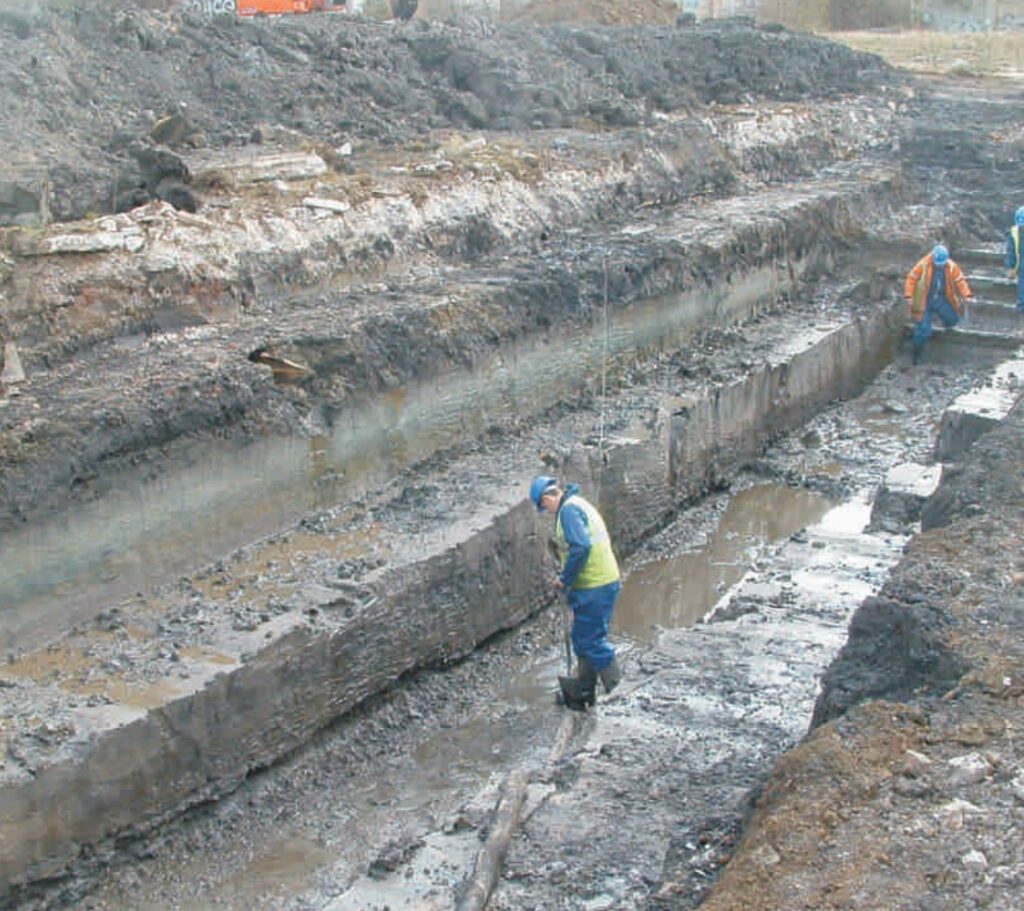
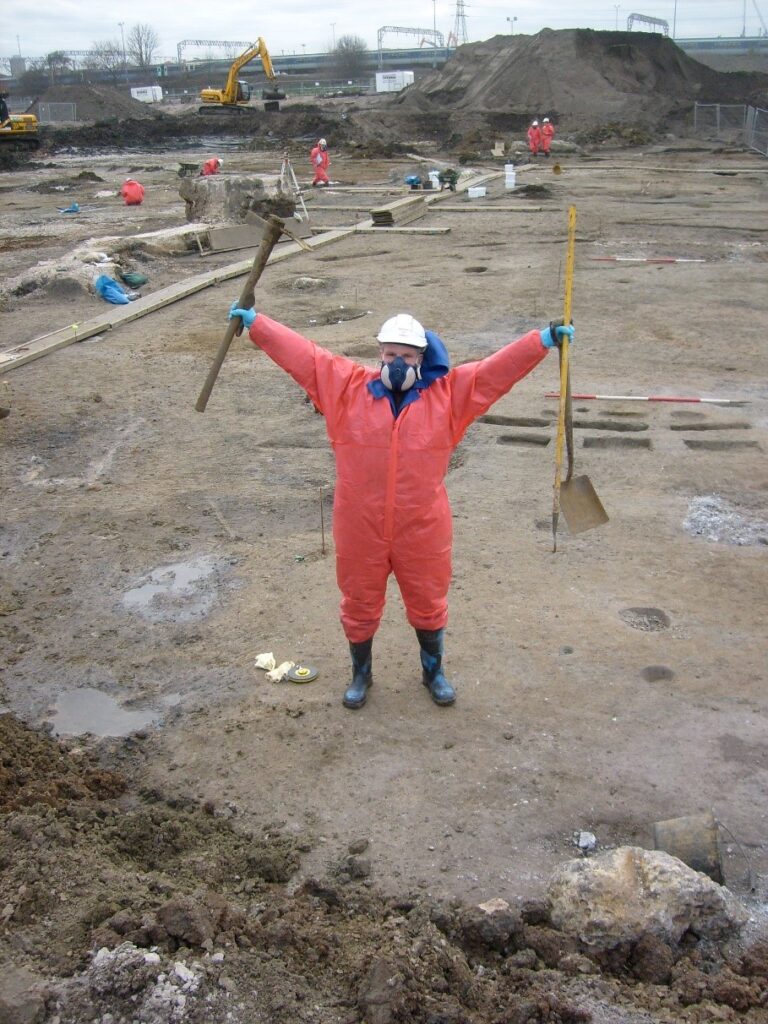
The industrial nature of the site presented challenges especially in terms of potential contamination, which necessitated in the majority of trenches the wearing of enhanced Personal Protective Equipment, including face masks. Other logistical challenges included the size of the site, concrete obstructions and the depth of deposits to be excavated (around 5m in places). Once all overburden had been removed and archaeologically sensitive deposits identified a toothless ditching bucket was employed on the mechanical excavator to avoid unnecessary damage to sensitive deposits and features. Deeper trenches were excavated in steps of 1.2m to guard against collapse of trench sides onto the archaeologists.
The excavations revealed a Middle Bronze Age field system, Late Bronze Age post holes, pits and ditches and Iron Age roundhouse gullies. Four inhumations were found, with carbon dating suggesting they dated from the Late Bronze Age to Iron Age. A Romano-British boundary ditch was also identified.
Post medieval features were also recorded on the site, dating to the industrialization of the area in the 19th century, which included the building of a gas works on the site in the mid-1800s and a distillery in the late 1800s.
Extensive geoarchaeological work was undertaken, recording a sequence of alluvial deposits showing the lateral migration of a tributary channel of the Lea during the prehistoric period, commencing in the early Neolithic, around 4,000 BC. Butchered bone was found in a peaty land surface of Neolithic date, and worked wood, dating to the Bronze Age, had been washed-up as driftwood at the margins of the later river.
The results of the excavations on the site of the Aquatic Centre was reported on separately, in support of the planning application, but also fed into the results from other investigations which resulted in a synthetic publication outlining the results across the Olympic Park.