Aurora Eccles School
Quiddenham
Norfolk
NR16
United Kingdom
Map
Sorry, no records were found. Please adjust your search criteria and try again.
Sorry, unable to load the Maps API.
Description
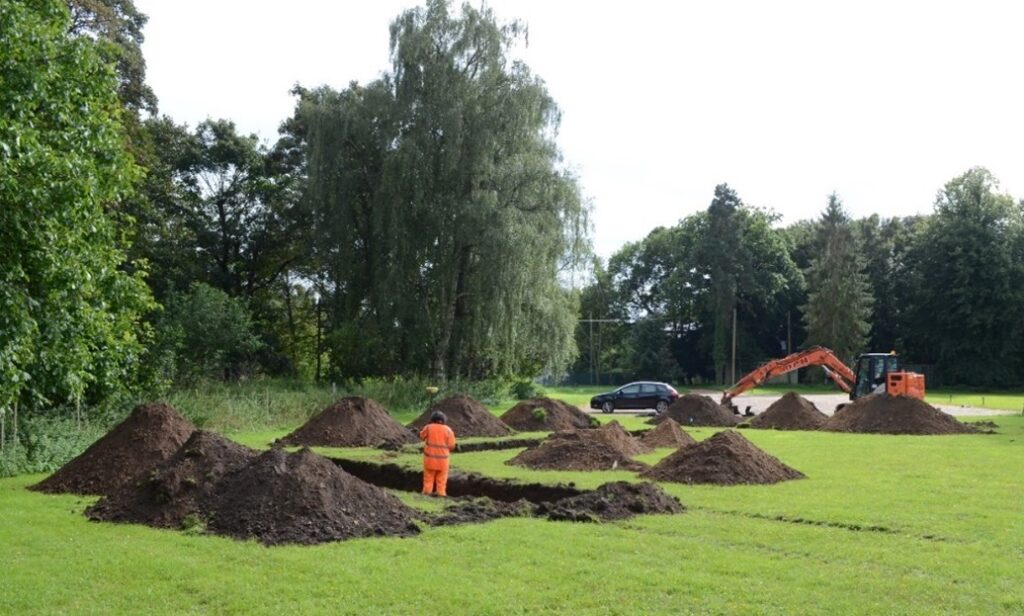
PCA Norwich was commissioned to undertake trial trenching works on land at the school, in response to advice from the Historic Environment Service of Norfolk County Council (NCC/HES), indicating archaeological significance in the area around Quiddenham. The 0.15ha proposed development area was for a new Multi Use Games Area, the construction of which may have impacted the buried archaeological resource. Neolithic, Bronze Age, Roman, Saxon to Medieval and post-medieval activity was all detailed in the Historic Environment Record (HER) data from the area surrounding the site. A devised methodology of three 10m trenches, evenly distributed across the area, was utilised to observe potential archaeological activity on the site.
The village of Quiddenham had been the location of the palace of the East Anglian Bishops and other archaeological features include a possible field boundary for a Saxon manorial site, St Mary’s Church (13th–14th century), and Medieval earthworks. The school itself is located on the site of Eccles Hall Estate, with the 17th-century great house being used to this day as a centre of learning.
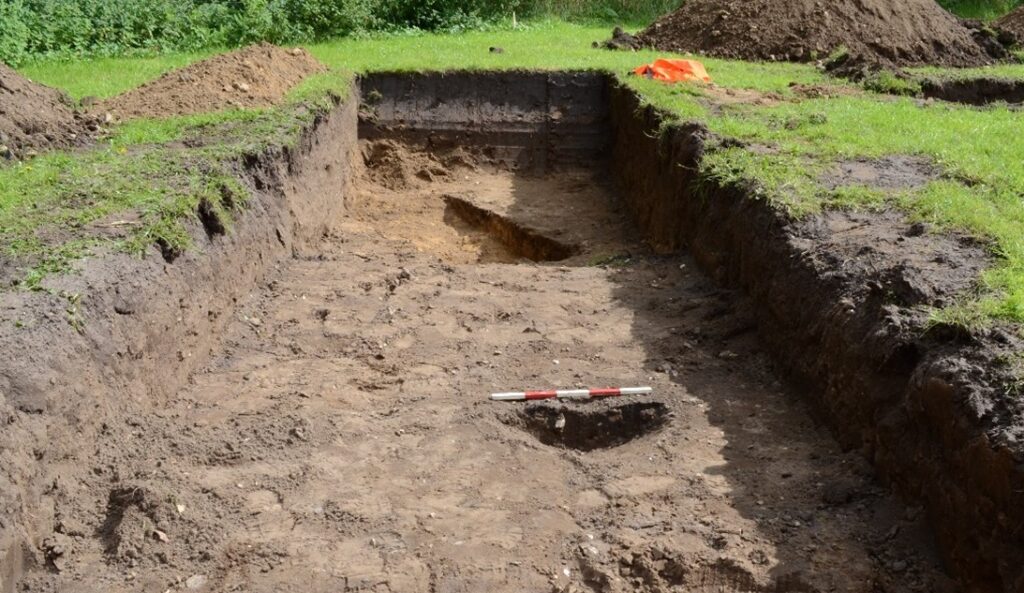
Two of the trenches contained archaeological material. A medieval waste pit containing burnt flint and 12th–13th-century pot was excavated, as was a ditch which was aligned with the lane joining Eccles Hall to St Mary’s Church and contained 11th–12th century fragments of St. Neots ware pottery.
Later activity included a piece of clay pipe within a post-medieval quarry pit. It is believed that this large quarry pit may have been used to acquire material for the construction of the 19th century chimney or one of the 20th-century buildings added within the grounds of Eccles Hall.
While archaeological material was limited, the findings discussed in the resulting report of this programme of works links to the surrounding medieval landscape, with activity hypothesised to be linked to a concentration of Medieval activity on both the site and at palace of the East Anglian Bishops. The results are also pertinent to a forthcoming programme of archaeological monitoring works also taking place on the school grounds, with the potential for further activity associated with the Medieval period being observed and incorporated with the data from this trial trench evaluation.