Baitul Aziz Masjid
London
Greater London
SE1 4JL
United Kingdom
Map
Sorry, no records were found. Please adjust your search criteria and try again.
Sorry, unable to load the Maps API.
Description
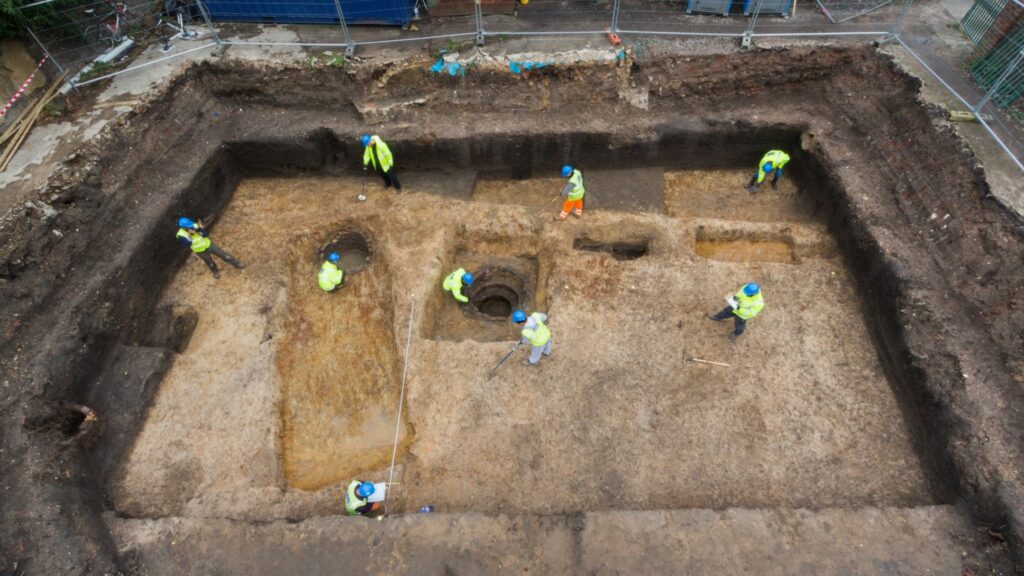
The Baitul Aziz Masjid lies on the southern periphery of the Roman settlement of Southwark, within the area of the ‘southern’ Roman cemetery.
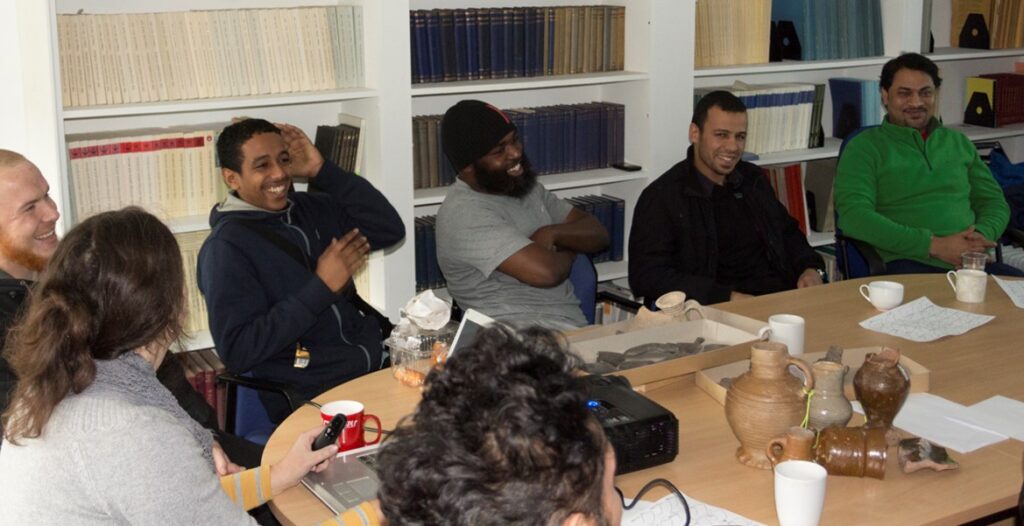
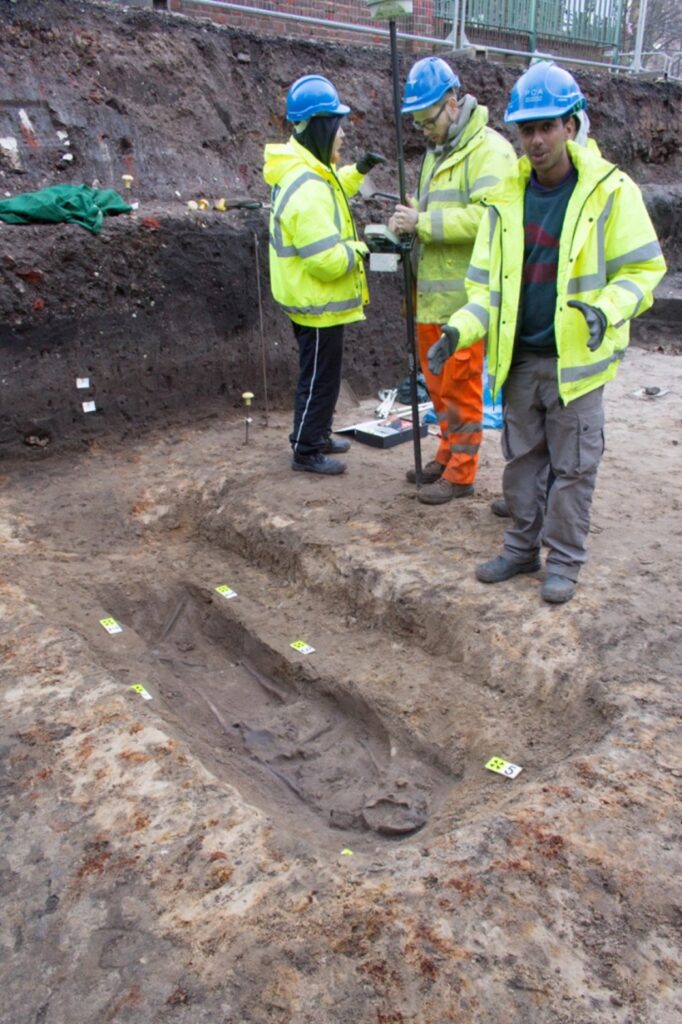
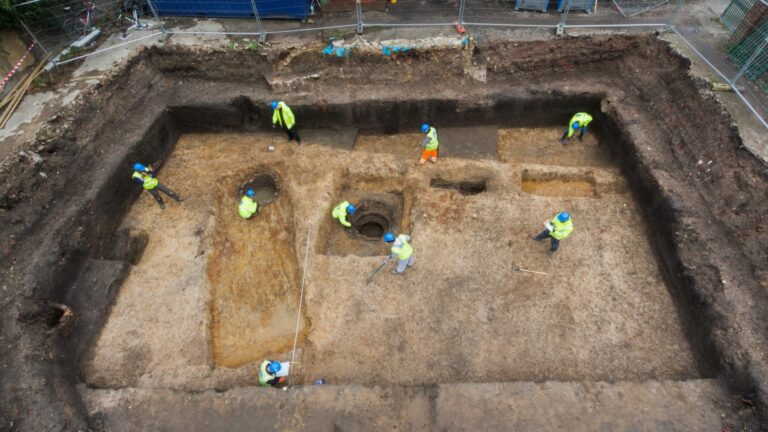
Pre-Construct Archaeology London were engaged to undertake archaeological investigations ahead of work to extend the mosque and build a cultural centre. The circumstances of the excavation were somewhat different to the usual commercial enterprise, with volunteers from the local Islamic community, who underwent classroom and field training in archaeological excavation and recording techniques, working alongside professional archaeologists to undertake the excavation.
The excavation revealed a small Roman cemetery area comprising three inhumation burials and a large boundary ditch along the western side of the excavation. This part of the cemetery was in use during the third and fourth century AD.
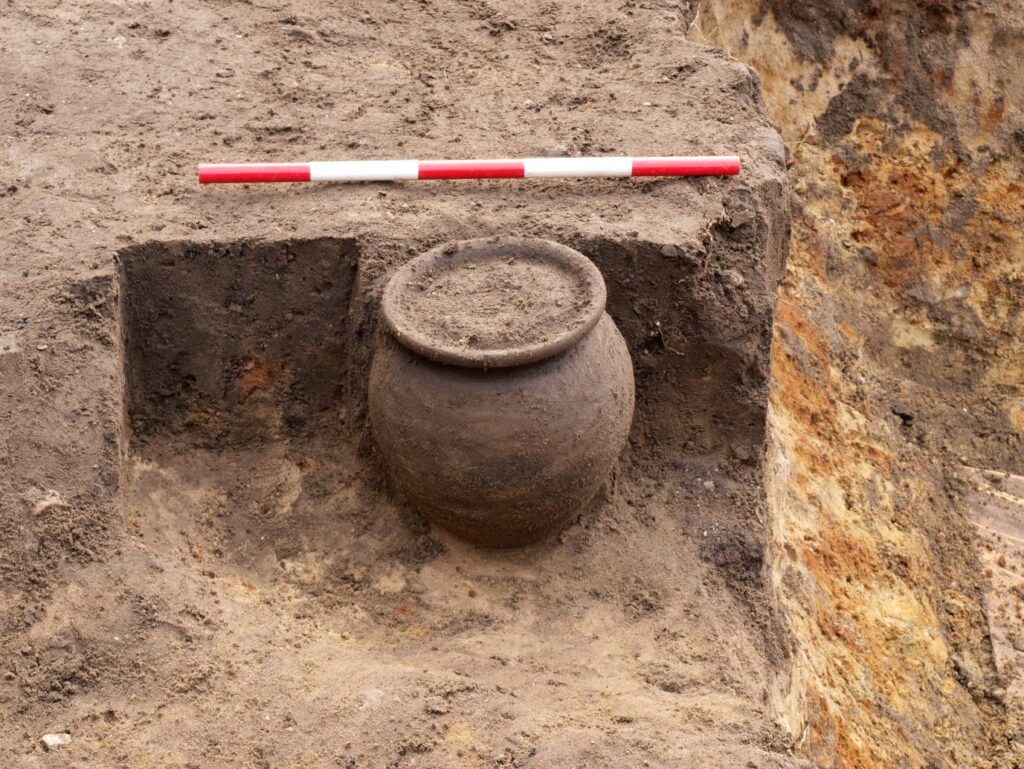
Also present on the site was a complete Roman pot, of a similar data, which contained cremated human bone from a single adult individual, including recognisable fragments originating from the skull, pelvis, long bones and vertebrae.
Activity after the Roman period included two irregularly shaped pits containing articulated cattle remains, probably representing an attempt to contain an outbreak of a contagious cattle infection. A total of four brick-lined wells, probably of Victorian date, were also excavated, their backfills revealing a large amount of broken pottery, clay tobacco pipes and other discarded material.
Pre-Construct Archaeology was able to add additional value to the usual scope of archaeological investigations by engaging with the mosque to provide training and experience of archaeological work to members of the local community.
Public outreach during the excavations included regular updates to the local community and an open day held at the mosque, as well as press articles and publication of aspects of the excavation, in The London Archaeologist Vol. 15, No. 9.