Beckenham Place Park
Beckenham
Greater London
BR3 1SY
United Kingdom
Map
Sorry, no records were found. Please adjust your search criteria and try again.
Sorry, unable to load the Maps API.
Description
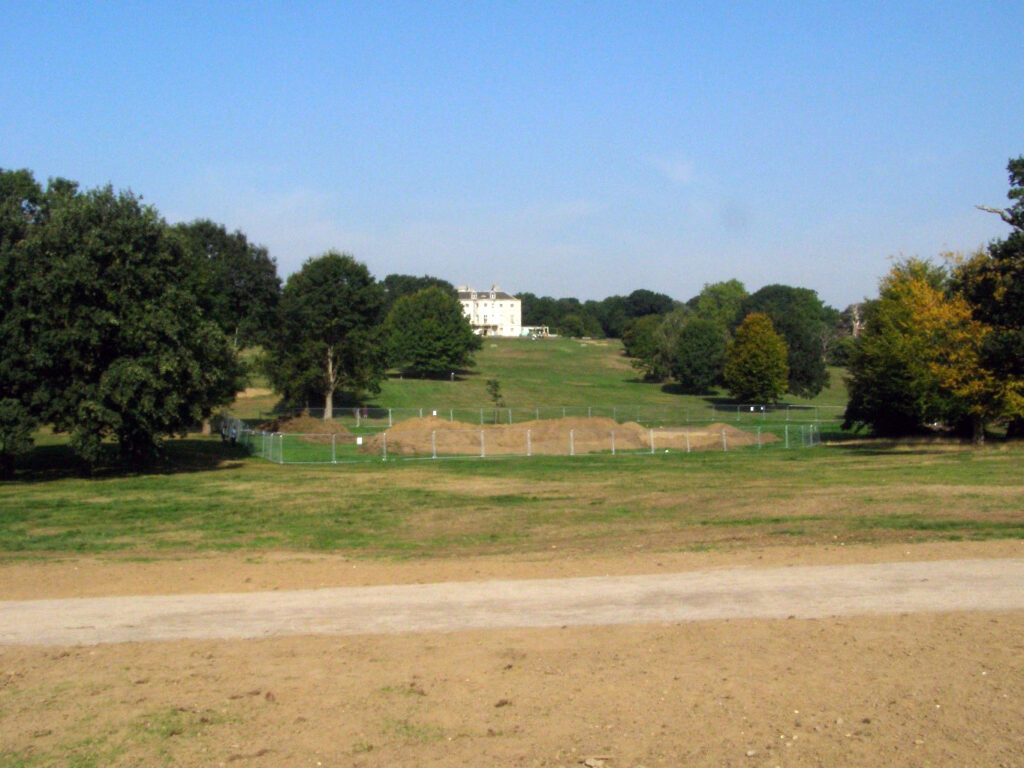
The Custodians of the Beckenham Place Park, Lewisham Council, proposed a range of work to restore and enhance the landscape of the park, including the restoration of the original pleasure grounds, relocation of the main car park, restoration of the 18th-century lake and the creation of new footpaths.
The park is a designated Archaeological Priority Area (APA 20) and contains the Beckenham Place Park Conservation Area as defined by the London Borough of Lewisham. Pre-Construct Archaeology London was commissioned by the Council to carry out various stages of archaeological research and fieldwork.
One such was conducted at the site of an 18th century ornamental lake. Although ten linear trenches each 30m x 2m were proposed these had to be adjusted due to constraints such as tree canopy and root systems, as well as the discovery of contaminated dump layers within the fill of the lake itself. Two trenches could not be excavated, but all alterations to the planned works were agreed with Historic England.
The results included the finding of a curvilinear ditch and a large spread of burnt flint, both dated to the prehistoric period. It also demonstrated that construction of the lake had used the natural sloping topography into the valley base, and this had been enhanced by a light sculpting of the surface. In two instances evidence for a possible waterproof clay lining of the lake were observed but there had been significant impact to the archaeological resource by later activities.
The final phase of work was an intermittent watching brief (monitoring and recording) of groundworks in and around the former 18th- and 19th century buildings of the Homesteads complex and of the general works around the ornamental lake and park.
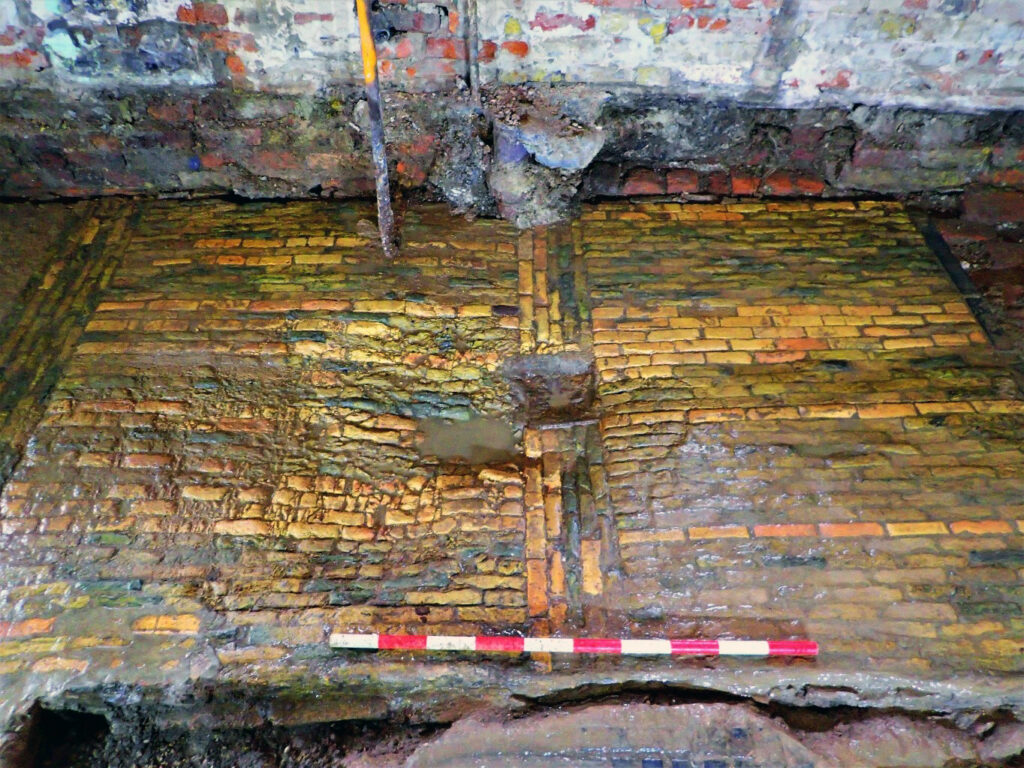
These recorded a large deposit of burnt material including both struck and heat-affected flint, interpreted as a prehistoric burnt mound. A ceramic vessel likely to be of late Neolithic or early Bronze Age date, which had been placed within a pit, was also recorded along with extensive post-medieval remains.
The results of the three investigations were combined into an overall report.