Bermondsey Square, Southwark
London
Greater London
SE1 3NQ
United Kingdom
Map
Sorry, no records were found. Please adjust your search criteria and try again.
Sorry, unable to load the Maps API.
Description
Bermondsey Square overlies part of the site of the Priory and Abbey of St Saviour, a religious centre with origins in the Saxon period and now a Scheduled Monument. The site lies at the western end of what would have been a large island or peninsula in the prehistoric Thames, known as Bermondsey eyot. The place name ‘Bermondsey’ is probably derived from ‘Beornmund’s Ey’, a Saxon name, although the site has been occupied since prehistoric times.
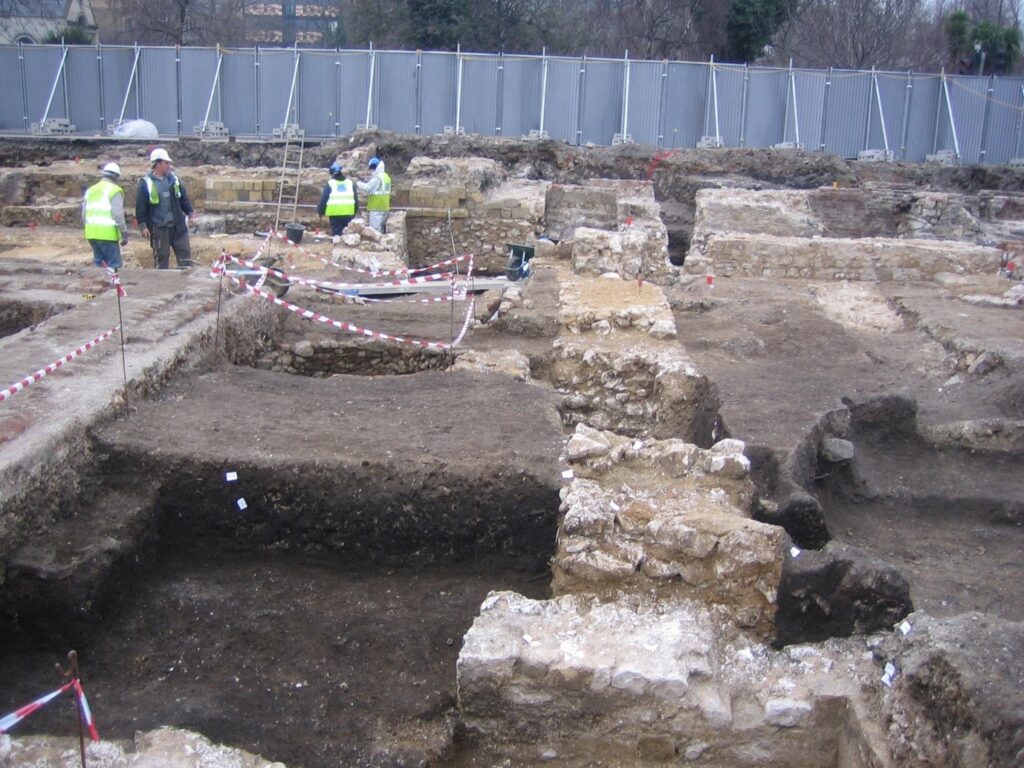
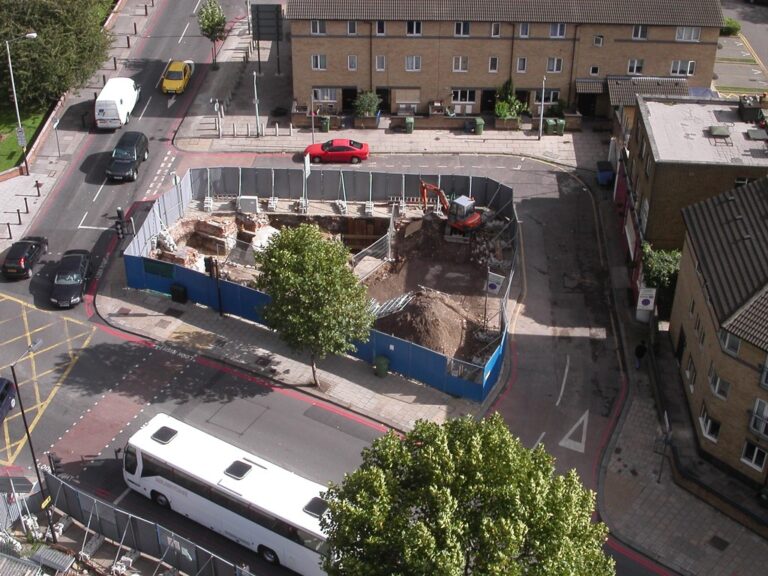
The project involved the redevelopment of Bermondsey Square to provide retail and leisure amenities, as well as residential units. PCA London was engaged to undertake archaeological investigations on the site to identify the extant remains of the Priory and determine where piles and intrusive groundworks could be located so as to cause minimal damage to surviving elements of the masonry structure. The overall aims of the works were to allow a major development to take place on land cleared after the Second World War, while preserving masonry elements of the Scheduled Ancient Monument in situ.
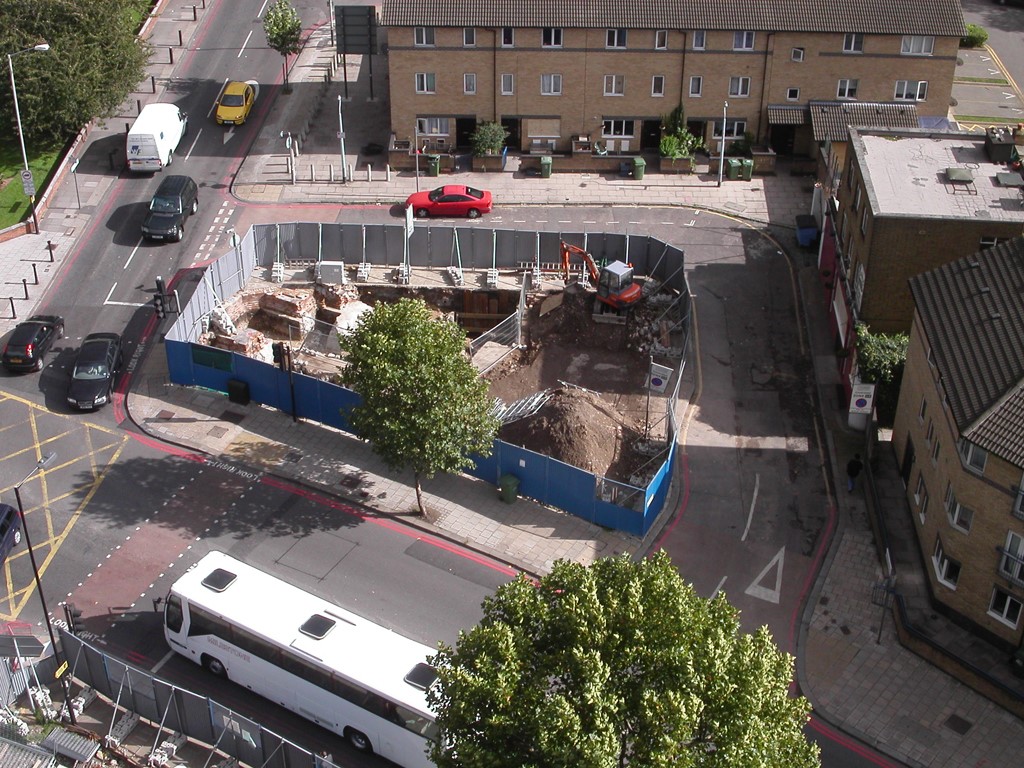
The site itself posed logistical problems for an archaeological excavation with part of it forming a detached ‘island’ surrounded by roads. An area of the site was also regularly used by market traders: PCA needed to ensure that they were able to carry on their business as best possible, and that the local community and stakeholders such as Southwark Council were engaged and informed, with inconvenience from the archaeological excavations kept to a minimum.
The excavations identified foundations of the Middle Saxon Minster. Subsequently a large late Saxon church was built to the west of the Minster. A large number of finds of pottery sherds, coins, a mould fragment and metal objects confirmed a Saxon presence on the site.
The Saxon Minster was succeeded by a Norman church built on the site in the 11th century as part of the Priory of St Saviour, founded in 1089 as part of the Cluniac order.
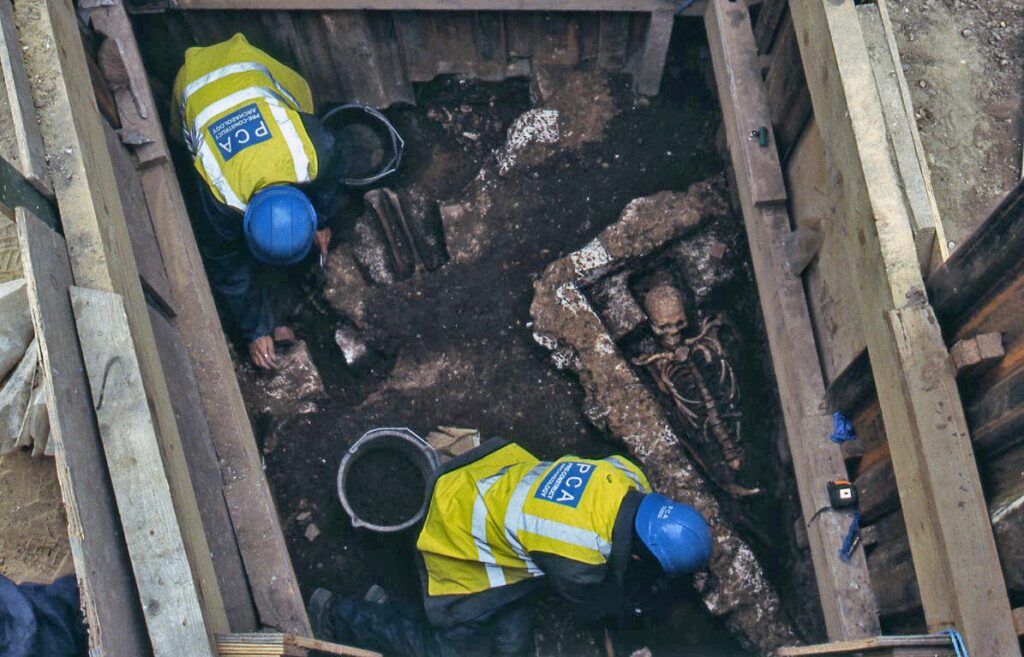
Significant rebuilding of the church took place in the 14th century, with foundations characterised by substantial buttresses. Over 180 burials were excavated in the cemetery associated with the priory, some within the priory buildings, the status of the individuals evidenced by their interment in stone tombs, or cists.
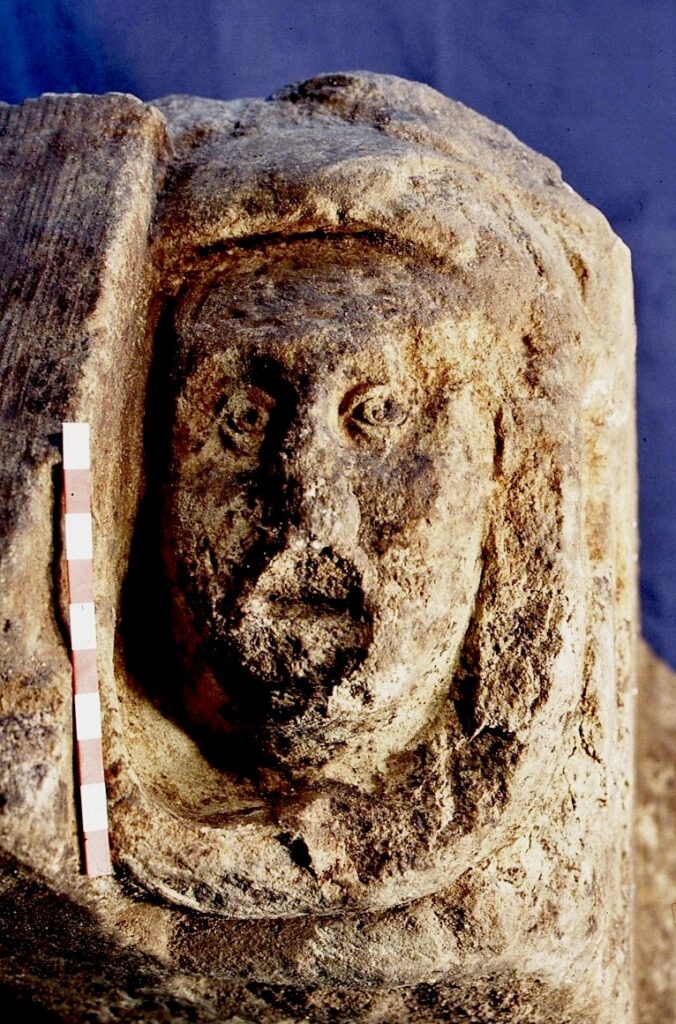
The excavations recovered fine fragments of worked stone, including a piece incorporating the image of a female face bordered by a head-dress. The decorative carving was most likely to have been displayed on an arcade, window or door arch.
Finds from the excavation also included worked bone implements, metal objects and pottery fragments.
Together with previous investigations within the scheduled monument, the excavations added significantly to the understanding of the Priory and Abbey, as well as its earlier Saxon predecessor. Following the Dissolution the area fell into private ownership and the area was predominantly used for residential housing, although subject to fluctuating fortunes. Public outreach from the excavations has included public lectures and talks as well as technical reports and the first volume of a two-part monograph was published in August 2024. Part of the southwest tower of the abbey church can still be seen on the site, preserved as a feature within a bar.