Boleyn Ground, West Ham Football Club
LB Newham
Greater London
E13 9AZ
United Kingdom
Map
Sorry, no records were found. Please adjust your search criteria and try again.
Sorry, unable to load the Maps API.
Description
Pre-Construct Archaeology Ltd London undertook an archaeological excavation in the western car park area at the Boleyn Ground, West Ham Football Club, West Ham prior to the redevelopment of the site as a residential-led mixed use complex of several blocks of between 4-14 storeys.
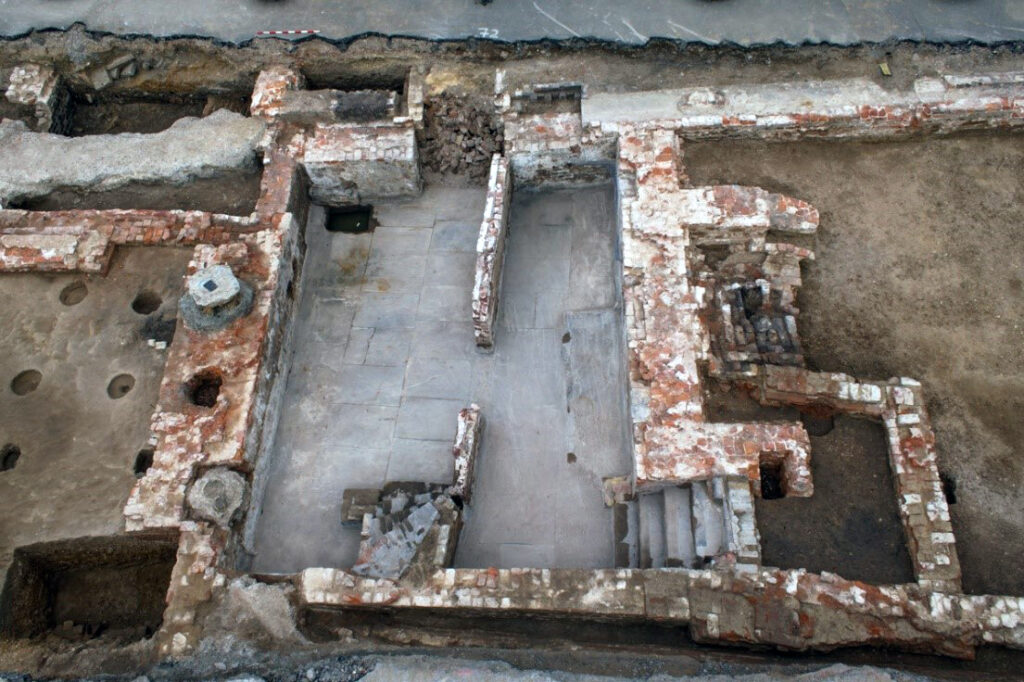
PCA London had previously prepared a Desk Based Assessment followed by an archaeological evaluation, which revealed the remains of a Tudor building, Green Street House, with 16th- and 17th-century garden features and later 18th- and 19th century additions to and remodelling of the house. These findings necessitated mitigation by excavation across agreed areas of the site where there was archaeological survival and/or no truncation. All works were undertaken in accordance with an approved Written Scheme of Investigation.
The initial mitigation scheme consisted of three excavation areas to be undertaken in sequence, enabling the movement and storage of spoil due to the spatial constraints of the site. These mitigation areas were targeted on the location of Green Street House and the garden areas to the south and southeast.
Medieval activity comprised clusters of pitting and possible postholes located at the southern end of site, from which was recovered a ceramic assemblage of some importance.
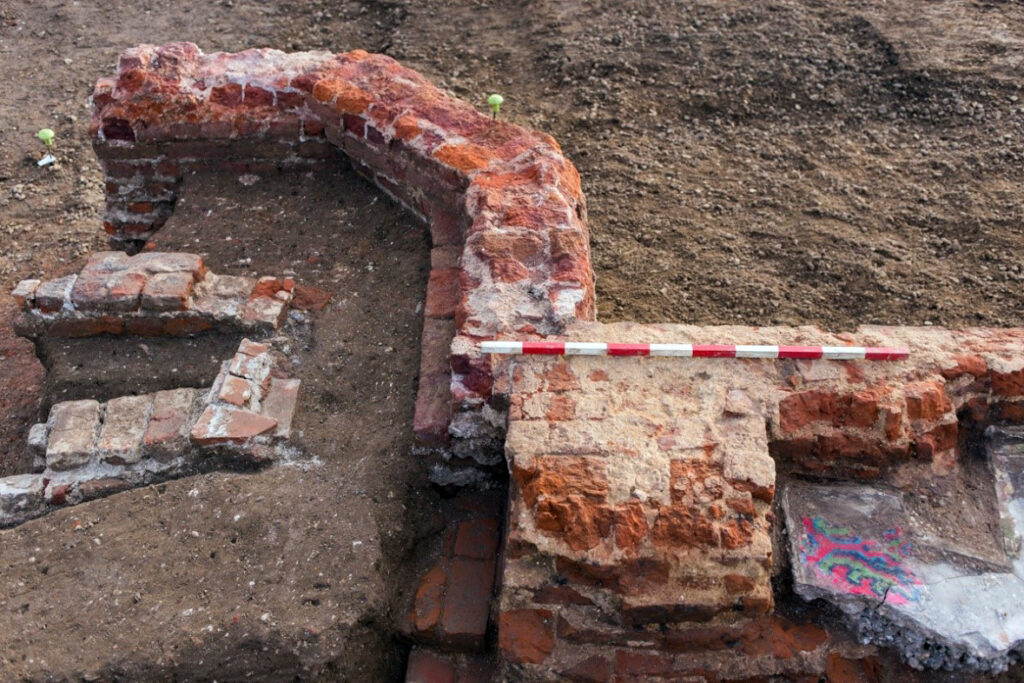
Preceding the construction of Green Street House a number of gravel pits were dug in the northwestern area of site. Extensive remains of the east range of the house were uncovered, represented mostly by its foundations, as was evidence of the formal garden represented by linear planting beds on a range of alignments, alongside ditches and a garden wall. external to the main house was a detached brick tower located at the southwestern aspect of the garden.
It was re-modelled and extended during the 17th and 18th centuries as it changed ownership. The archaeological evidence appears to confirm this with new internal features including floors and walls dating to this period recorded.
A number of reports were prepared to support the planning application and the results of the archaeological excavation were published in the ‘Transactions of the Essex Society for Archaeology & History’ volume 11 (2022).