British Museum
London
Greater London
WC1E 7JW
United Kingdom
Map
Sorry, no records were found. Please adjust your search criteria and try again.
Sorry, unable to load the Maps API.
Description
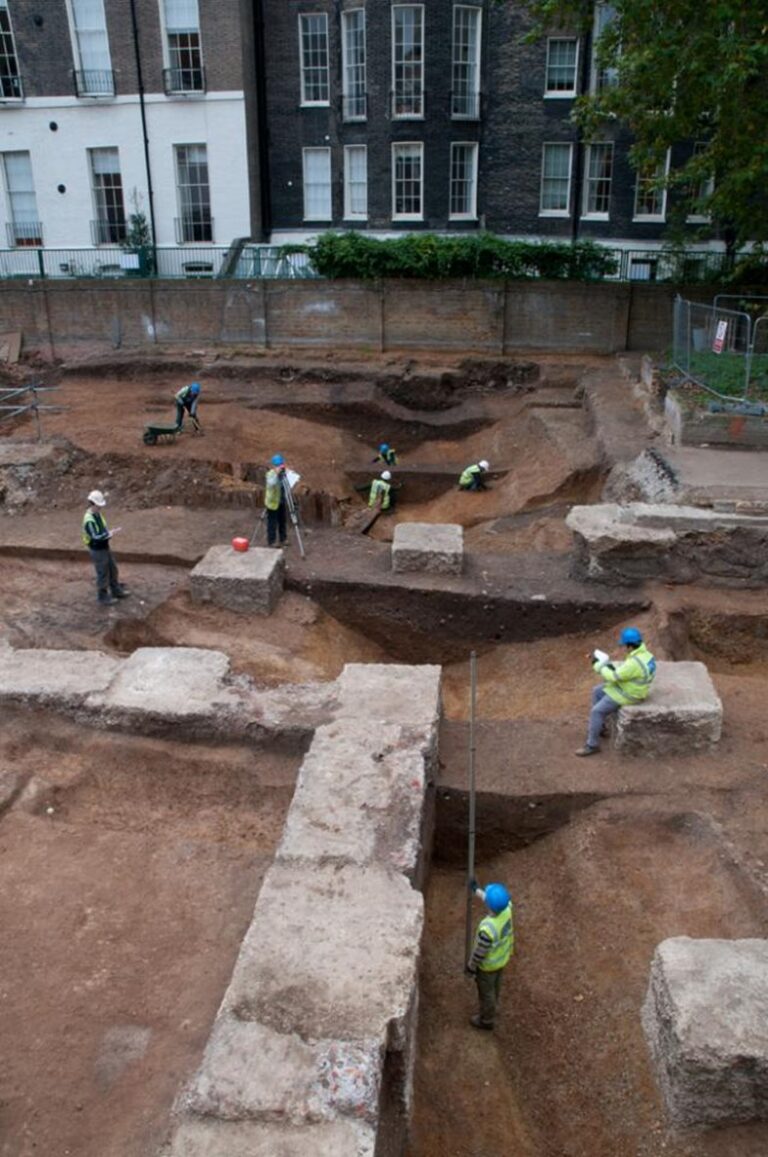
The British Museum was built on the site of a 17th century aristocratic residence, Montagu House, and part of London’s Civil War defences. Pre-Construct Archaeology’s engagement with the British Museum has included the redevelopment of the Great Court, the construction of the World Conservation and Exhibition Centre and ongoing infrastructure improvements including proposed development of an energy centre
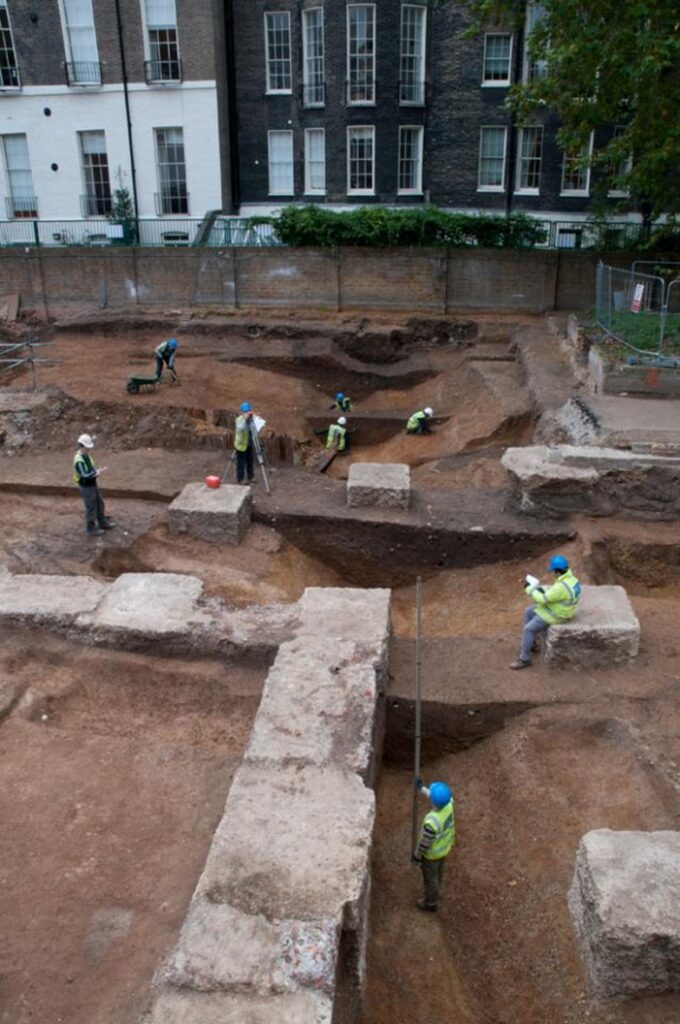
The projects have revealed a complex sequence masonry structures and landscape elements associated with Montagu House and its grounds, as well as portions of a ditch and rampart forming part of the ‘Lines of Communication’ – defensive earthworks connecting forts and bastions around London during the English Civil War (1642-51). The work has also revealed elements of the modern British Museum’s development from its origins in the mid-18th century up to the present.
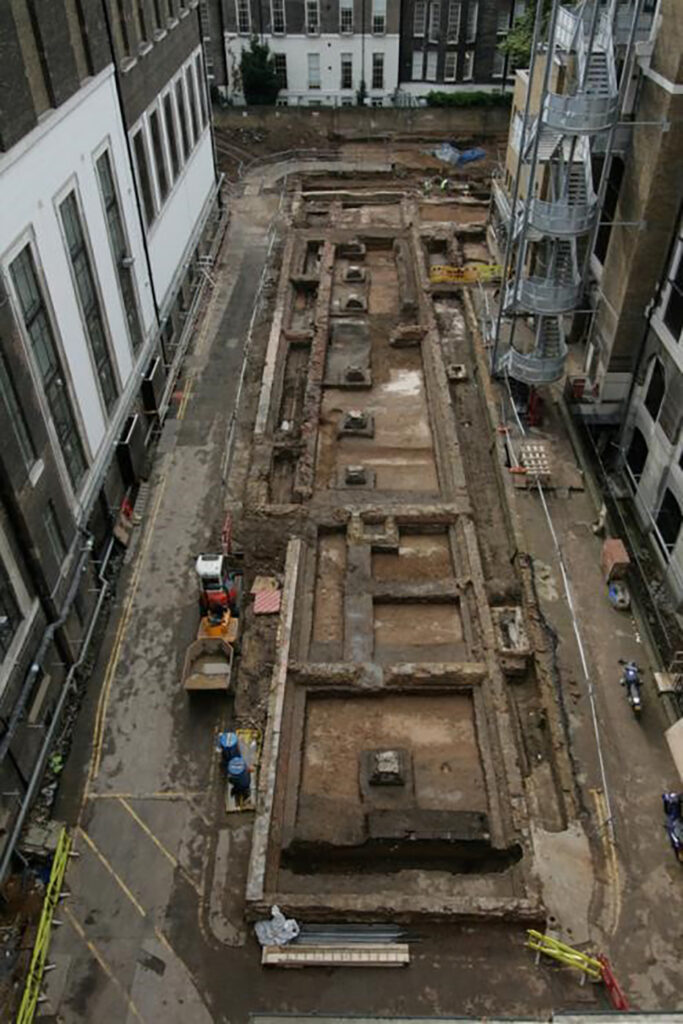
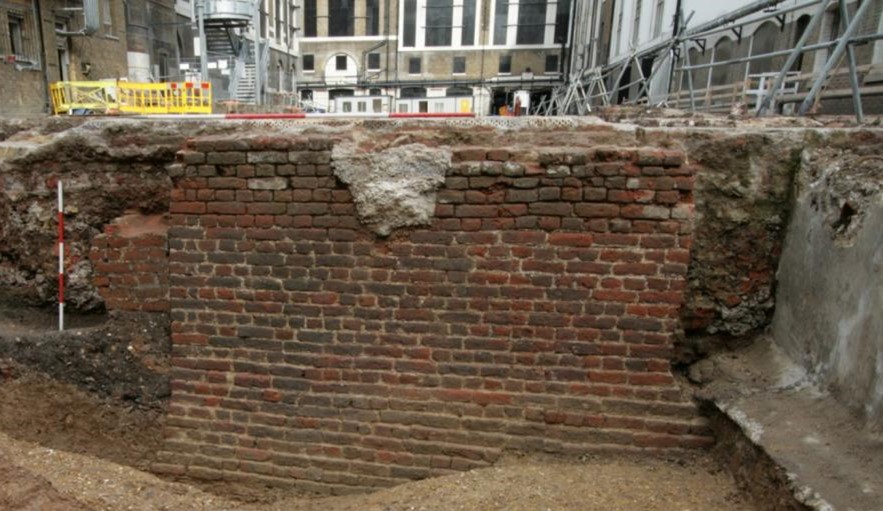
PCA’s involvement began with watching briefs (monitoring and recording) on site investigation works, followed by open excavations in the Great Court and the Museum forecourt. Surfaces within the Great Court had been severely truncated by earlier development, but in the forecourt we were able to reveal construction details of Montagu House and its grounds from 1675–7. Although the original building burnt down just nine years after its completion, it was rapidly rebuilt in a similar style and continued to serve as an aristocratic residence until 1754, when it was sold to the Government and converted into the first incarnation of the British Museum and Library. The ensuing decades would see the surrounding farmland yield to urbanisation as the growth of London’s wealthy western suburbs gathered pace and by the turn of the 19th century Montagu House was surrounded on all sides by high status residential townhouses and their gardens.
In 2007 work commenced on the site of the World Conservation and Exhibition Centre, which necessitated a PCA undertaking a standing building survey prior to the demolition of the historic Bindery building.
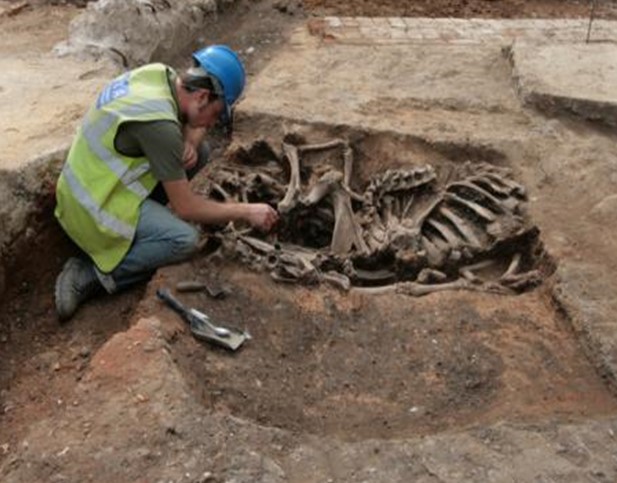
Amongst the findings were field boundaries, a brick drain, and a large brick lined cistern, either a well or a soak-away and a series of pits containing cattle burials, their complete carcases suggesting they were probably killed to try and contain a contagious disease rather than slaughtered for meat.
However, the most significant finding was a ditch and the base of a possible rampart which were part of London’s defences during the English Civil War. The earliest deposits in the ditch suggest that it fell out of use and was partially in-filled in the mid-17th century with the land then returning to agricultural use.
Further investigations from 2022 onwards, associated with infrastructure work and a project to build a new energy centre in the southwest area of the site, added supporting evidence for the agricultural use of the land prior to the construction of Montagu House, and aspects of the composition of the Montagu estate through its lifetime, and also offered insight into the subsequent history of the British Museum itself.
Pre-Construct Archaeology has played a vital role in the development, revealing evidence of the archaeology and history of the British Museum and enabling its ongoing evolution as a world-famous institution. Public outreach from the excavations has included updates and newsletters for British Museum staff as well as popular talks and press articles as well as a Monograph published in 2017: Excavations at the British Museum: An Archaeological and Social History of Bloomsbury. The British Museum Research Publication 210.