Carrington Street, Mayfair
Westminster
Greater London
W1J 7NJ
United Kingdom
Map
Sorry, no records were found. Please adjust your search criteria and try again.
Sorry, unable to load the Maps API.
Description
The project involved the redevelopment of the former NCP car park to provide office space, residential units, a gymnasium, retail art gallery, restaurant and retail floorspace. A large basement covering most of the site footprint was also excavated to create additional space for an underground car park.
PCA London were commissioned to undertake an Historic Building Survey and archaeological investigations, including mitigation work, in advance of development.
The car park itself was of historical importance as the original building, dating from 1907, was the earliest custom-built garage in London for the maintenance and charging of electric carriages. PCA undertook a standing building survey of the garage structure prior to its demolition.
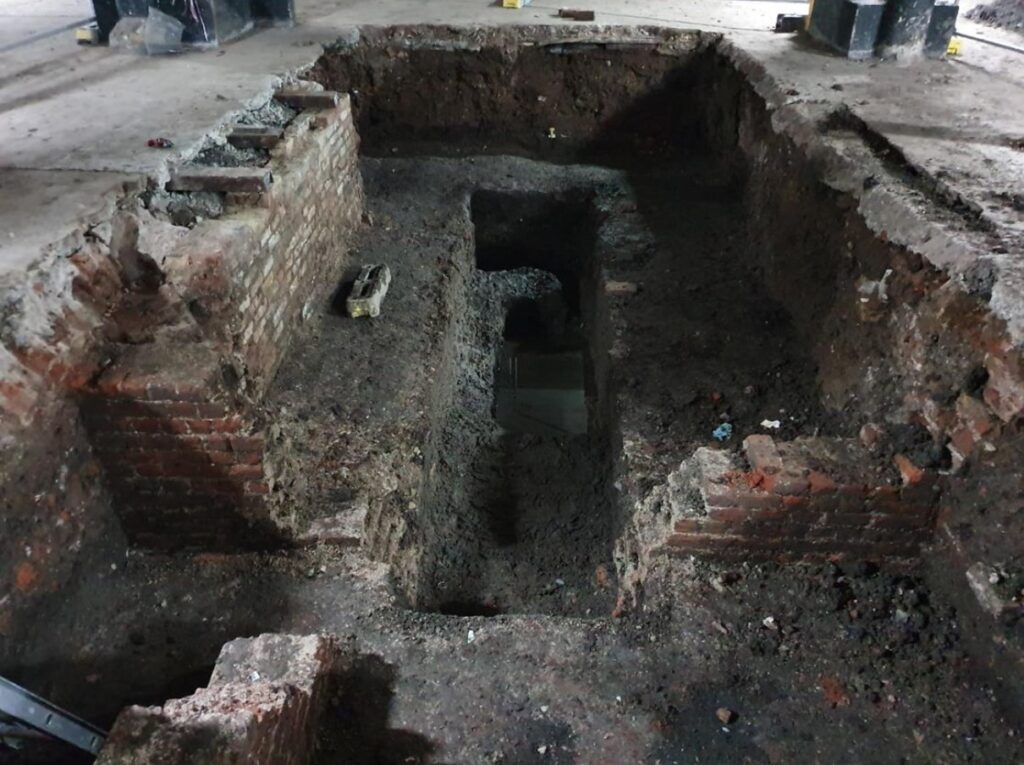
The archaeological evaluation involved excavating six trial trenches within the basement of the car park, prior to its demolition. This was logistically challenging given the tight confines of the standing structure, and the presence of significant hazardous waste (asbestos contamination), which was removed by specialist contractors.
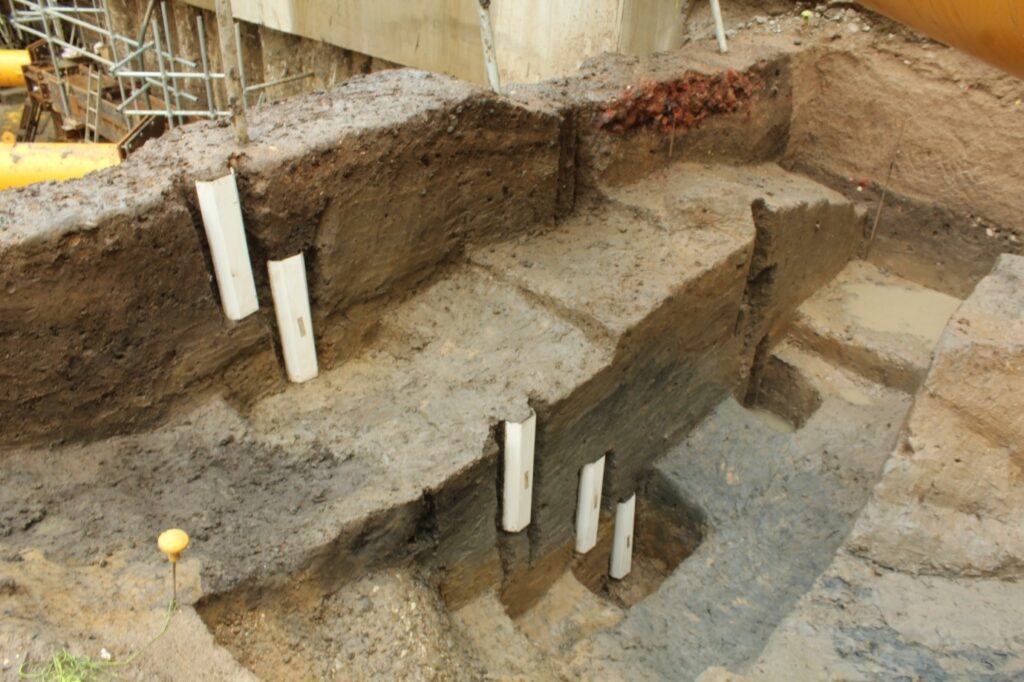
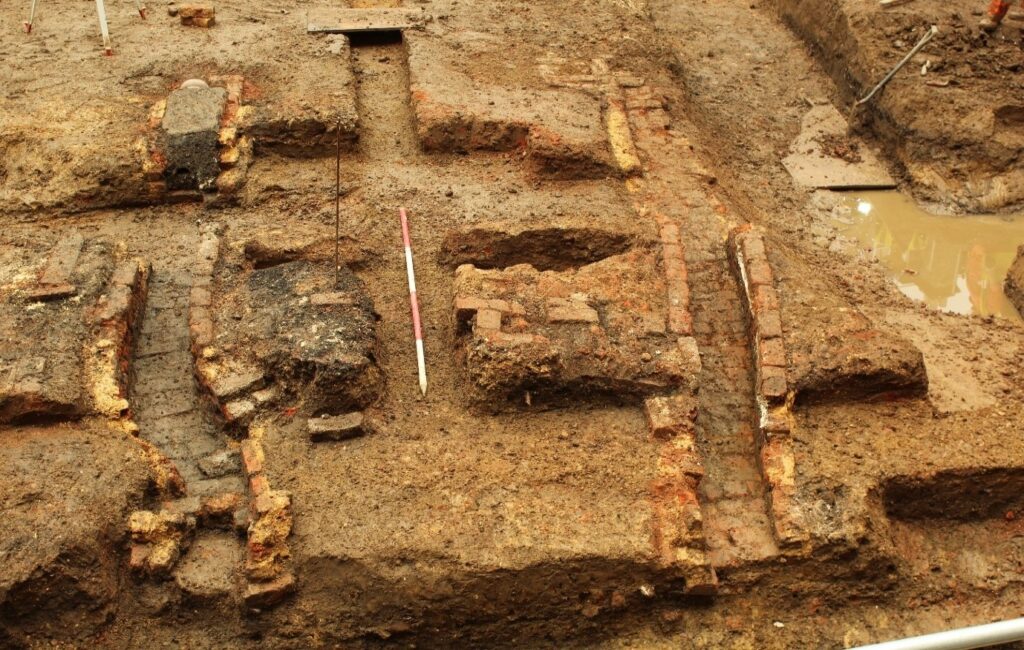
The results of the evaluation, together with geotechnical and borehole information, allowed a ‘deposit model’ to be built up for the site, showing details of the natural prehistoric Tyburn Valley and subsequent human activity. The Tyburn River itself was successively culverted and built over in the early 18th century, and now runs entirely underground. The land had been drained and levelled from the late 17th century onwards, with brick structures dating to the early 18th century representing the first building development in the Mayfair area of London.
Given the significance of the site, the evaluation was followed by two phases of full excavation between May 2020 and March 2021. The work was undertaken during lock-down conditions of the COVID-19 pandemic and involved major challenges in ensuring safety protocols, agreed with the principal contractor McGee, were rigidly followed.
The excavations revealed activity from the prehistoric to the modern period. The site was dominated by the presence of the Tyburn River which, together with a nearby tributary, contributed to the wetland nature of the site.
Archaeological evidence for the seasonal occupation of the site during the prehistoric period was recorded alongside the north and west bank of the watercourses in the form of intercutting pits and layers which produced prehistoric pottery and fragments of worked flint dated from the Neolithic to the late Bronze Age.
The site was periodically flooded until the late 17th century when drainage and improvement works began, the valley was infilled (with dumped deposits including best-preserved collection of knackers’ yard waste in Greater London) ahead of building from the early 18th century onwards. The excavation demonstrated the survival of much of this early development on the site.
Following conclusion of the excavations, a detailed analysis of the archaeological features and finds and the environmental samples and geoarchaeological information was undertaken. Specialists in prehistoric pottery and flint tools and experts in later post-medieval finds, including glass, leather, wood, bricks and stonework, worked with environmental specialists looking at animal bone, shells, seeds and pollen. Together they built up a detailed picture of the prehistoric landscape of the site through to the beginnings of urban development in the late 17th century.
Public engagement during the COVID-19 pandemic was obviously limited, but subsequently a number of reports have been produced and lectures delivered to interested groups and societies.