Central Winchester Regeneration Project
Winchester
Hampshire
SO23 8AD
United Kingdom
Map
Sorry, no records were found. Please adjust your search criteria and try again.
Sorry, unable to load the Maps API.
Description
The Central Winchester Regeneration project covers a wide area in the centre of the city. The project lies in the eastern part of the walled city of Winchester, on the north side of High Street and Broadway.
PCA Winchester was commissioned to undertake an archaeological investigation as part of the Central Winchester Regeneration Project. The excavation of the trenches and the subsequent reporting were intended to meet the aims and objectives set out in the WSI, which were to verify and characterize the archaeological deposit sequence present within the site and inform decisions concerning its future treatment in respect of the proposed development.
Within the CWR project area previous investigations indicated the potential for archaeological material spanning the Mesolithic to modern era, including Roman roads and mosaics, late Anglo-Saxon streets and properties and evidence of metal working and other industries, medieval churches, tenements and other buildings. Post-medieval activity includes evidence of the transformation of earlier properties into open areas, including orchards and tenter grounds, followed by 19th century urban development of the medieval street plan, as shown on historic mapping.
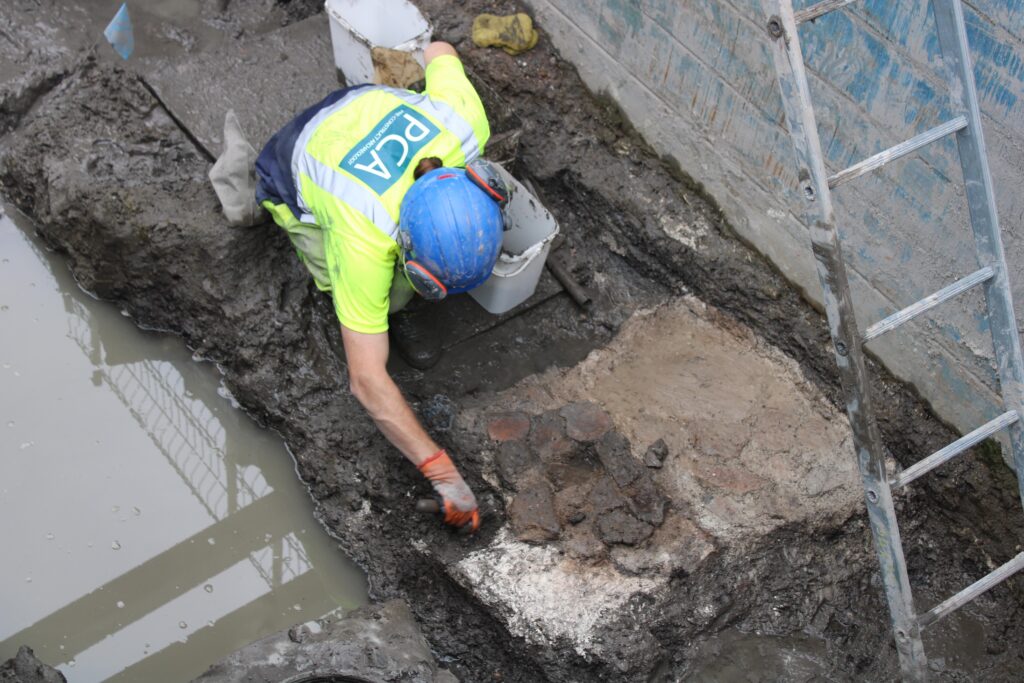
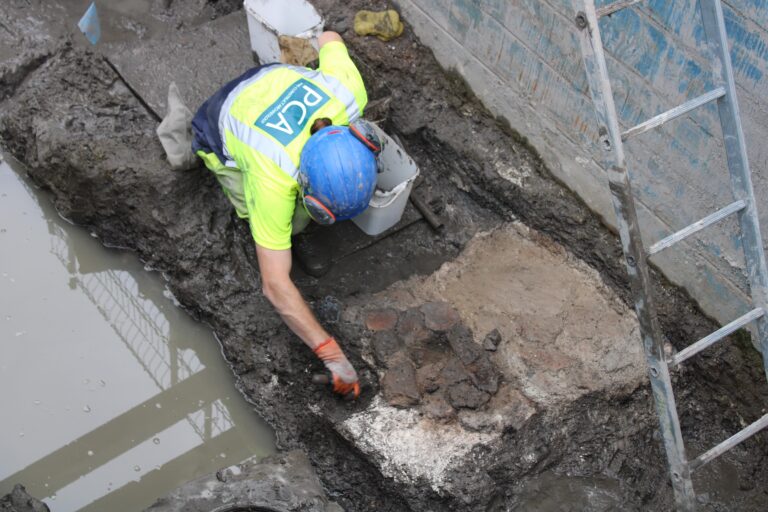
PCA excavated four trenches in the site surrounding Winchester bus station, which ranged from 6.6m to 10.52m in length and 2.7m to 5.24m width and between 2.27m and 2.98m in depth. To attain the depths below ground to examine archaeological deposits two trenches were stepped, and two were shored using trench boxes. Further constraints included the presence of live services, a culvert and the presence of an active bus station. Additionally, ingress of ground water into the trenches, created a constant challenge necessitating a pumping operation agreed with the Environment Agency and Southern Water to extract, store and discharge significant volumes of water to the local drainage system while protecting the highly significant River Itchen environment adjacent to the site..
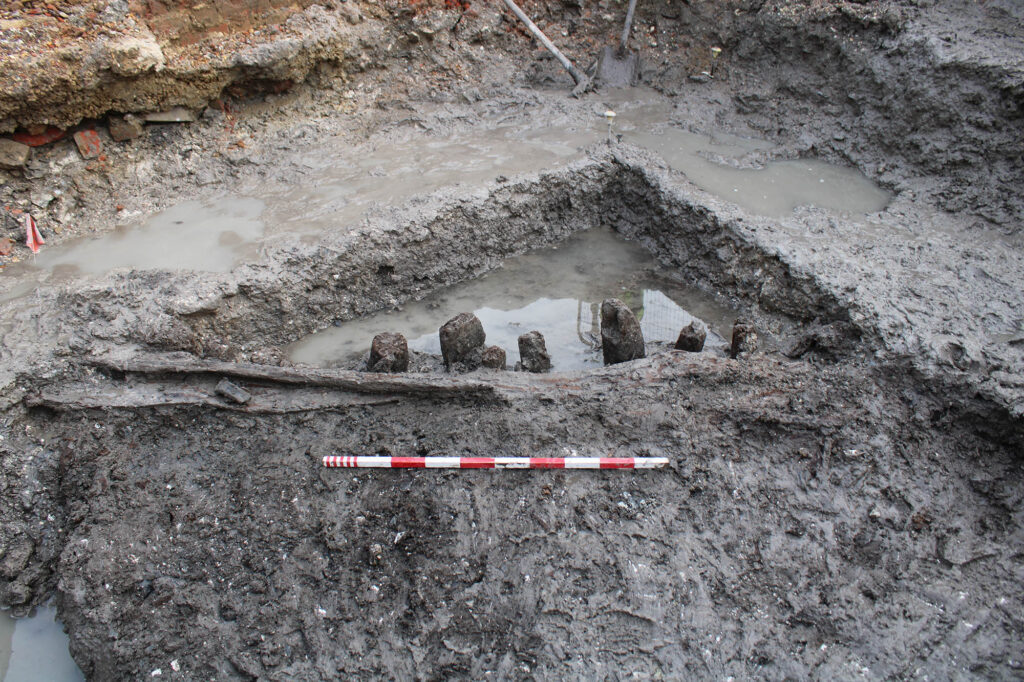
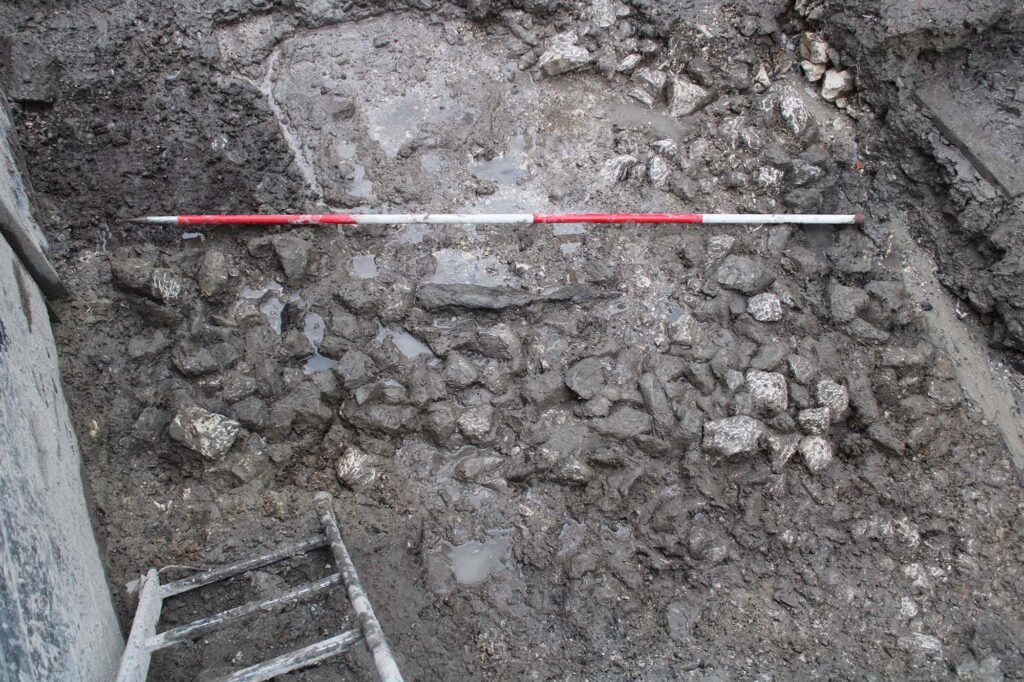
Within all four trenches, extensive medieval archaeology was revealed, ranging from masonry and timber building remains to an extraordinarily well-preserved revetment illustrating the riverine management in Winchester. All four trenches also proved to be a rich resource for both artefactual recovery and environmental sampling. Redeposited Roman artefacts testify to the survival of Roman deposits at the site. Due to the depth of the medieval deposits, which remained largely unexcavated, it was unfortunately not possible to further define the character of the Roman remains during the archaeological investigation. However, there seems little doubt that the archaeological potential of the CWR site is significant and present within a waterlogged and thus enriched environment that is to be found between 1m and at least 4m below existing ground level.
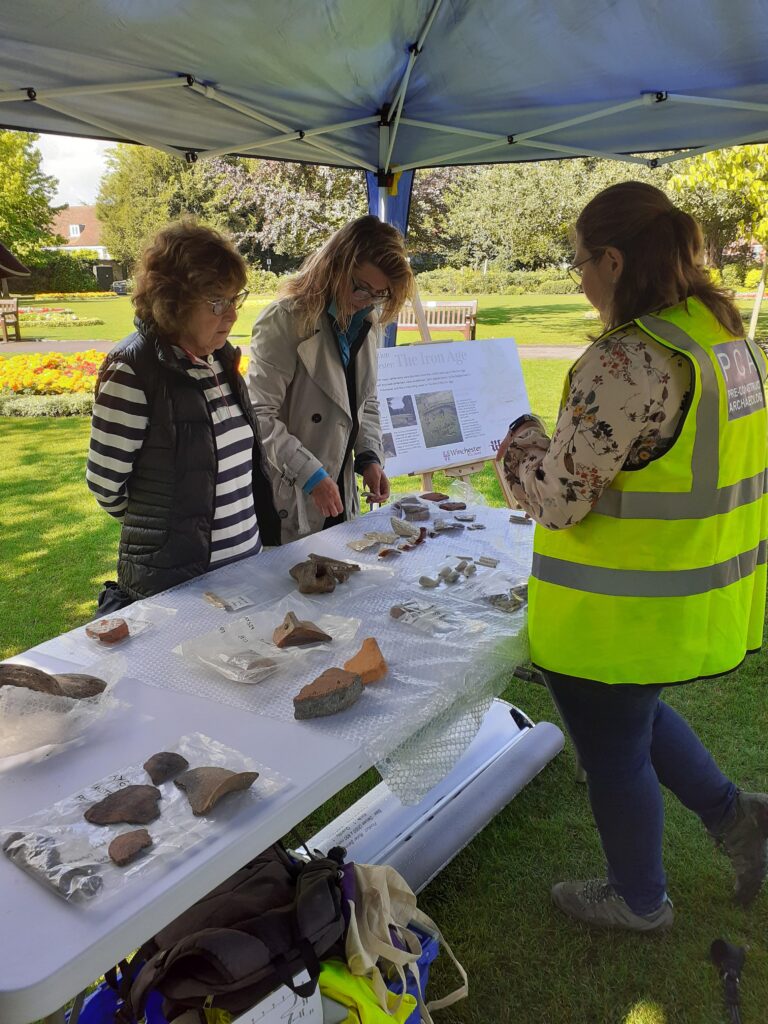
A public outreach scheme, designed to provide information about the archaeological investigation and an insight into Winchester’s archaeological heritage, formed an important component of the CWR project. PCA’s engagement activities included: providing information on progress of the evaluation on the PCA website and its social media and the presentation of a series of information boards and mesh panels describing the history and archaeology of Winchester. Open days were held both for the general public and for special groups, such as local Guides and Scouts, and enabled the public to visit the site and view examples what was found. Volunteers from the general public as well as students from the University of Winchester, were invited to help process artefacts and environmental samples from the evaluation. Open evenings and guided tours were held for local organisations such as the Hampshire Field Club, Winchester Archaeology Research Group and CBA Wessex, and provided an opportunity for more technical questions to be asked by the archaeological community.
Following completion of the evaluation investigation in early 2024, a report on the results was provided to Winchester City Council and the CWR Archaeology Panel. The report will be used to inform development proposals that are to be brought forward by the Council and its development partner Jigsaw. The proposals will include a strategy to preserve the archaeology of the CWR site whilst allowing the regeneration project to succeed. As the CWR development is brought forward, there maybe additional requirements for archaeological investigation either to further evaluate the site’s archaeological potential or to offset the impact of development proposals. For the time being, we look forward to being asked by the Council to carry out additional analysis and to publish the results of the evaluation.