Clarendon Centre, Oxford
Oxford
Oxfordshire
OX1 3JE
United Kingdom
Map
Sorry, no records were found. Please adjust your search criteria and try again.
Sorry, unable to load the Maps API.
Description
The Clarendon Centre lies at the historic core of Oxford, off Shoe Lane, west of Cornmarket Street. Oxford was founded in Saxon times and was already a thriving settlement at the time of the Norman Conquest. The site was in an area of the city that has been populated from the medieval period continuously to the present day.
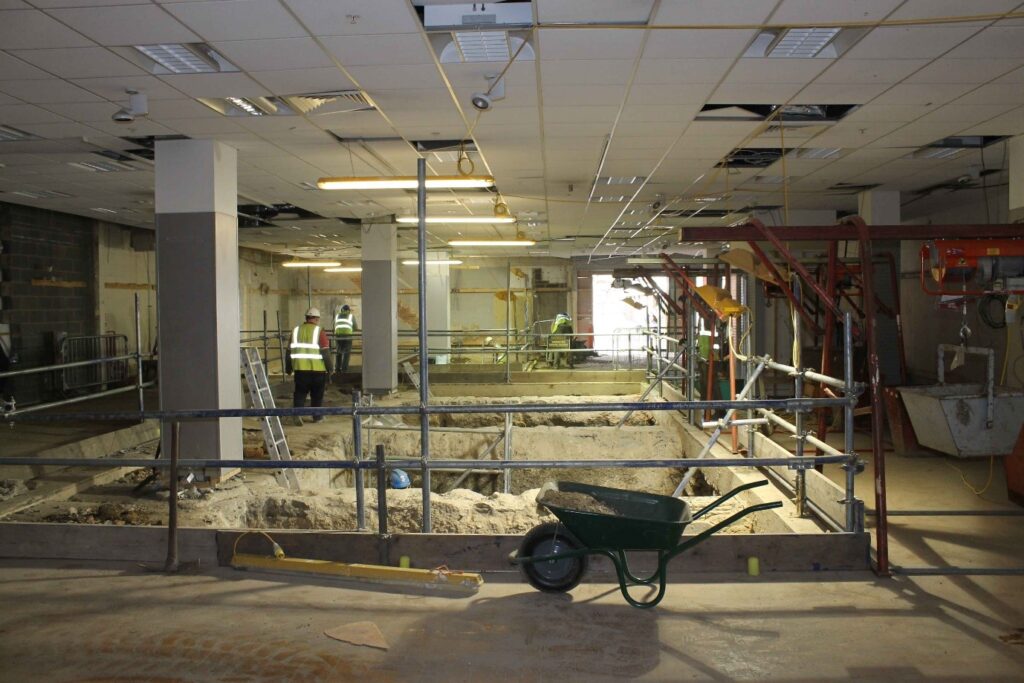
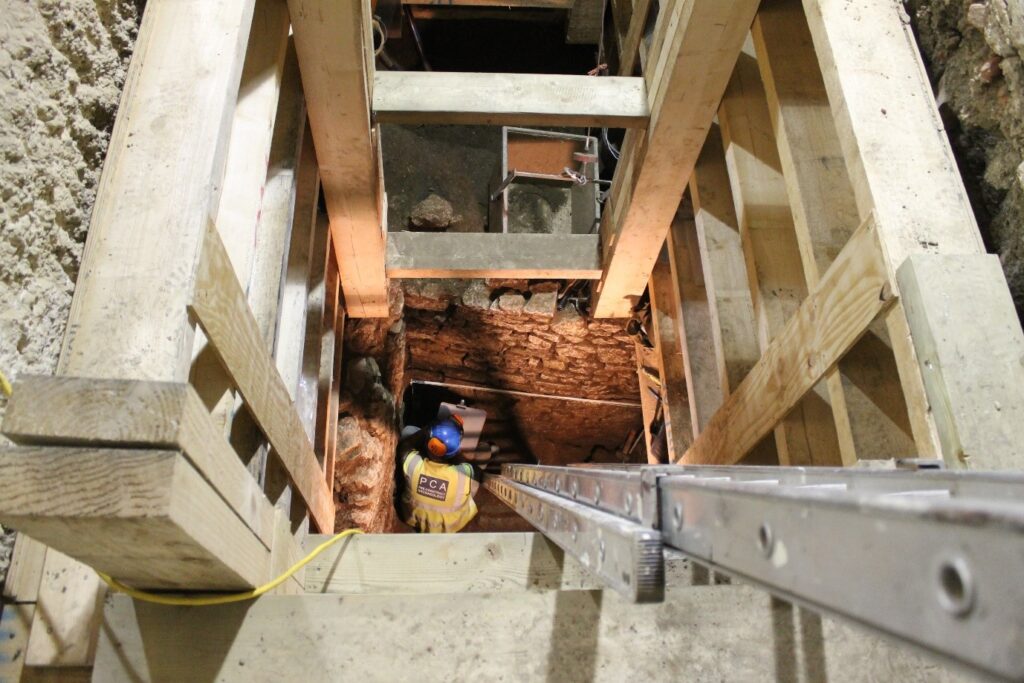
PCA Warwick was engaged to undertake archaeological mitigation following a strategy formulated with Oxford City Council’s Archaeological Planning Officer. Excavations targeted areas where intrusive works such as pile clusters and lift pits would take place, elsewhere leaving areas of undisturbed archaeology for the future.
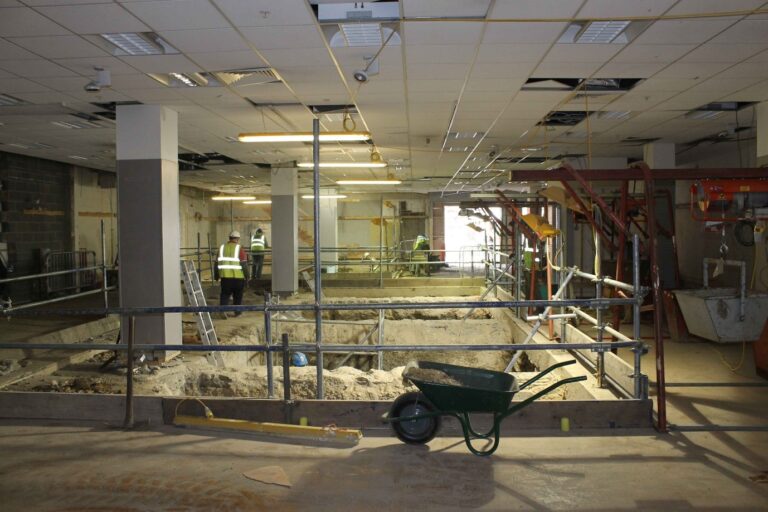
The work involved carrying out archaeological investigations while the existing building was still standing; further constraints included the necessity of working between concrete ground beams, which ensured the building’s integrity.
The excavations revealed evidence for 11 phases of activity, with the earliest dating to the Late Saxon period where pits associated with rubbish disposal were revealed.
Settlement activity on the site increased dramatically in the Norman period and included large quarry pits originally dug for gravel required for yard and road surfaces one of which was Sewy’s (Shoe) Lane.
By the 13th century metal-working, particularly copper, was being undertaken on one of the yard surfaces and later in the same century a stone wall and a possible well were constructed and a probable lime kiln was found nearby.
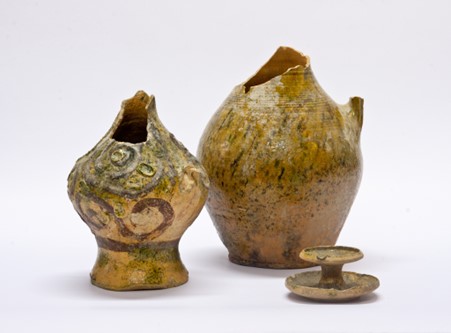
Later phases of activity spanning the medieval period were recorded, with a 14th-century wall possibly marking a land boundary. Surfaces and pits revealed a wealth of finds including worked antler and bone tuning pegs for a musical instrument, fragments of iron suggesting smithing was taking place, and a large quantity of pottery, as well as butchered bone and parts of animal carcases, as well as fish bones.
The archaeological investigations have provided significant information about the backlots and narrow lanes away from the major street frontages of the city. Subsequent analysis of the records and the finds and environmental data revealed that this was a vibrant part of medieval Oxford with numerous craft and small industrial activities, such as tawing, dyeing and bone and horn working, taking place in close proximity to one another. The fish and animal bone assemblage together with seed and plant remains allowed the diet of the local population to be reconstructed, and along with the study of the finds recovered from the site it could be seen that both the rich and the poor were living very close together.
Public outreach during the excavations included an Open Day to showcase the site to local residents, along with press releases. Following the excavation a monograph was produced which highlighted the results of the excavation, a copy of which may be downloaded here: Medieval Craft-working in Oxford – Pre Construct Archaeology (pre-construct.com)