Coca Cola Factory, Sidcup
Sidcup, LB Bexley
Greater London
DA14 5BZ
United Kingdom
Map
Sorry, no records were found. Please adjust your search criteria and try again.
Sorry, unable to load the Maps API.
Description
The Coca Cola factory in Sidcup lies in the Cray River Valley, which is an ‘Archaeological Priority Area’, designated by the London Borough of Bexley based on a significant prehistoric presence dating back to the Late Upper Palaeolithic, from around 10,000 BC. The majority of the evidence falls within the Mesolithic (Middle Stone Age) period and dates to around 8,500–7,500 BC, with some later activity.
Pre-Construct Archaeology Ltd (PCA) was initially commissioned in 2015 by Chalcroft Construction Limited, and later by Faithful+Gould, on behalf of Coca-Cola Enterprises Ltd, to undertake an archaeological and geoarchaeological evaluation at the site, in advance of the demolition of warehousing and the erection of a new Automated Storage and Retrieval System in 2016.
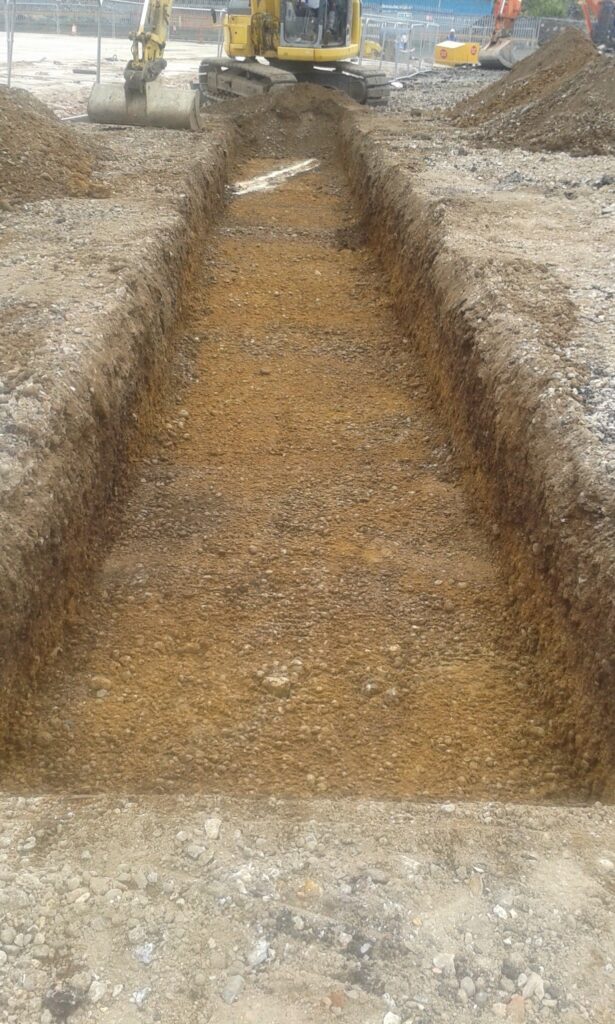
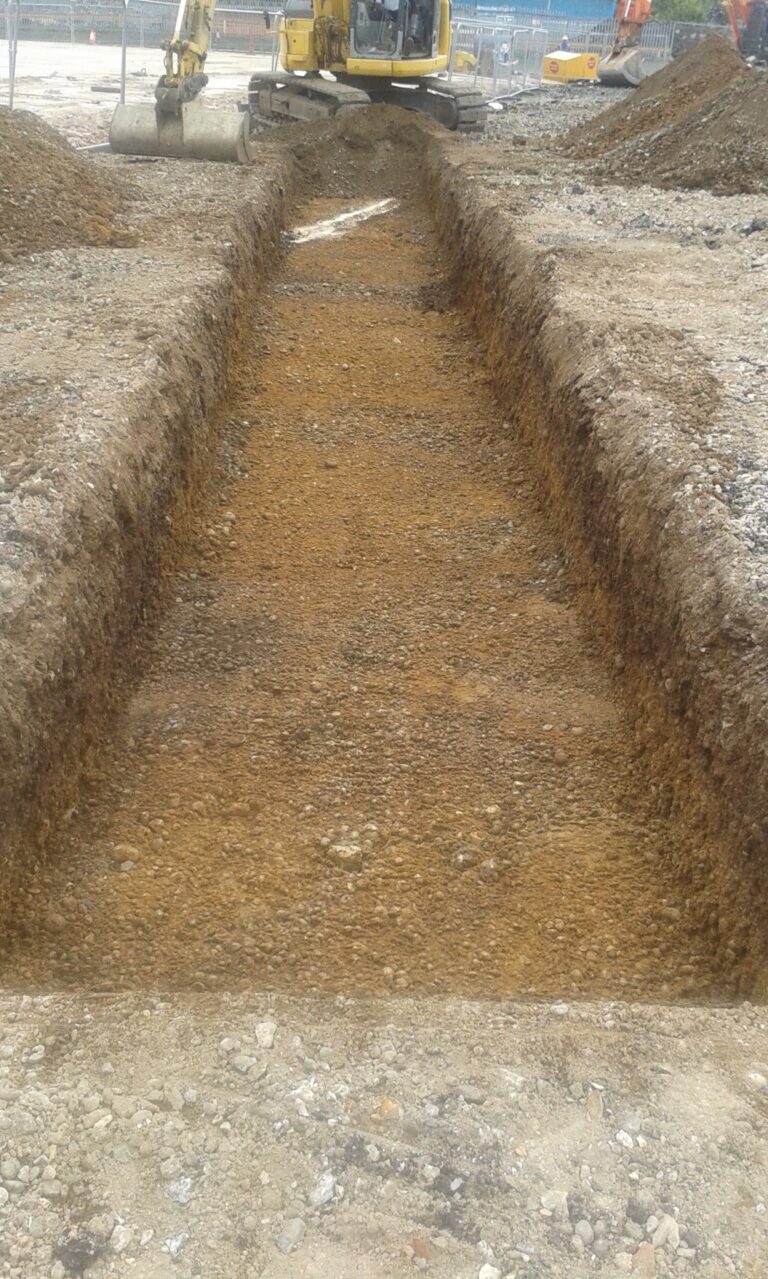
The results of initial geotechnical investigations in 2015 allowed PCA’s in-house geoarchaeological specialist to identify two areas of interest (Zones 1 and 2) where prehistoric layers appeared not to have been truncated by earlier construction activity. Six trenches were agreed with Historic England’s archaeological advisor to Bexley, and the excavations were carried out in July 2016. Further archaeological investigations followed in 2018, prior to additional expansion of factory buildings.
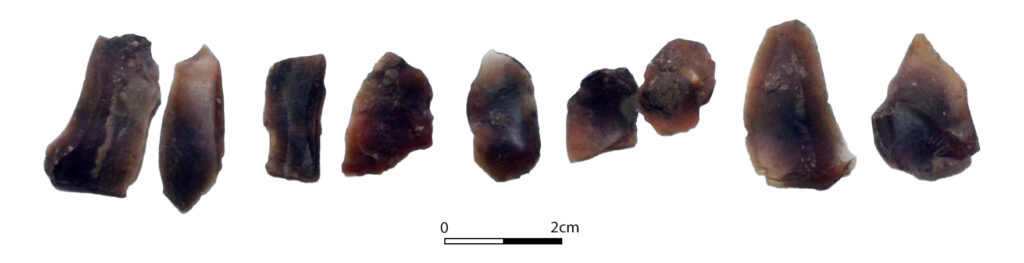
The excavations in the southern part of Zone 1 revealed a shallow feature containing exceptionally rare Late Upper Palaeolithic flint tools alongside a large collection of Mesolithic artefacts, dating to the very end of the last Ice Age, between 10,000 and 7,500 BC. The rarity of the finds confirmed the local and regional importance of the site and is of interest nationally and internationally.
Given the importance of the results of the 2016 excavations, PCA was subsequently commissioned by Currie & Brown, on behalf of Coca-Cola Enterprises Ltd to undertake an archaeological watching brief on a geotechnical investigation of three further areas at the site. As a result, the excavation of four test pits and seven boreholes were monitored in April 2018 in advance of construction work.
The watching brief recorded the chalk bedrock and river terrace gravel below a layer of sandy clay brick-earth. This work was followed by an evaluation comprising three trenches in the north part of the site, as agreed with the archaeological advisor to the London Borough of Bexley. No features were recorded in these later excavations.
The archaeological works were undertaken in the challenging environment of a working factory with major issues of security, safety, working plant and major vehicle movements. PCA worked with the management of the site to ensure that the works were carried out safely and with the least disruption.
Public outreach from the site took the form of updates in the news section of PCA’s website. The results of the excavations will be covered in full in a forthcoming PCA monograph.