Drapers’ Gardens, City of London
City of London
Greater London
EC2N 2DL
United Kingdom
Map
Sorry, no records were found. Please adjust your search criteria and try again.
Sorry, unable to load the Maps API.
Description
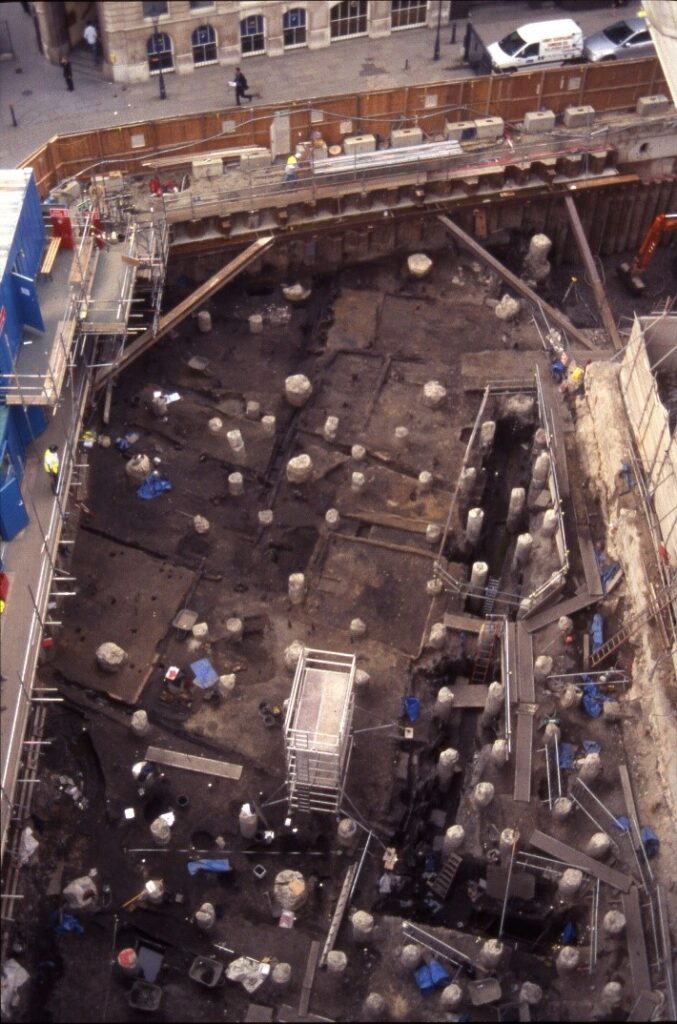
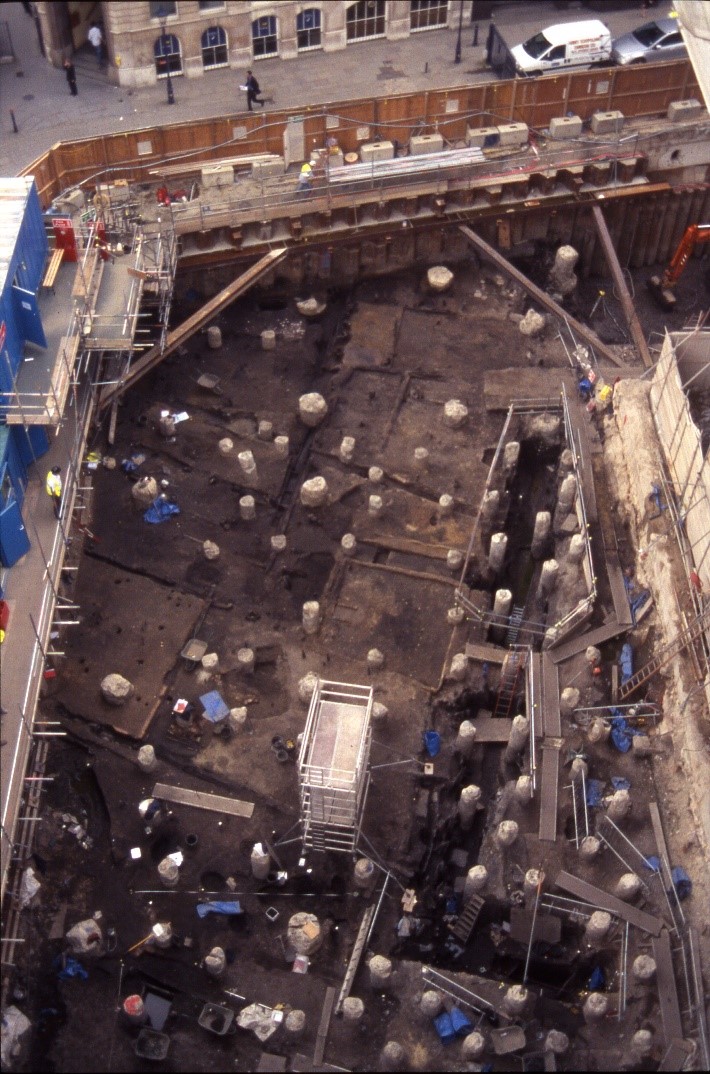
The archaeological investigations, comprising various watching briefs on enabling trenches and ground reduction and two distinct open area excavations, the eastern and southern portions of the site (Area A) and the western side of the site (Area B). The archaeological works were ‘dovetailed’ to interface with demolition and construction works and were subject to set timeframes. The logistics involved excavating areas of complex archaeology in tandem with the demolition of one of the tallest towers in London.
The site was located within an area of high archaeological potential in the Upper Walbrook Valley; evidence for one of the tributaries of the stream was recorded in the northwest of the site.
The investigations encountered multi-phase archaeological activity from the prehistoric to the post-medieval period across one of the most significant archaeological sites in the City of London. As the area was largely gardens for most of its later history the site had escaped widespread disturbance caused by 18th and 19th-century activity.
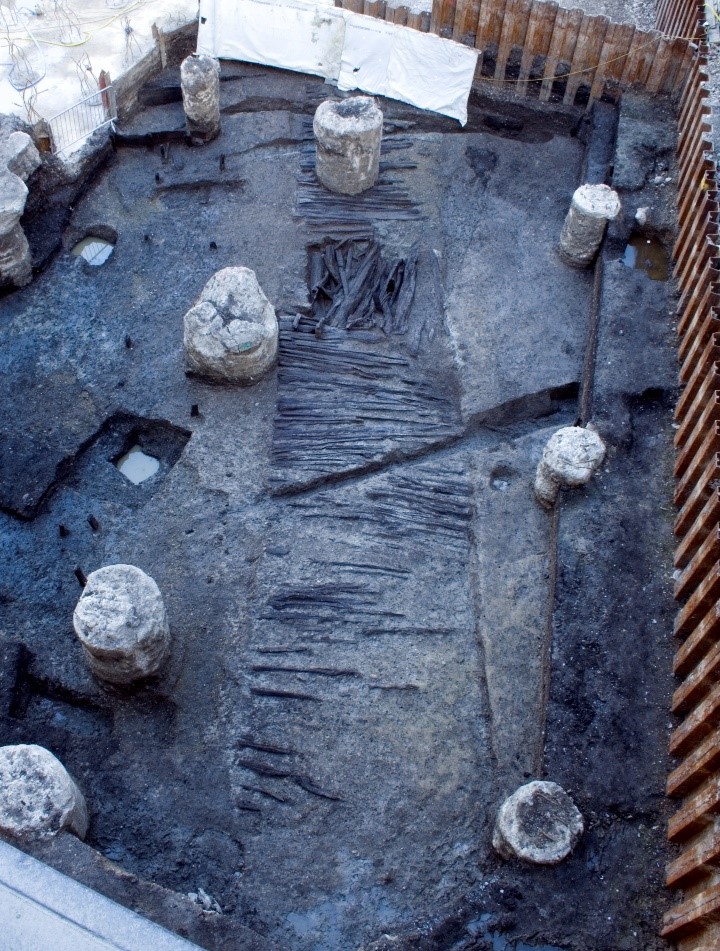
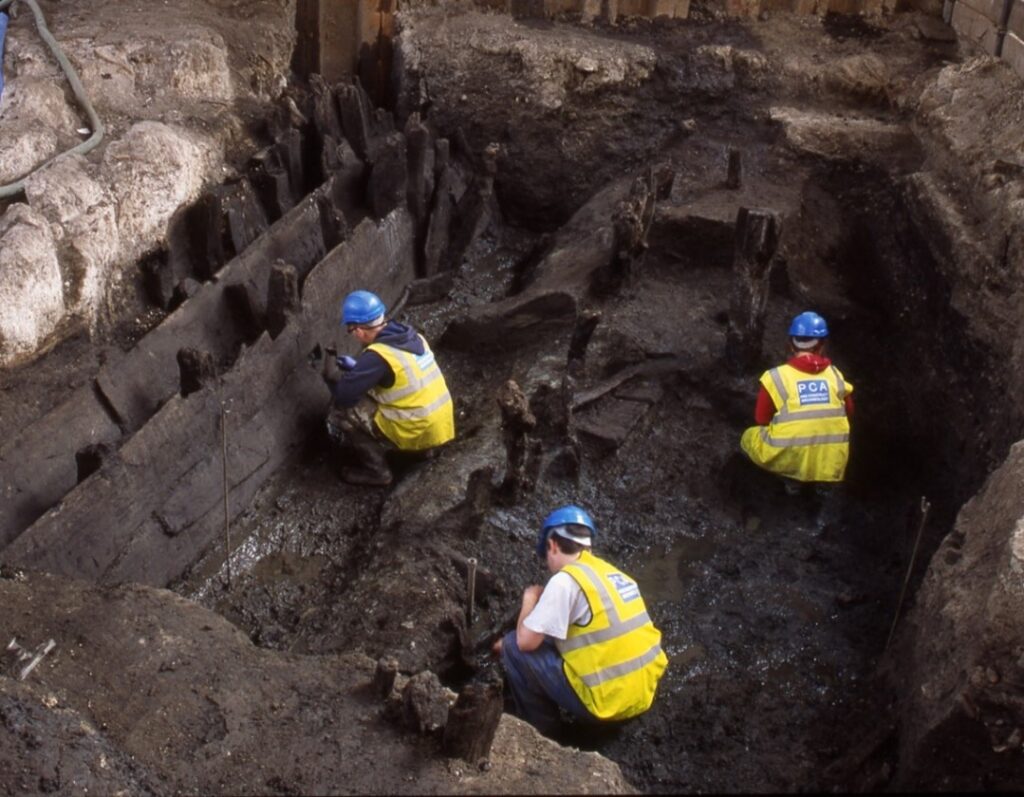
With the exception of the central part of the site in which all archaeological remains had been removed by the construction of the 1960s tower, a series of perfectly preserved Roman horizons were revealed. A Roman streetscape was recorded comprising a road, with revetted channels alongside, and numerous phases of buildings associated with and aligned to the road. Footbridges were identified crossing the channel from the buildings to the road, and the floor plans and layout of the Roman buildings were discerned.
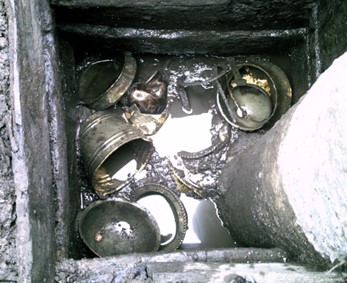
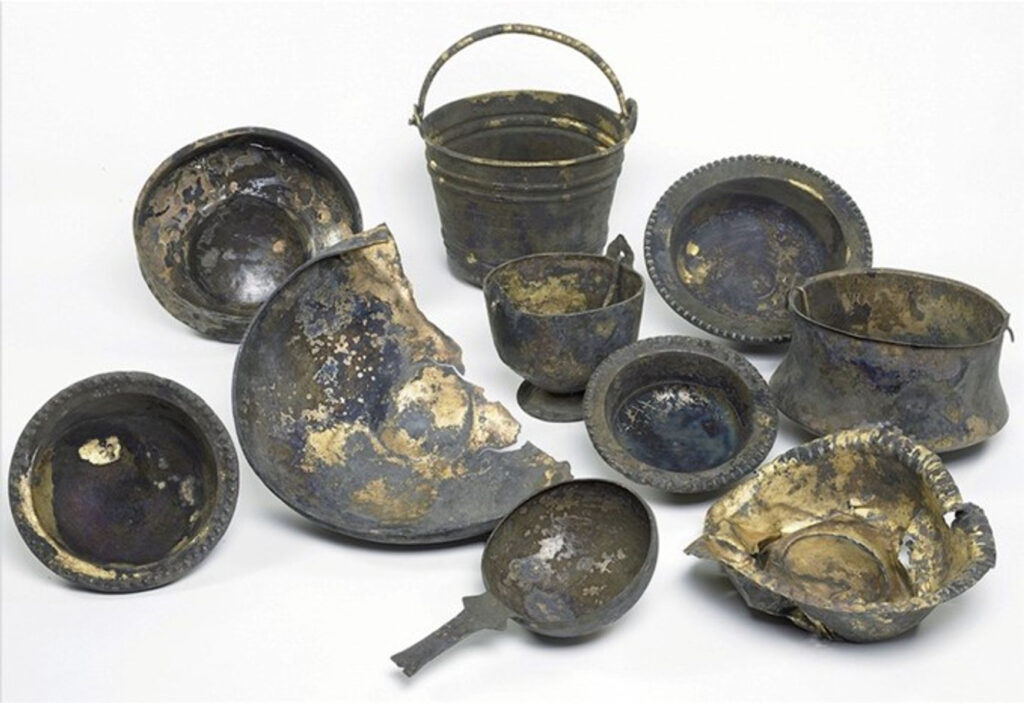
One of most significant aspects of the site was the large assemblages of artefacts that were recovered including pottery, animal bone, ceramic building material and leather. Such assemblages have the potential to provide significant information on the lifestyles, material goods, trade and diet of the inhabitants of Londinium. The well-preserved finds, including large numbers of metal and wooden objects, reflect important aspects of crafts and industries, and domestic household objects in daily use by these early Londoners. Pride of place was a hoard of metal vessels recovered from a late 4th-century well which is of national and international significance.
The findings from the site were documented in the press at the time and were the subject of numerous public engagement talks. They were documented in a popular book ‘Secrets of The Gardens’, published by PCA in 2009 and were also published in The London Archaeologist in the Autumn of 2009. They await the ongoing process of comprehensive academic publication in PCA’s award winning Monograph Series.