Fornham Park
Bury Saint Edmunds
Suffolk
United Kingdom
Map
Sorry, no records were found. Please adjust your search criteria and try again.
Sorry, unable to load the Maps API.
Description
PCA Norwich conducted an intermittent archaeological excavation on land at Fornham Park to fulfil a condition in a planning application for a residential development of luxury holiday lodges and associated infrastructure, over an area of 0.89ha area.
The Suffolk Historic Environment Record (SHER), revealed significant prehistoric remains within Fornham Park itself and in the wider environment, which included the site of the Abbot of Bury’s estate and an associated medieval settlement within the park itself. Nearby are the remains of the Church of St. Genevieve, albeit as a ruined 15th century tower, a Grade II Listed Building.
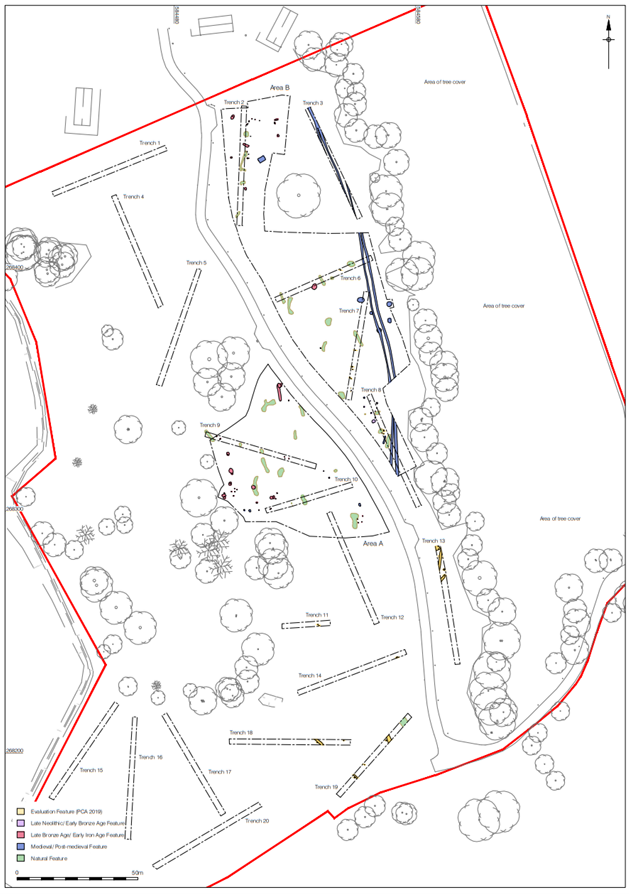
Following an informative metal detecting survey and initial programme of archaeological trial trenching, the excavations were located to target archaeological remains which held the most significance. The aims of the excavation were focused on a potential Bronze Age settlement that was indicated from the previous works, connecting it to wider themes of regional Bronze Age settlement patterns. To target these key locations, the excavation was divided into two irregularly shaped areas, to gather maximum archaeological information, whilst avoiding disturbance to the park’s infrastructure and natural features.
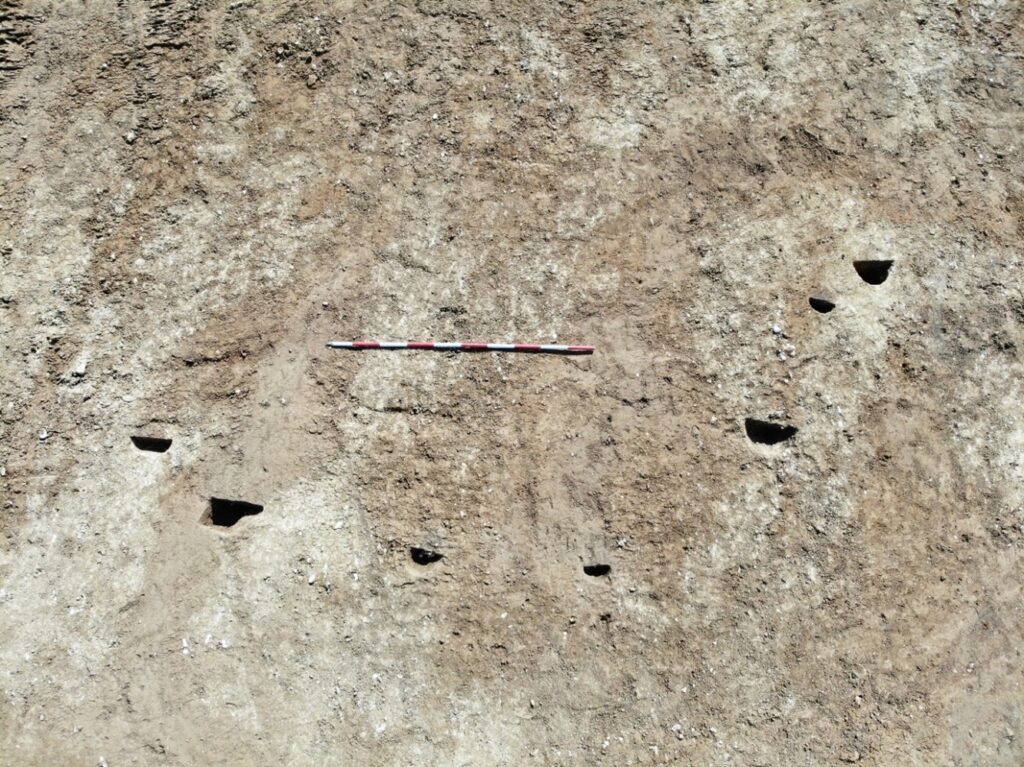
The excavations revealed scattered evidence for the end of the Palaeolithic and Mesolithic periods. Pits and postholes also suggest low-level, perhaps short-lived or seasonal, occupation in the Late Neolithic to Early Bronze Age (c. 2500–1700 BC). The principal discovery was of a Late Bronze Age (c. 1000–800 BC) dispersed settlement, represented within the excavation area by five, somewhat irregular, posthole structures and associated pits containing struck and burnt flint, pottery, animal bones, and other residues of domestic-type activity. Two deposits of burnt sheep, one interred in a large pottery vessel, appear to represent ritual activity. Whilst minimal material was recovered dated to the Medieval and post-Medieval periods, two parallel ditches found these likely formed boundaries associated with the village of Fornham St. Genevieve, which were infilled by the 18th century.
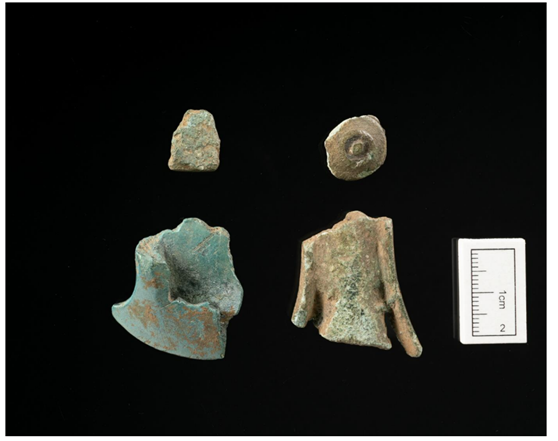
Given the significant nature of the prehistoric archaeological remains, a published article will be submitted to the journal ‘Proceedings of the Suffolk Institute of Archaeology and History’. Although relatively small in size, the key artefactual remains that were recovered greatly contribute to the wider understanding of Bronze Age settlement activity in East Anglia.