Lady Seaham Pit
West Rainton
County Durham
DH6 1BL
United Kingdom
Map
Sorry, no records were found. Please adjust your search criteria and try again.
Sorry, unable to load the Maps API.
Description
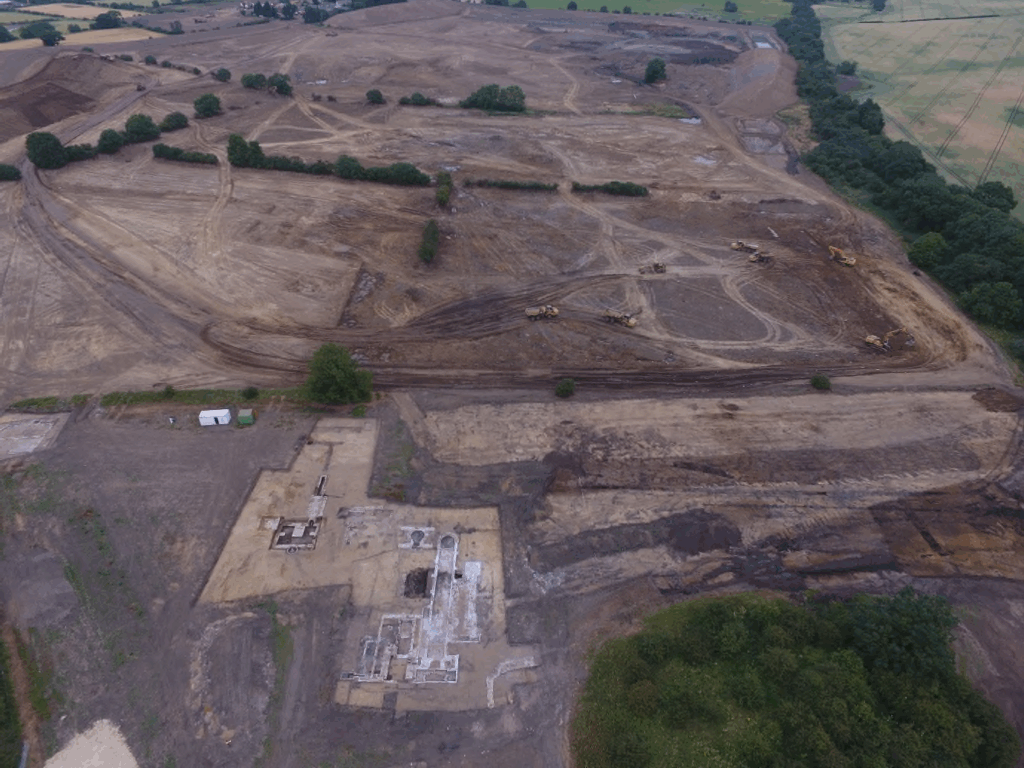
Pre-Construct Archaeology Ltd was commissioned by CgMs Consulting (now Tetra-Tech) on behalf of Hargreaves Surface Mining to undertake an archaeological investigation at Lady Seaham pit, a c. 52 hectare coal extraction site located c. 5.5km north-east of Durham City, to the south-east of West Rainton village, County Durham. The investigations took place between June and August 2018.
Lady Seaham Pit, established in the mid to late 1840s, is first depicted on the 1856 and 1861 Ordnance Survey maps which shows pithead structures included a building with internal mineshaft, reservoir, pumphouse and other structures. The pithead complex was later restructured, the reservoir and pumphouse were demolished and a large pithead building constructed. By 1896 the colliery had closed. A geophysical survey of the site undertaken in 2013 detected anomalies relating to 19th-century colliery workings and railways of Lady Seaham Pit, trial trenching established that no archaeological remains of significance were present across the majority of the site and no further archaeological mitigation would be required other than in the southern part of the site where well-preserved and extensive structural remains of the 19th-century colliery pithead and associated railway were located.
Two excavation areas targeted the 19th-century pithead and a further archaeological watching brief exposed the remains of the Lady Seaham Branch railway. Six trial pits were investigated at the locations of mineshafts shown on historic mapping.
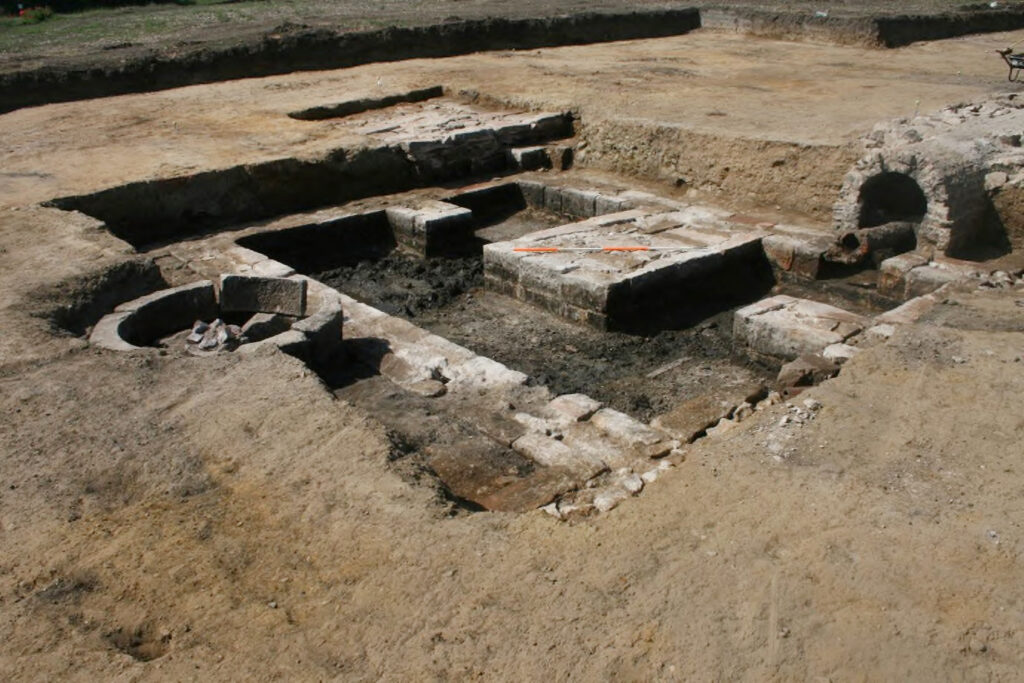
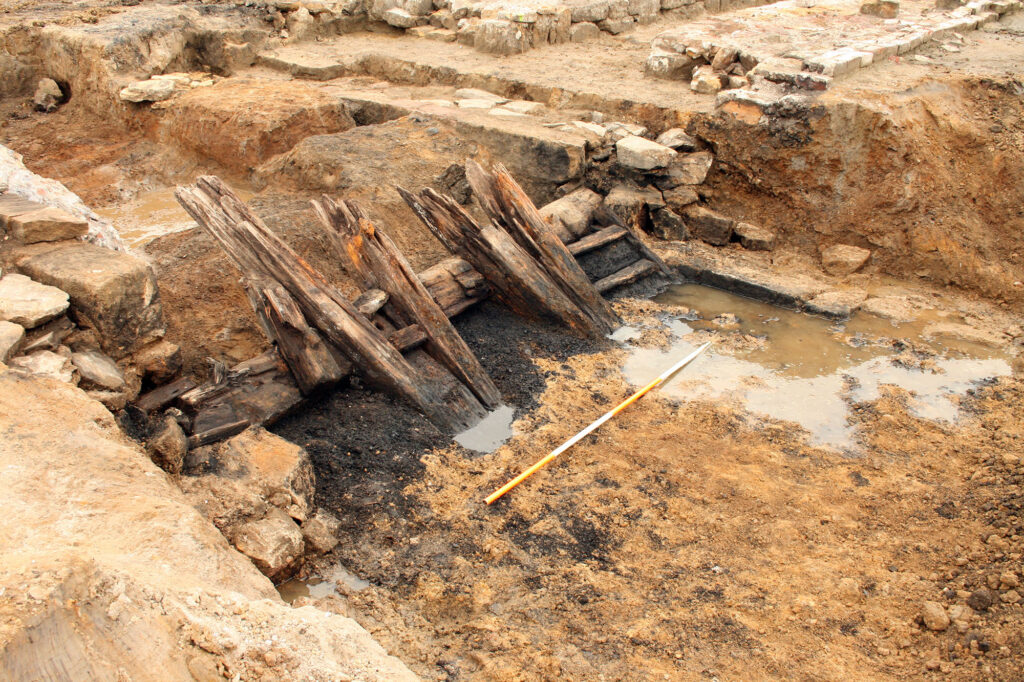
Archaeological remains included evidence of early agricultural activity predating the colliery along with activity representing the workings of the former colliery between 1840 and 1896. The earliest mining activity comprised a sandstone-lined incline shaft with timber supports for hauling tubs or wagons of coal from the lower workings of the mine, and associated trackside ditches to the east. Following demolition and backfilling of the incline, a pumphouse was constructed connected via a pipe to a substantial reservoir located to the north-west. Timber sleeper impressions of the Rainton & Seaham Railway (Lady Seaham Branch) were also encountered. By 1896, the pumphouse and reservoir had been demolished and the main pithead building was restructured. A second vertical shaft was added along with additional pithead structures relating to the headframe and winding mechanism of the mineshafts. The pit was abandoned by the late 19th century and the site was returned to agricultural use.
The results of the archaeological work were of considered to be of regional significance. They were presented at the Durham Archaeology Day and an article was published in Durham Archaeology Magazine and Durham Archaeological Journal to satisfy planning conditions.