Land at Anchor Lane, Ingoldmells
Ingoldmells
Lincolnshire
PE25 1LZ
United Kingdom
Map
Sorry, no records were found. Please adjust your search criteria and try again.
Sorry, unable to load the Maps API.
Description
Pre-Construct Archaeology Ltd Newark were commissioned to undertake a Strip, Map and Sample Excavation (SMS) in support of a planning application for residential development.
PCA undertook an evaluation in 2014 that targeted the results of an earlier geophysical survey. The work was required to comply with NPPF Section 12 and Local Planning Policy of East Lindsey District Council.
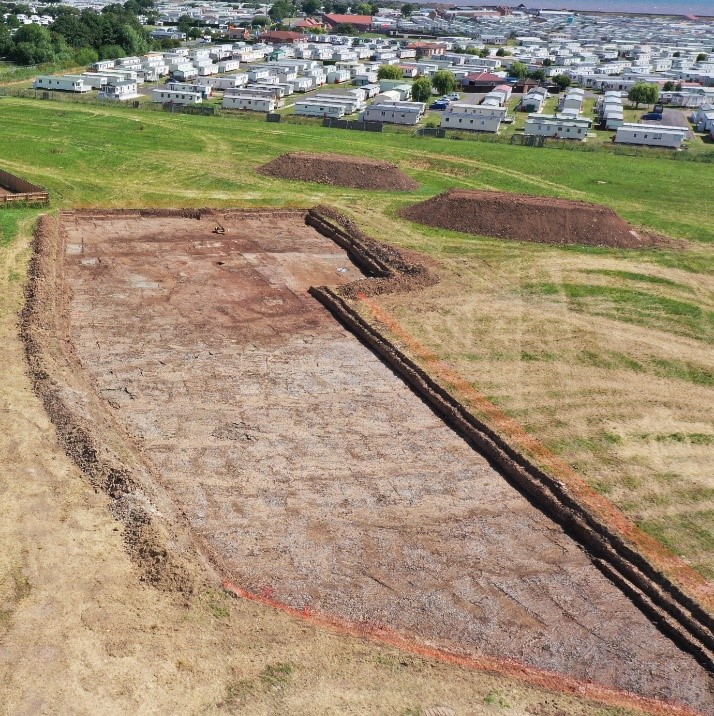
The SMS comprised three broadly rectangular areas of land covering a total of c.4500m2. The site was situated on level ground at roughly 2m above Ordnance Datum.
The site was thought to have a high potential for the survival of archaeological remains pertaining to the Iron Age and Roman extraction of salt industry, known as ‘salterns’. A field to the east of the subject site contained evidence of the saltern industry and finds included briquetage – clay trays used to evaporate brine – and ten other saltern sites are known in the area
The main aim of the SMS work was to reveal and plan all archaeological features surviving on the site particularly those related to the salt extraction and to define the structure, layout and chronological development of the Iron Age and Roman utilisation of the site and assessing the briquetage in relation to the techniques used.
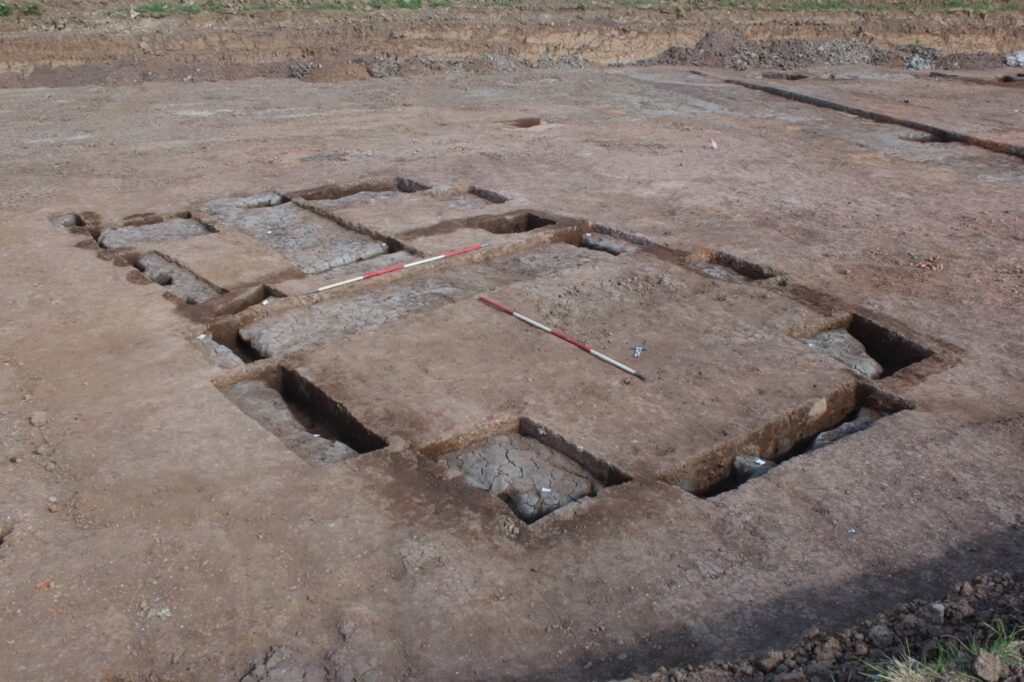
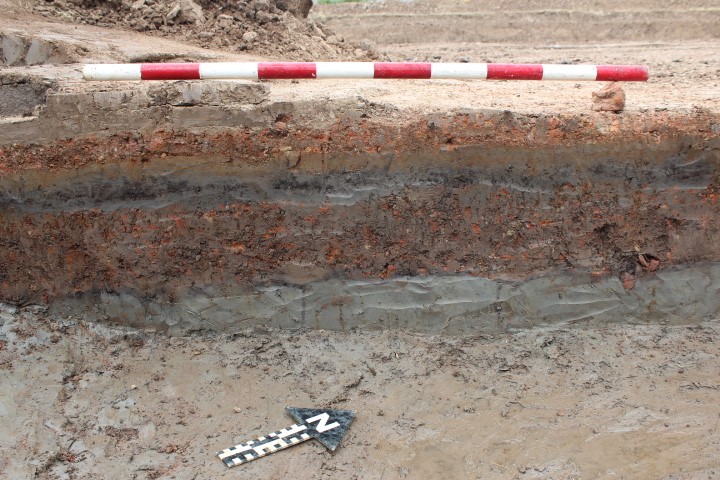
Evidence for the Iron Age/ Roman industrial production of salt was revealed across the site, represented by features, structural remains and deposits related to the process and frequent flooding events. These included inland creeks and water management features, settling tanks, hearths, heating structures and the waste briquetage layers themselves. The information gained from this archaeological exercise adds to the body of knowledge for regional salterns across the Lincolnshire marshlands, particularly in the vicinity of Ingoldmells. There is no need for publication of the results, which have added to our existing knowledge.