Larkstoke Manor
Admington
Warwickshire
CV36 4JH
United Kingdom
Map
Sorry, no records were found. Please adjust your search criteria and try again.
Sorry, unable to load the Maps API.
Description
PCA Warwick’s investigations began at the scheduled monument of Lark Stoke, Admington in 2018 and evolved into a whole suite of works as the clients’ requirements changed during their project to sensitively remodel a much-loved family home. The archaeological works were required to investigate the potential for heritage assets within the boundary of the Scheduled Monument and as a condition of planning relating to Grade II listed buildings. Communicating the advice and constraints received from Historic England to our clients and their other contractors was a key factor in the success of the project. It was satisfying to see the private clients’ trust in PCA’s professionalism and confidence in our expertise grow over the six-year duration of PCA Warwick’s involvement.
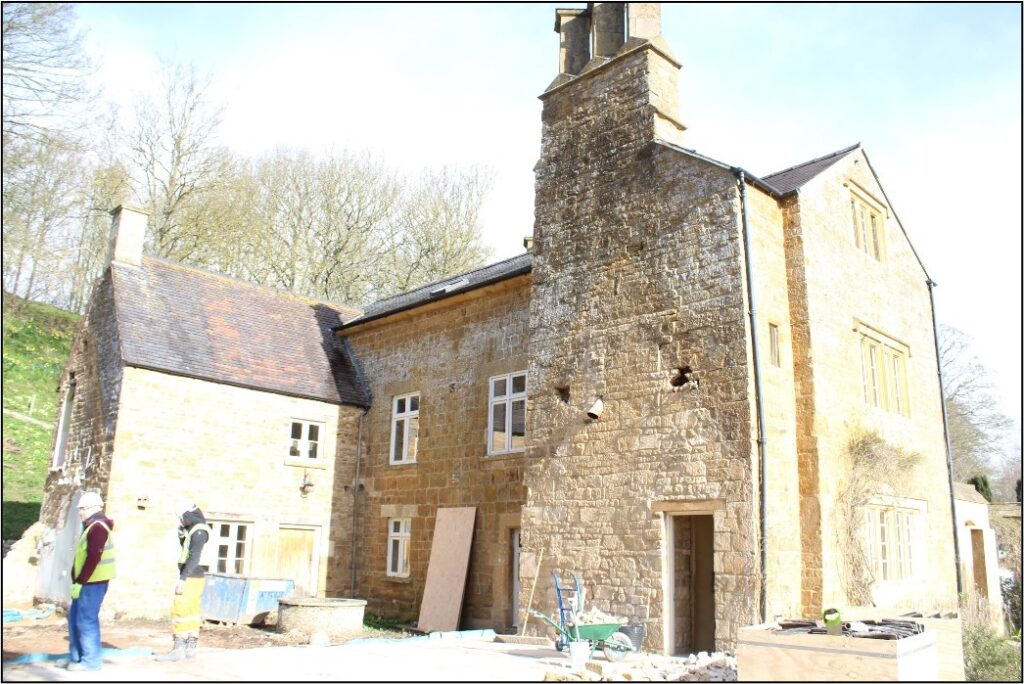
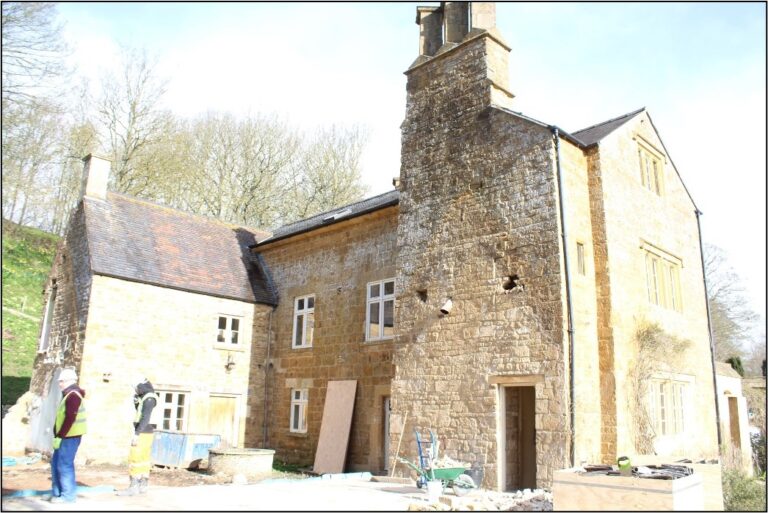
The clients’ home is an 18th to 19th century Cotswold Limestone building which not only preserves late 16th and early 17th century elements but is within an area designated by Historic England as containing the earthworks of a deserted medieval village and fishponds, with potential for an earlier medieval manor, a chapel and a cemetery. A Civil War siege, extensive 19th century garden terracing, a post-medieval dairy, and a rather unsympathetic 20th century steel, glass and concrete extension undertaken by former owners, were all part of the building’s story. The modern building was removed and replaced with something more appropriate, and the interior of the manor was remodelled to reflect the needs of a modern family.
PCA’s historic building recording and targeted opening-up works demonstrated that internal remodelling of the manor’s roof and parts of the ground floor had occurred in the 19th and early 20th centuries. This architectural assessment gave our clients a freer rein inside the manor than may have been the case. Outside, PCA reacted to the changing needs of the clients by utilising the full range of archaeological interventions including monitoring and recording of groundworks and repair of historic architectural features, hand excavated evaluation pits and archaeological sample excavation areas, as appropriate. This kept our attendance to only that which was strictly necessary and supported our clients’ other contractors in their delivery of timescales.
PCA’s work revealed no evidence for the earlier manor, the chapel or the cemetery, and only late medieval rubbish pits and a boundary ditch were recorded amongst the 19th and 20th century activity. The recording of the levels and locations of the archaeological horizon, where it survived, were reported on, and will provide a resource for our clients in the future. PCA’s involvement supported our clients in ensuring that the Manor was put to a viable use consistent with its conservation (a central pillar of planning policy relating to heritage and archaeology), and the integrity of the scheduled area was not compromised. When works were concluded in 2023 and appropriate reporting had been submitted, PCA were happy to have satisfied both Historic England and our clients, who were able to discharge the planning conditions and achieve their renovation goals.