Monksfield
St. Neots
Cambridgeshire
PE19 0AA
United Kingdom
Map
Sorry, no records were found. Please adjust your search criteria and try again.
Sorry, unable to load the Maps API.
Description
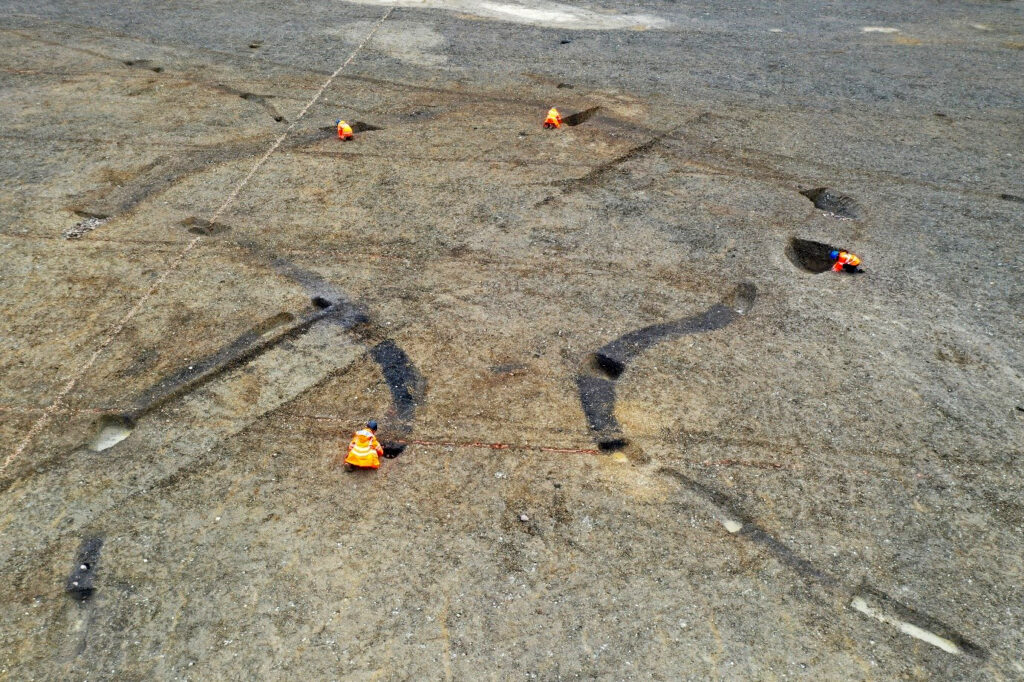
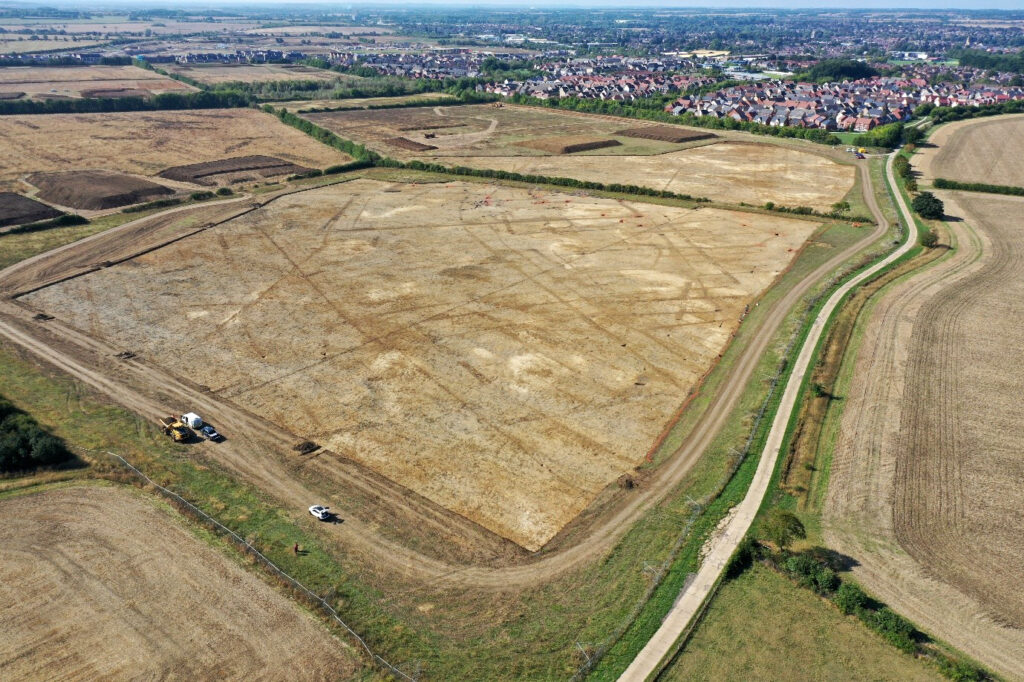
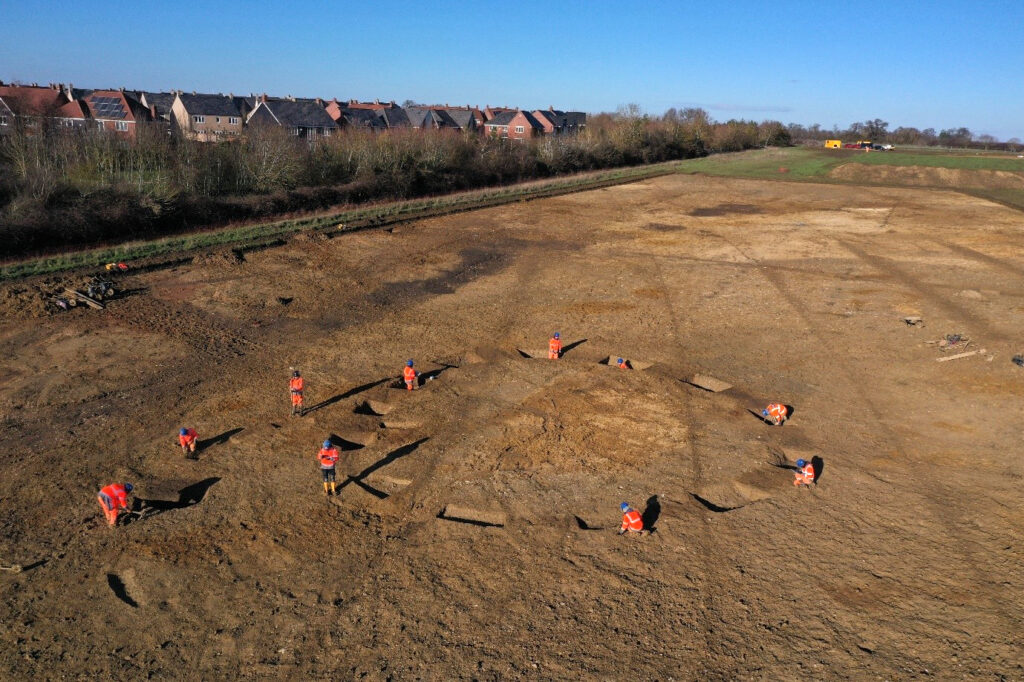
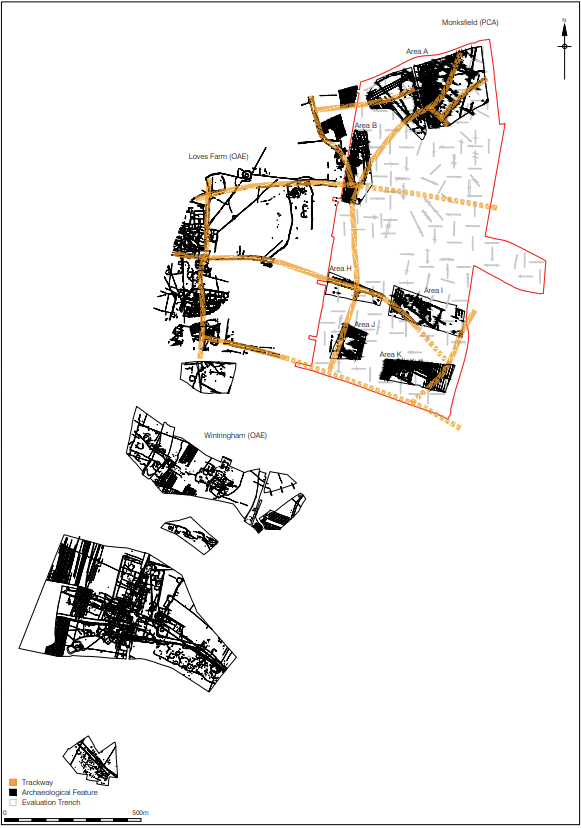
PCA Cambridge conducted an archaeological excavation comprising six excavation areas and five trenches and measured 18.9ha in size. The site was located to the east of the historic town centre of St Neots and investigations were conducted to enable the development of 1,020 residential dwellings and up to 7.6 ha of mixed uses, including a nursery, public house, hotel, primary school, and related infrastructure. These works followed extensive research into the site, comprising Air Photo Survey, Geophysical Survey, field walking and trial trenching, as well as the study of the neighbouring site (Love Farm West) located immediately to the east of Monksfield.
Prior to the main excavations, PCA conducted an archaeological evaluation comprising 176 evaluation trenches across an area of 68ha of gently sloping, south facing farmland which revealed areas of archaeological interest that were later targeted to provide a clearer picture of the archaeological potential at the site. The evaluation identified four well-defined settlements across the site. Three of these were short-lived occupations dated to the Late Iron Age period only, with evidence of occupation, animal husbandry and small-scale cultivation. The fourth, located at the most north-eastern extent of the site, commenced in the Late Iron Age period and continued into the Late Roman period.
Although no direct evidence of Late Bronze Age settlement activity was identified, remnants of routeways established during this period influenced how the landscape was utilised during the Middle Iron Age period and onwards.
Occupation at three of the four Late Iron Age farmsteads ceased by the end of the 1st century AD. The fourth farmstead located at the north-eastern extent of the site showed a continuous usage of the land until the end of the 3rd century AD but with some evidence for it extending into the 4th century.
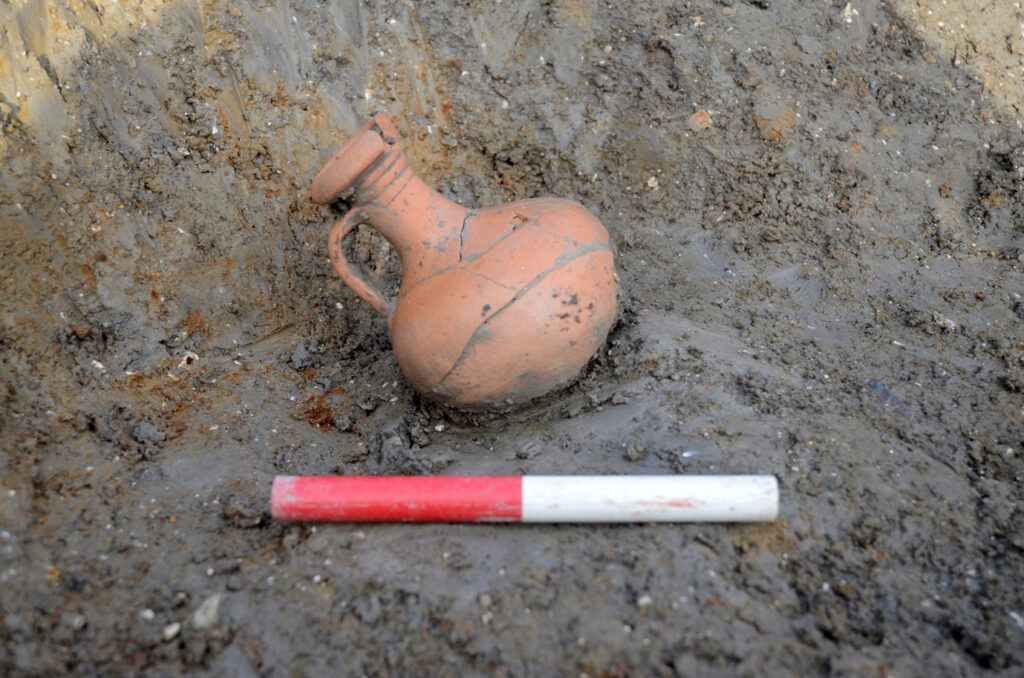
In addition, evidence for Early to Middle Saxon dated activity was also demonstrated with pottery dated to the period being recovered from a pits and a well.
Due to the varied and important findings from the excavations, multiple aspects of the works warrant further research and subsequent publications. Discussions between EDP, Cambridge County Council Historic Environment Team and PCA regarding the various aspects of the site including the Bronze Age origins of the site, interconnectivity between the settlements, the rural settlement spanning the Late Iron Age to middle Roman periods and the Saxon activity on the site will focus on the appropriate publication to catalogue the information learned during the excavations.