Nightingale Lane
Downham Market
Norfolk
PE38 9BG
United Kingdom
Map
Sorry, no records were found. Please adjust your search criteria and try again.
Sorry, unable to load the Maps API.
Description
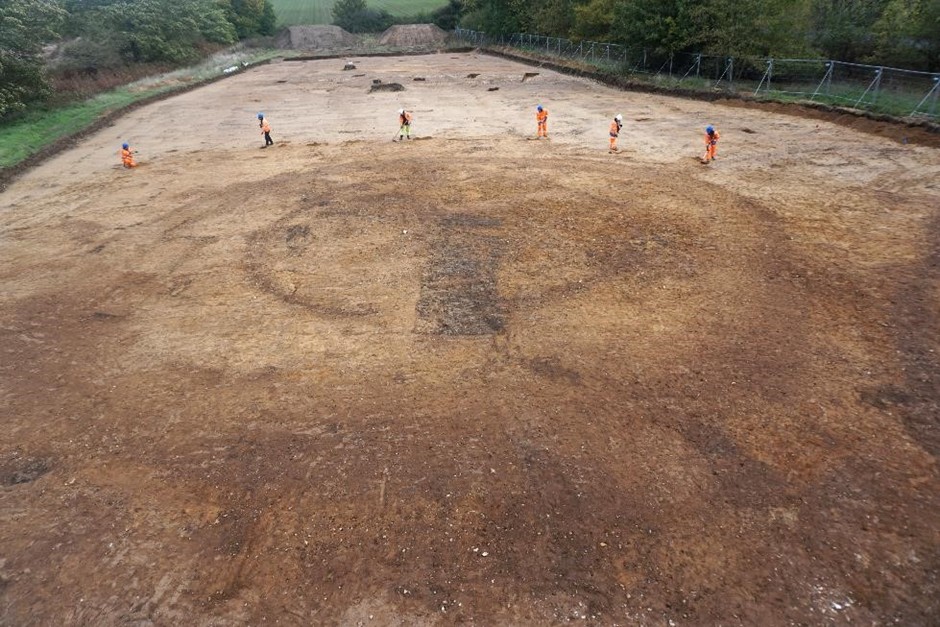
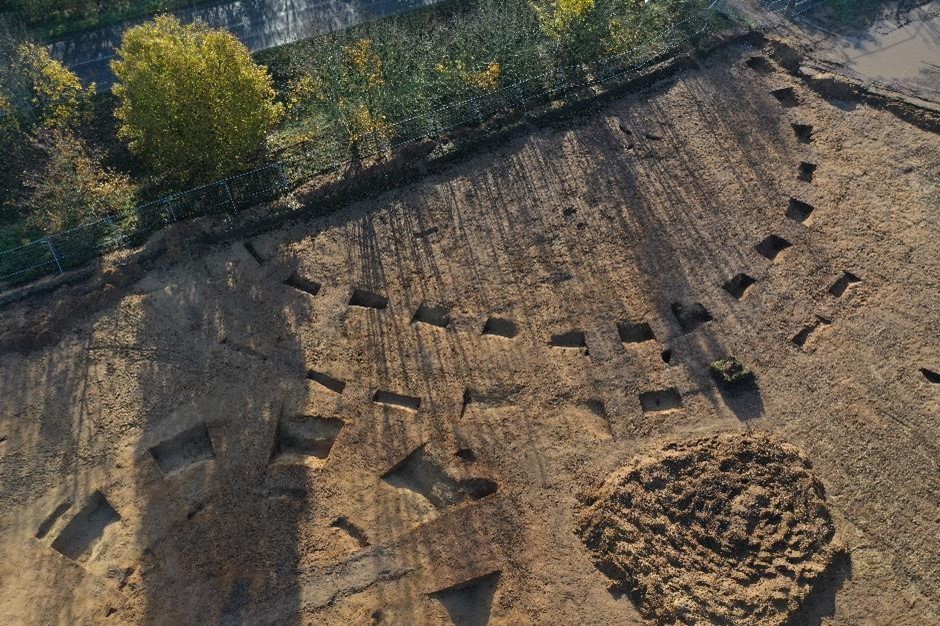
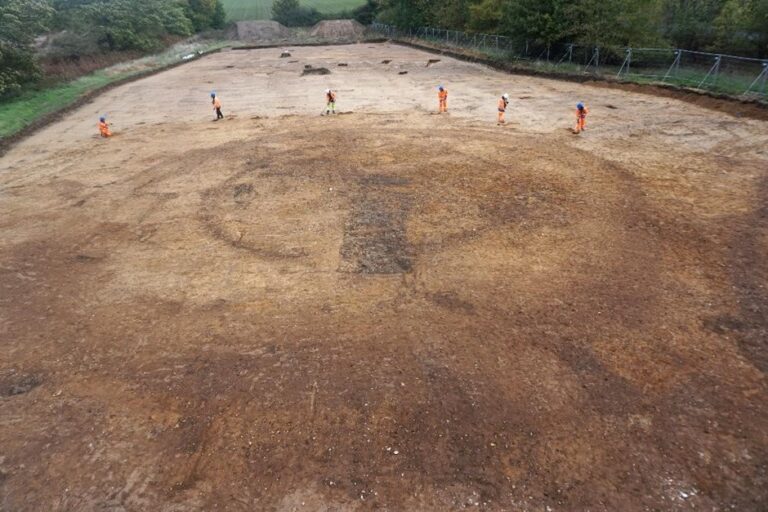
PCA Norwich was commissioned to undertake archaeological investigations to meet the requirements of a planning condition for the development of up to 300 dwellings, alongside associated infrastructure and access, on land at Nightingale Lane. The excavation were undertaken at two areas, roughly 1.8ha in size. The first area, 1.1ha in size, targeted previously identified Iron Age to Roman activity in the north of the site, while the second, an area of 0.7ha, centred on the location of the possible barrow in the south.
Extensive non-intrusive works were conducted on the site prior to excavation. Initially, a programme of fieldwalking and geophysical survey which was followed by two phases of trial trench evaluation, both undertaken by PCA. These works revealed evidence of a broad span of activity from the Neolithic to post-Medieval periods, with predominantly prehistoric activity (a possible Bronze Age dated barrow, and an Iron Age to Roman dated farmstead) identified on the site.
Excavations within the areas proceeded with careful consideration of environmental constraints. A known tree protection area between the two archaeological areas was surrounded by 10m buffer zones and, following site inspections, a possible fox den was identified in the south and subsequently demarcated until monitoring confirmed it had been abandoned.
Overall, the excavations confirmed the presence of the activity identified during the geophysics and trial trenching works and contributed further details to create a clearer understanding and timeframe of the activity on the site.
The earliest activity on the site is dated to the Neolithic period, comprising deliberately backfilled pits containing Grooved ware pottery. Additional Neolithic activity included a barrow monument that was identified as two pairs of concentric ditches (one inside the other) as well as three further ring ditch monuments. Dating for all of these features, interpreted as henge-like monuments, have been placed between the Late Neolithic and the Early Iron Age periods, with forthcoming radiocarbon analysis hopefully supporting the scarcity of finds from them. Cremations and an inhumation burial around these (and in one case truncating one of the ring ditches), suggests either contemporary or later reuse of the landscape for funerary activities. This follows the understood trend of Bronze Age burials being placed around earlier Neolithic and Bronze Age monuments, and perhaps placing this site within a wider ritual landscape at the margin of the fens.
Early Iron Age settlement activity was identified clearly respecting the earlier ring ditch monuments, with structures located nearby, but not truncating, the earlier features. Further Iron Age activity was observed in the form of numerous pit clusters, posthole structures, ovens and waste pits.
The establishment of an early Roman enclosure system was observed across the site, including a large well defined rectilinear enclosure, containing regular square sub enclosures that truncated earlier occupation. Settlement activities continued into the post-Medieval phase, with post-Medieval hayricks and wheel ruts being identified as well as later pits and two ditches that truncated earlier phases of archaeology.
With activity spanning numerous periods inclusive of the Late Neolithic to Early Bronze Age ring-ditch monuments, Early Iron Age pit activity, and the early Roman enclosures, the land at Nightingale Lane has been deemed of regional archaeological significance. To further understand settlement and funerary practices from the various periods present both here and wider in East Anglia, further specialist work has been recommended such as further finds analysis, absolute dating, and reinterpretation and integration of the trial trenching excavations. The findings from this site will be published in the county archaeological journal, ‘Norfolk Archaeology’, following the further research topics being addressed.