Olympic Park, Stratford
LB Newham
Greater London
United Kingdom
Map
Sorry, no records were found. Please adjust your search criteria and try again.
Sorry, unable to load the Maps API.
Description
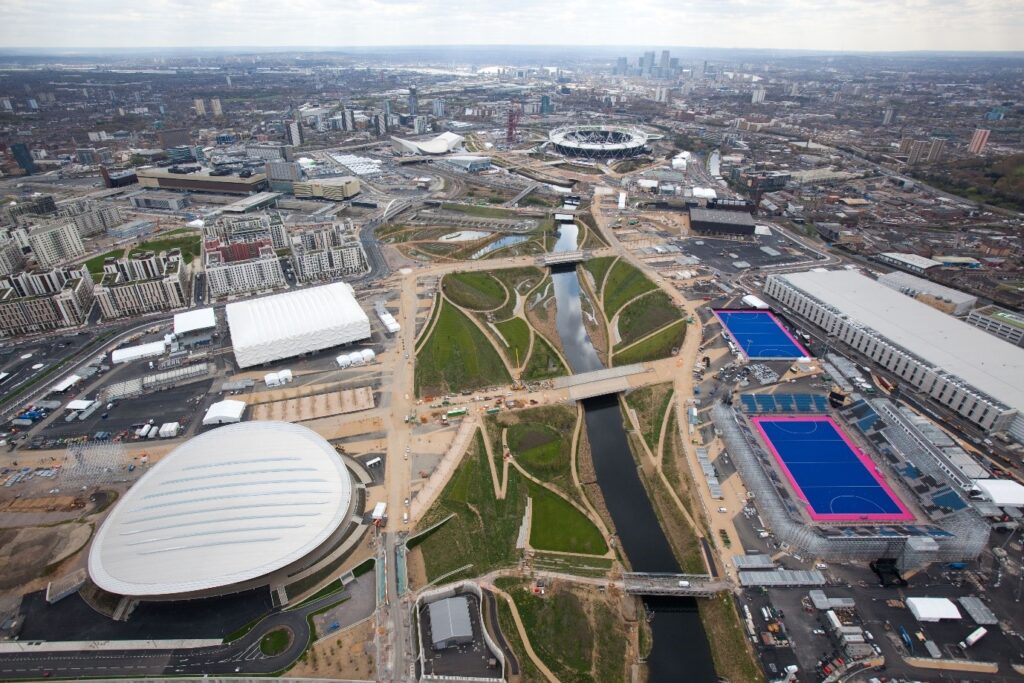
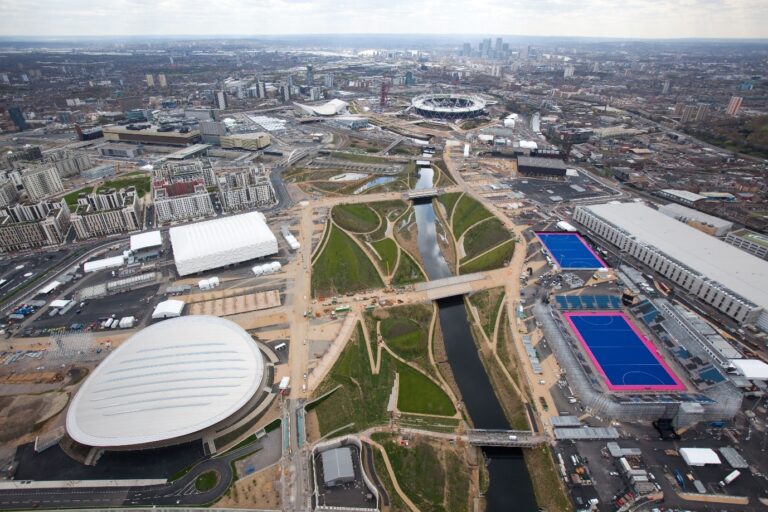
The development of the Olympic Park in Stratford, East London, was a large-scale regeneration project to transform an area of largely derelict post-industrial wasteland and deliver modern sporting facilities and venues as well as accommodation, retail and leisure facilities together with all the necessary transport and service infrastructure, for the 2012 London Olympics.
Pre-Construct Archaeology Ltd London (PCA) was engaged by the London Development Agency, to carry out archaeological works, in a joint venture with Museum of London Archaeology Services (MoLAS), on sites across the Olympic Park. Thes works included evaluations, mitigation excavations and historic building recording of elements of industrial heritage, especially those associated with the early development of the River Lea Navigation and other waterways, and defensive structures of World War II date
The Olympic Park lay in the lower Lea Valley, which from the end of the last Ice Age in around 10,000 BC, until the industrialization of the area from the 19th century onwards, was occupied by the main course of the River Lea and braided tributaries, surrounded by marshland. The area would have been rich in wetland resources, providing opportunities for hunting, fowling, fishing and resource gathering. Areas of higher ground, likely to have remained mostly dry, appear to have been occupied for much of the prehistoric period.
There was limited evidence for Roman occupation and the major focus of medieval activity in the area was to the south-east, and outside of the Park’s boundaries, where, in the 12th century, the Abbey of Stratford Langthorne was founded. Industry was a significant part of the abbey’s income, based on its possession of several watermills on tributaries of the main course of the Lea.
In the post medieval period the site largely remained open land until the 19th century, when industrial development began. The oldest extant structural remains date to the improvement schemes of the 1850s, which upgraded both medieval millstreams and natural rivers and created a single controlling body for the Lea Valley waterways, called the Lea Conservancy Board. The proximity of the Lea Navigation led to the area becoming heavily industrialized from the 1860s onwards. By the 1960s however most of the factories had gone out of use and the area was utilised by small businesses such as car repairs and light industry.
The Olympic Park development area was divided into 15 project delivery zones (PDZs) and the project design for archaeology comprised 5 phases; detailed desk-based assessments for each PDZ, field evaluation including built heritage recording, archaeological mitigation fieldwork, site wide post fieldwork assessment, and finally analysis, research and publication / dissemination of the results.
In all, over 100 evaluation trenches were excavated across the PDZs, which led to a further 8 mitigation excavation trenches being opened. Features dating from the Neolithic, Bronze Age and Iron Age / Romano British periods were revealed, as well as the Saxon / early medieval periods. Post medieval features dating to the industrial exploitation of the river system were also revealed by the excavations.
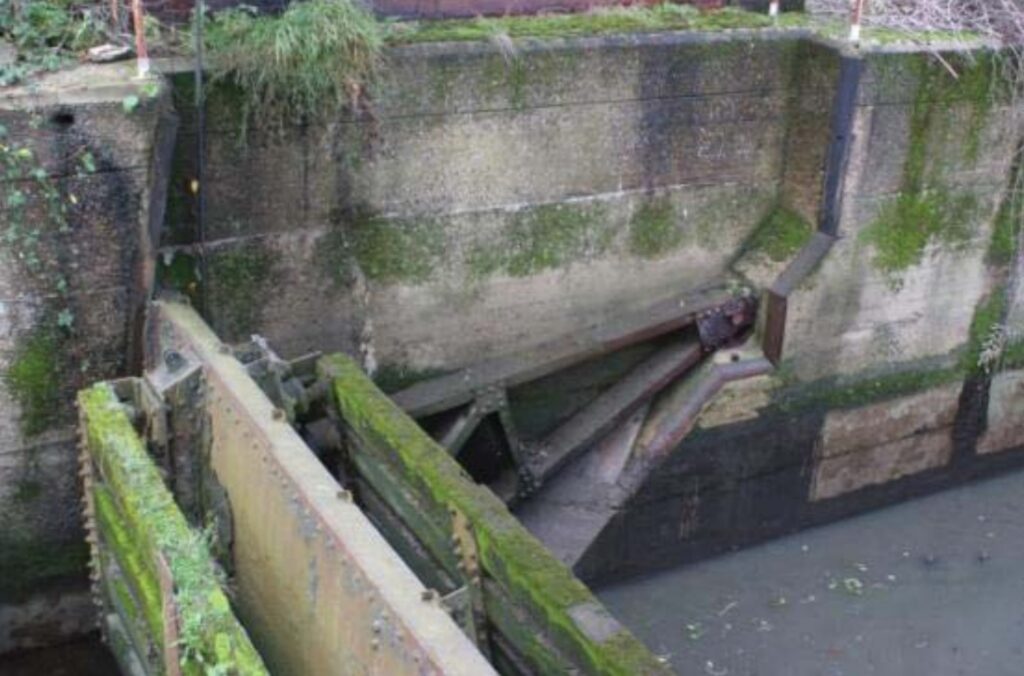
The historic building recording included documenting the various locks and associated structures along the Lea and its tributaries.
Surviving lock mechanisms from the late 19th century and early 20th century included the remains of innovative radial lock gates at Carpenter’s Lock, a solution to the discharge of floodwater as well as managing canal traffic.
The results from the archaeological investigations at the Olympic Park demonstrated human activities and interventions over an extended timeline. The investigations ensured not only a better understanding of the human exploitation of the river and its environment, but also that a unique industrial heritage was properly recorded for posterity.