Painted Hall, Old Royal Naval College
Greenwich
Greater London
SE10 9NN
United Kingdom
Map
Sorry, no records were found. Please adjust your search criteria and try again.
Sorry, unable to load the Maps API.
Description
The Painted Hall and Undercroft of the Old Royal Naval College, Greenwich, is part of a World Heritage site and is a Scheduled Monument, with the current building complex dating from the late 17th century although the site itself has possibly been occupied by royal buildings since late Saxon times.
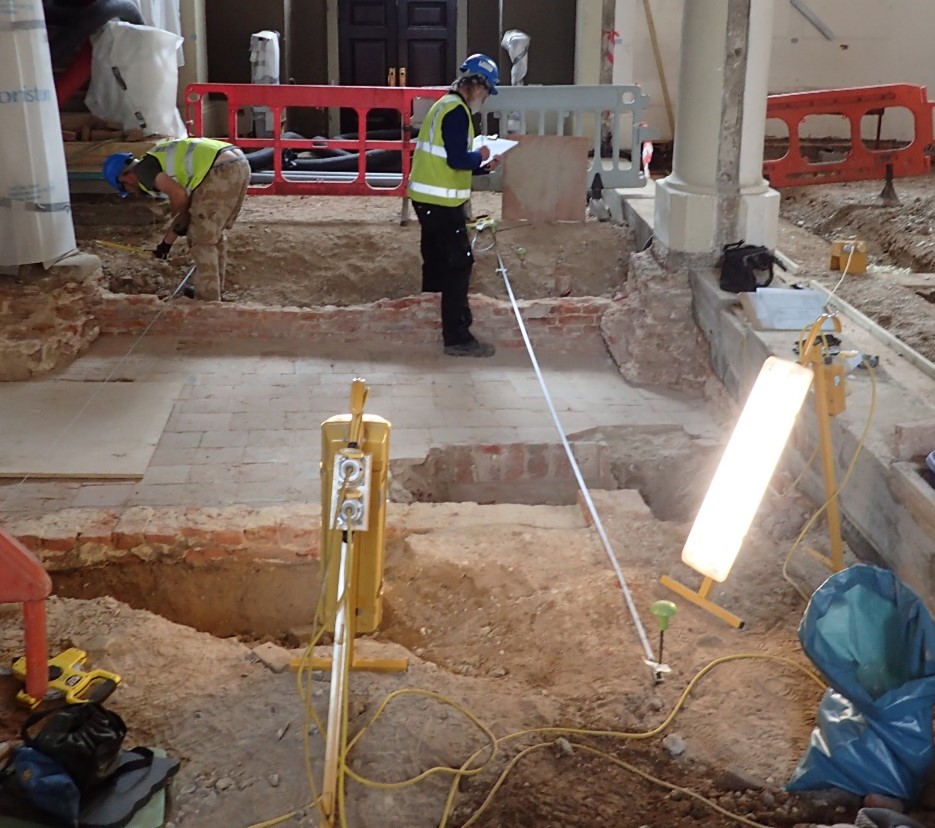
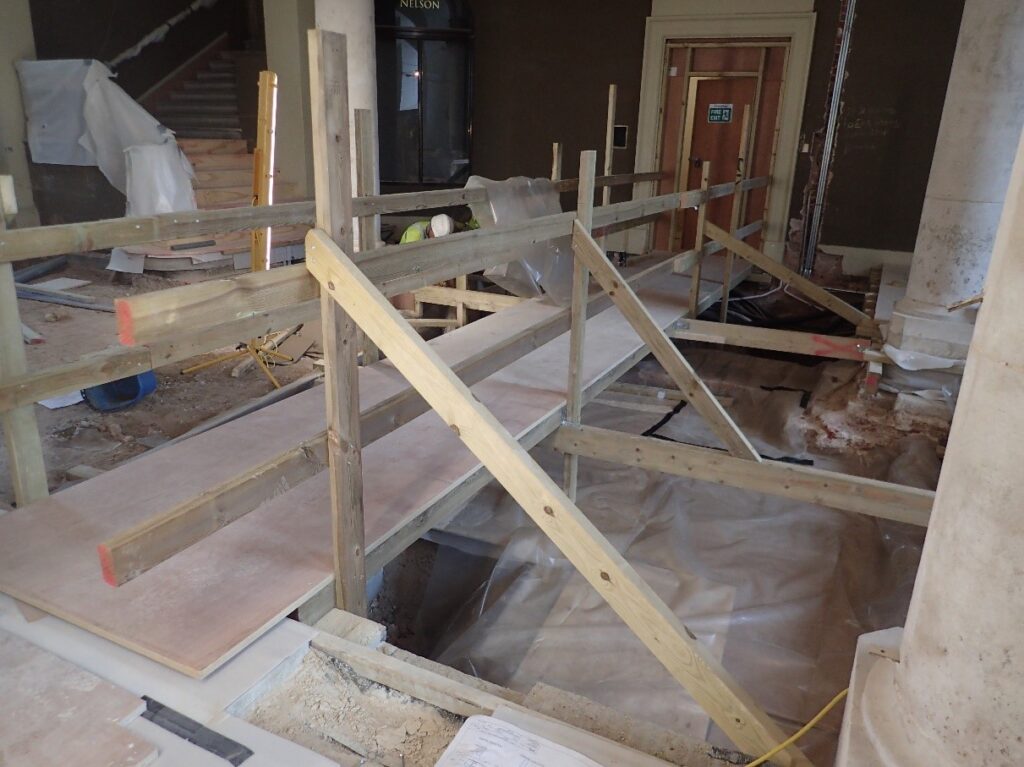
The project involved the removal of the undercroft’s modern floor surfaces and the excavation of trenches for new drainage and other infrastructure, including two lift shafts, necessary to improve access and enhance the visitor experience of the building.
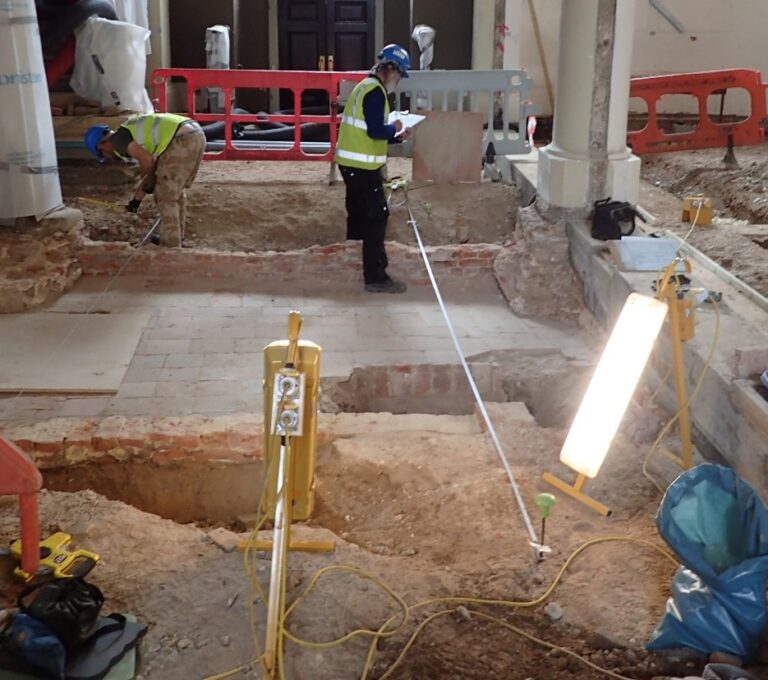
Pre-Construct Archaeology Ltd London was engaged to monitor works and investigate archaeological features and deposits exposed as part of the improvement works.
The works comprised 15 discrete areas, one of which became the subject of a controlled excavation due to the discovery of sensitive Tudor remains associated with the Royal Palace of Greenwich. These remains, below the floor of the Undercroft, were preserved in situ and are now on public display.
The unique nature of the site and its importance as a Scheduled Monument forming part of a World Heritage Site required a sensitive and careful approach drawing on the experience and expertise of excavation and specialist staff at PCA in close cooperation with staff at the Old Royal Naval College, Historic England, and specialist contractors undertaking the works.
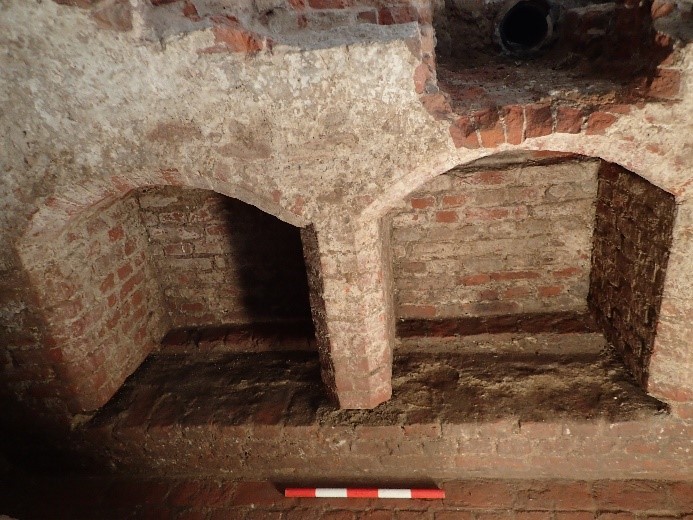
The earliest remains took the form of two probable Tudor-period bee cellars and an associated part-sunken cellar of uncertain function that together were housed within a rectangular outbuilding. The building may correspond to one illustrated on the Wyngaerde Panorama of 1558.
The ceramic building materials used in its construction indicate it was built between 1515 and 1550, probably after the suppression of the monasteries and the death of Henry VIII in 1547.
Medieval and Tudor-period ‘bee boles’ take the form of eight small alcoves built into internal or external walls in which wicker skeps (a form of hive) were placed. They typically possess a recess for a shelf as seen in the alcoves uncovered below the Undercroft. Although their survival is extremely rare, similar examples are known from other locations.
The archaeological watching brief demonstrated that this section of Greenwich Palace was probably demolished in the early 1690s to make way for the Painted Hall. A levelling layer of sand was deposited before the foundations of the hall were built in 1694–6, into which the foundations were dug. The foundations themselves were dominated by bricks manufactured between 1600 and 1800, however bricks that more usually post-date 1700 were also found, which suggests that innovative materials were used in this construction project.
Evidence of repairs and alterations to the Painted Hall were also identified, which probably post-date its conversion into the Royal Naval College in 1873
The preservation and public display of the structures revealed below the Undercroft represents a relatively rare opportunity to engage directly with the wider audience for the results of archaeological investigations.