Princess of Wales Memorial Fountain
London
Greater London
W2 2UH
United Kingdom
Map
Sorry, no records were found. Please adjust your search criteria and try again.
Sorry, unable to load the Maps API.
Description
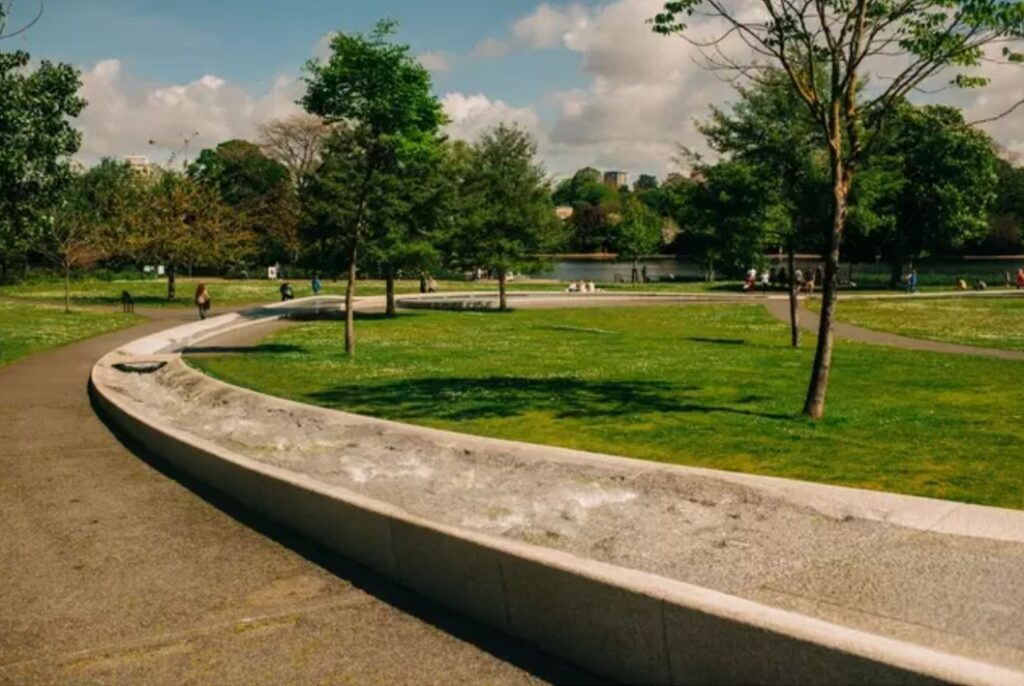
A commemorative fountain to the memory of Princess Diana, designed by Gustafson Porter + Bowman and opened by HM the Queen in 2004, now occupies a prominent position in Hyde Park in central London.
The park, recorded in the Domesday Book as part of the Manor of Hyde, was the property of Westminster Abbey, and provided an income from agriculture, hunting and fishing. Following the Dissolution of the Monasteries in the 16th century, the land was enclosed as a deer park. It became crown land in the late 17th century, and was extensively landscaped from the 18th century onwards, including the creation of the Serpentine Lake.
Pre-Construct Archaeology London was engaged to undertake archaeological investigations at the location of the proposed memorial fountain. The site lay in a busy public area of the park, requiring particular attention to making sure the site was secure, in liaison with the Royal Parks Police, and ensuring excavated trenches were not left in a hazardous condition. The work also required a professional public face to the excavations to respond to interest from the public.
The archaeological investigations provided some evidence for later prehistoric activity which was superseded by multi-phase Roman occupation from the early to mid-2nd century to the 4th century AD. This included large quarry pits, as well as smaller pits, postholes and enclosure ditches. Whilst the majority of features produced high concentrations of cultural material, the finds recovered from the 4th-century enclosure ditch were particularly striking, and included large concentrations of building material, providing tantalising evidence of a building in the immediate vicinity. That this occupation was at least in part domestic was suggested by the nature and quantity of the associated pottery. As such, the site provided important evidence of a Roman settlement in London’s rural hinterland in an area where previous archaeological intervention has been minimal.
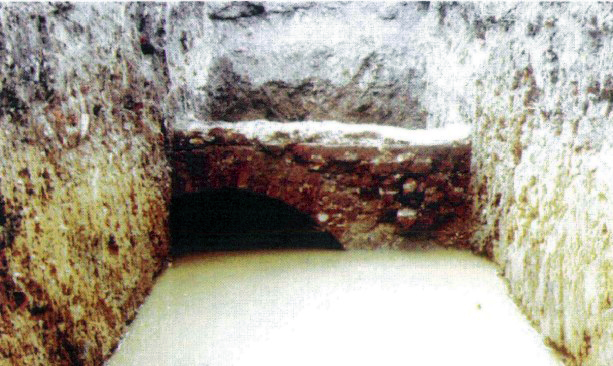
The investigations also revealed evidence of an early 18th-century decorative bastion and associated ha-ha which formed part of a landscape garden feature separating the formal Kensington Gardens from Hyde Park.
The excavations added significantly to the history of the park and were able to confirm the precise location of the original garden boundary of Kensington Palace. The results have been published in Volume 57 of the Transactions of the London & Middlesex Archaeological Society (2006).