Somerset House
Westminster
Greater London
WC2R 1LA
United Kingdom
Map
Sorry, no records were found. Please adjust your search criteria and try again.
Sorry, unable to load the Maps API.
Description
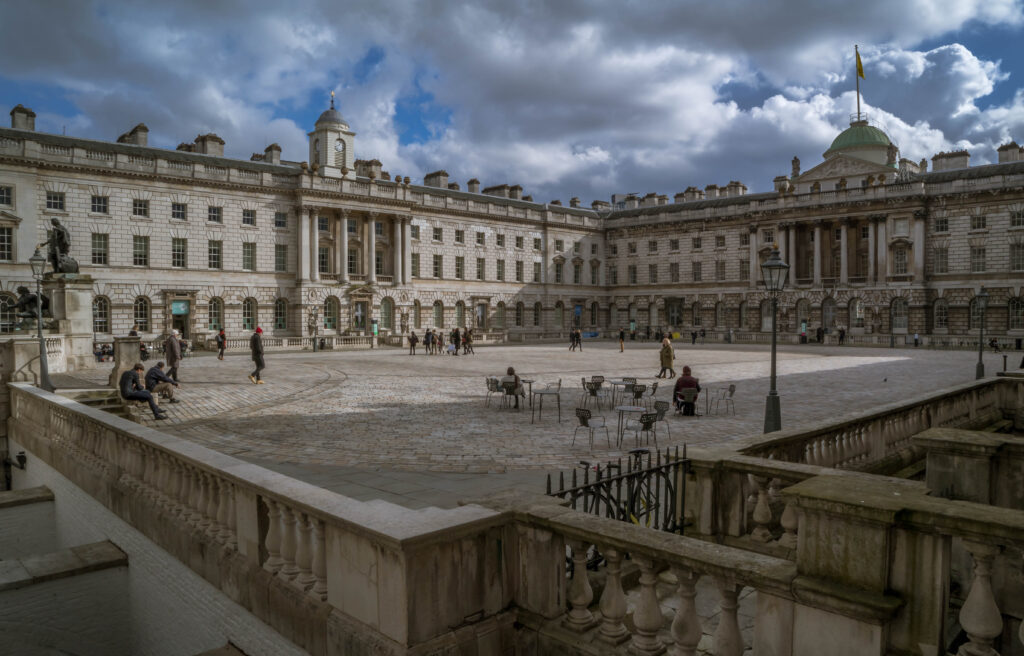
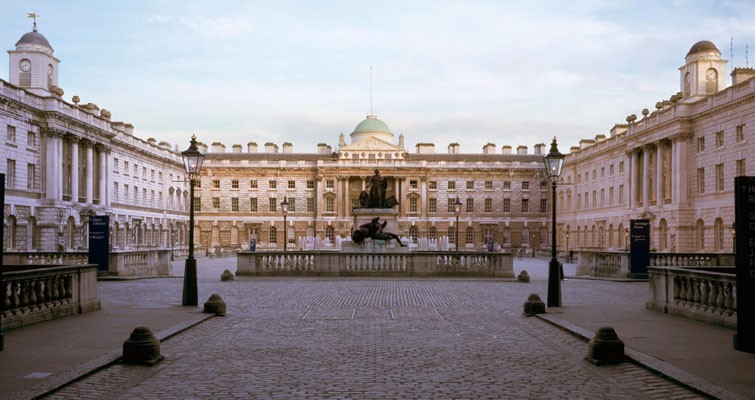
Somerset House in Westminster is a Grade 1 listed building dating from the 1770s but overlying the site of a Tudor palace, itself built over demolished medieval buildings. The location itself is in the heart of the Saxon settlement of Lundenwic.
PCA London was commissioned in 2010, to conduct historic building recording and undertake an archaeological watching brief on ground reduction in the basement and refurbishment works in the east wing of the building.
The watching brief involved continuous and effective liaison between the groundworks company and the PCA Project Manager and Supervisor, to enable efficient archaeological investigation and recording of the identified remains, whilst having minimal impact on the groundworks programme.
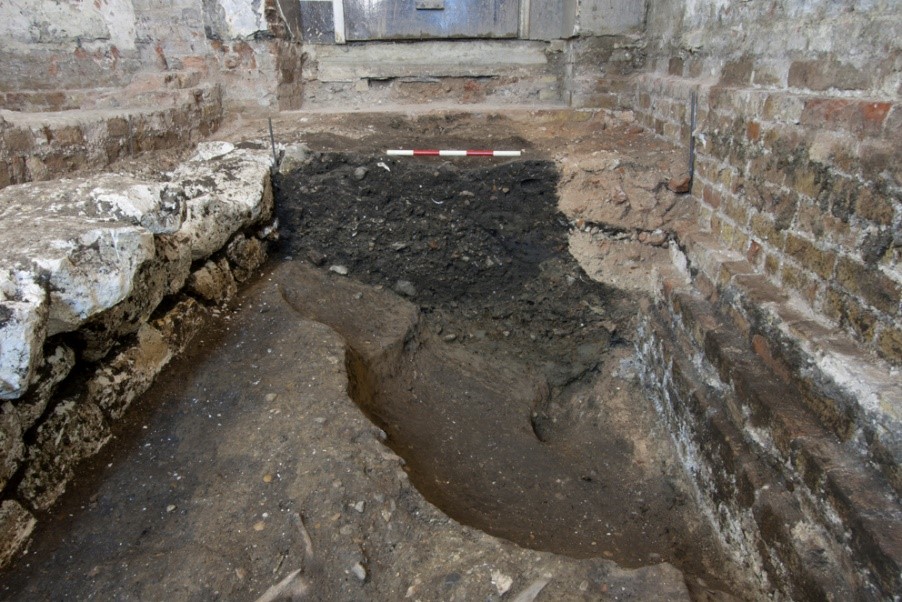
The excavation recorded evidence for activity from the Saxon period to the 19th century. Middle Saxon deposits and refuse pits confirmed that the site lay within the settlement of Lundenwic. Subsequent medieval levelling deposits and pitting illustrated continuous peripheral activity on the site. The levelling horizon contained residual Roman building material hinting at Roman activity in the vicinity. One of the Saxon pits contained a rich collection of finds including pottery fragments which dated to the Middle Saxon period, AD 600–800 and six fragments of loom weights.
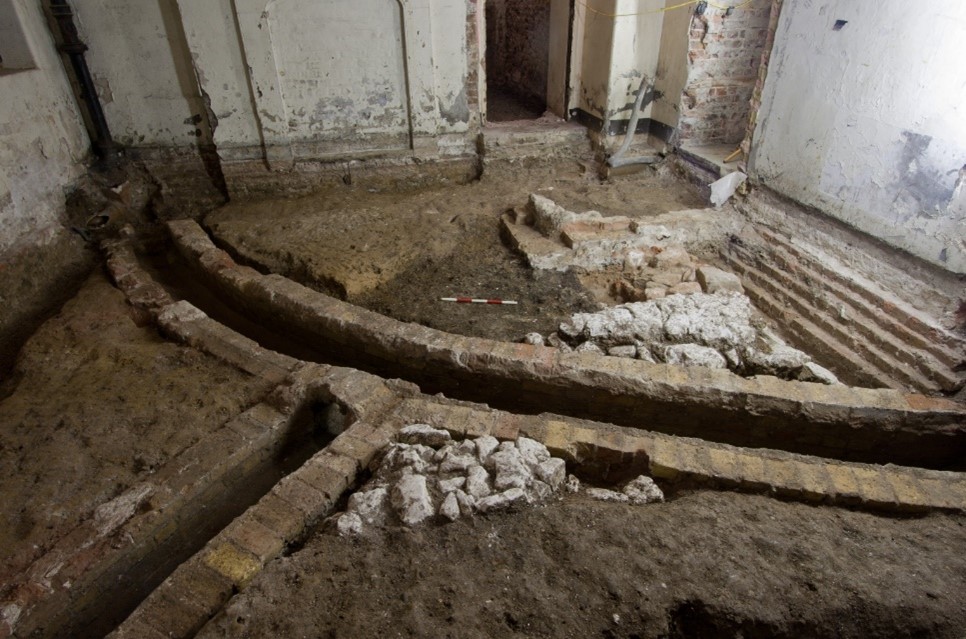
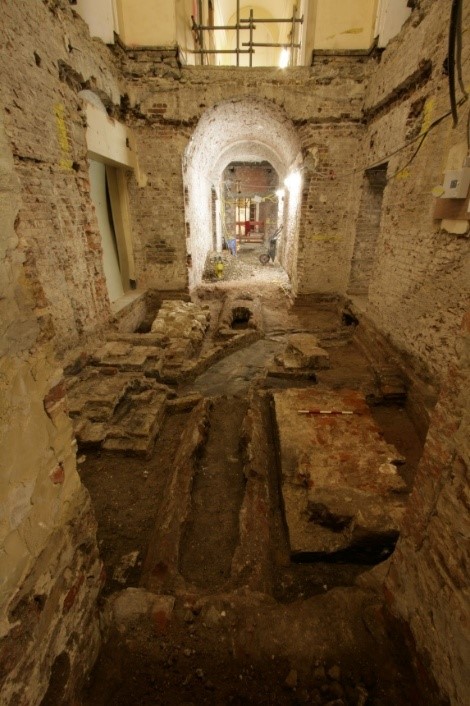
Masonry foundations relating to the mid-16th century Tudor palace of Somerset House were encountered throughout the east wing. Further masonry foundations of a later date may represent Stuart alterations initiated by Anne of Denmark during her occupation of the palace. The late 18th century saw the Tudor palace demolished and the new purpose-built government offices constructed on the site, the Grade I Listed Somerset House.
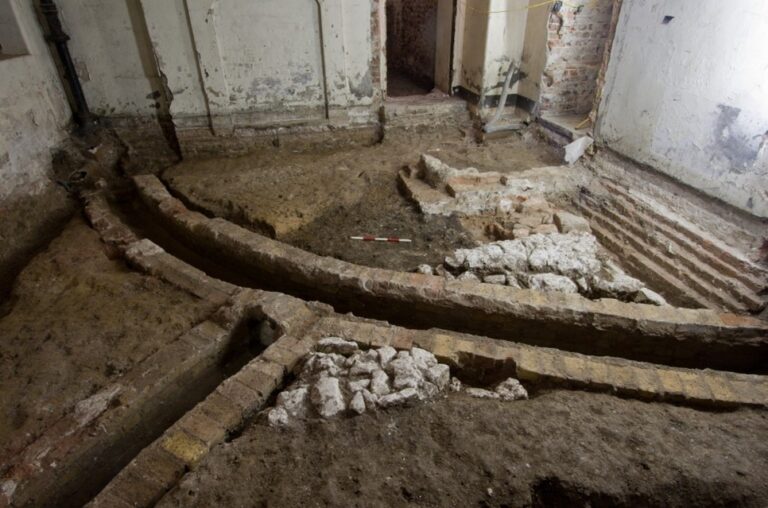
Amongst features relating to the construction of the new Somerset House were an extensive network of under-floor drainage culverts. In the 19th century a network of interconnecting brick flues; their purpose has not yet been unidentified.
Public outreach from the site took the form of updates issued to Kings College, which published an article on its own website during the excavations. One section of medieval chalk wall foundation was preserved below a glass viewing floor within Kings College and the results of the archaeological investigations have been published in the Transactions of the London and Middlesex archaeological Society, vol 67 (2016), see: 133_182_Somerset_House.pdf