Staffordshire Records Office
Stafford
Staffordshire
ST16 2ND
United Kingdom
Map
Sorry, no records were found. Please adjust your search criteria and try again.
Sorry, unable to load the Maps API.
Description
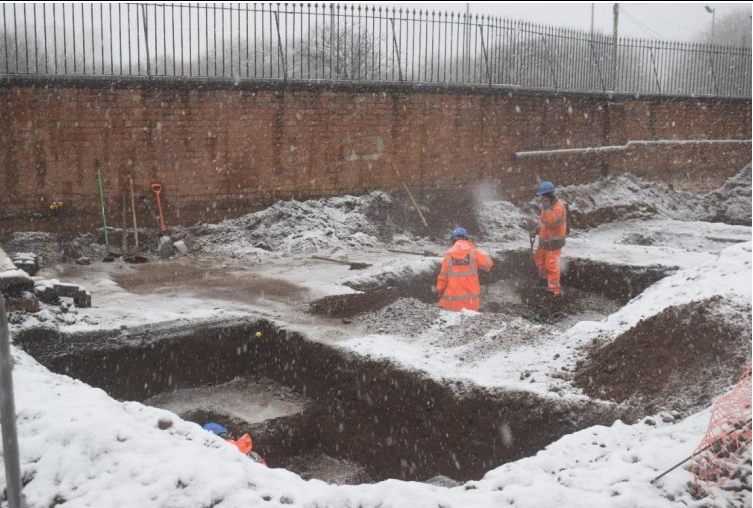
PCA Warwick was commissioned to undertake an archaeological evaluation at the site of the Staffordshire Records Office. The investigations were required to investigate the potential for archaeological remains ahead of the demolition of existing structures and the construction of a new multi-level History Centre, for which planning permission has been granted by Staffordshire County Council.
The site area lies within the medieval core of Stafford, which itself had an Anglo-Saxon antecedent. PCA’s involvement commenced with three hand dug test pits which demonstrated that medieval garden deposits dating to the 13th and 14th centuries survived in discrete areas across the development area.
Further investigations were undertaken in 2023 with 36 test pits directed to areas where the impact of the construction would be most felt. These demonstrated that the development area was at the peripheries of the medieval settlement and at the fringes of industrial activities such as metalwork and pottery manufacture. Relatively small-scale mineral extraction of the sand rich geology was recorded, and artefacts dated this activity as occurring between the Anglo-Saxon period and the 13th and 14th centuries. Together with mineral waste there were hints that metalworking was occurring. Additionally, locally produced Late Saxon Stafford Ware sherds were assessed to be ‘wasters’ from the production process, which is known to have taken place on the outside of the town’s 10th century burghal walls. No domestic artefact assemblages were found on the site, even in the extraction pits which we might assume would be used for rubbish disposal and as such the evidence indicates that the site was located towards the edge of a special industrial zone of activity dealing with metal and pottery production.,
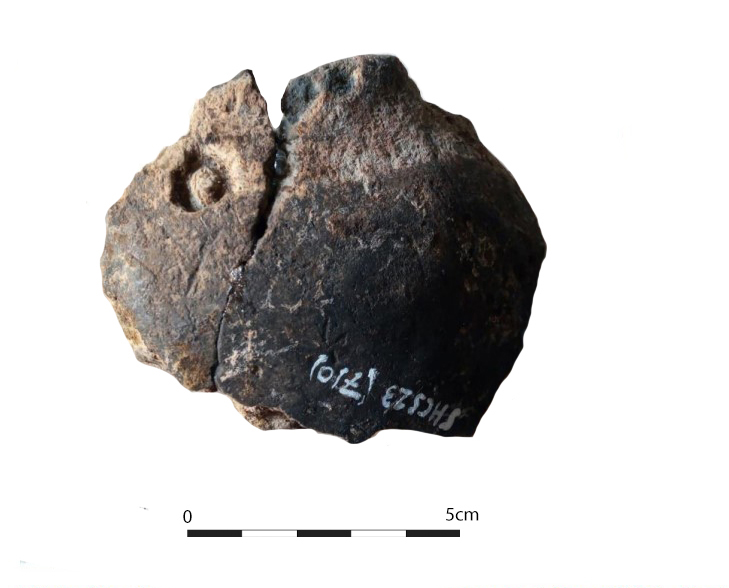
Two early to middle-Anglo-Saxon sherds that were recovered are without precedent in Stafford and have been recommended for further study. Almost nothing concrete is known about the founding of Stafford or its precise location in the modern townscape in this period. Specialist assessment highlighted that the fabric of these sherds has some similarity with fabrics excavated at Catholme in the middle Trent Valley, 28km to the east. Was Stafford founded by families or ceramics specialists from Catholme or linked in some other way not the least unlikely of which being by trading via the local river which joins the river Trent?
The works were deemed appropriate to satisfy planning conditions and an assessment report has been produced. No further works are required.