Stoke Quay
Ipswich
Suffolk
United Kingdom
Map
Sorry, no records were found. Please adjust your search criteria and try again.
Sorry, unable to load the Maps API.
Description
An archaeological excavation was conducted by PCA Cambridge and Oxford Archaeology (OA) on the 1.2ha site at Stoke Quay to enable the discharge of a planning condition for the development of the site. The end client was Genesis Housing.
The excavation works revealed impressive archaeological remains largely spanning the 7th–15th centuries, with minimal remains predating the Middle Saxon period and postdated by a later shipyard and finally modern houses, warehouses, and a public house.
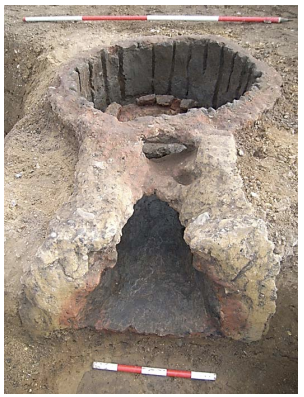
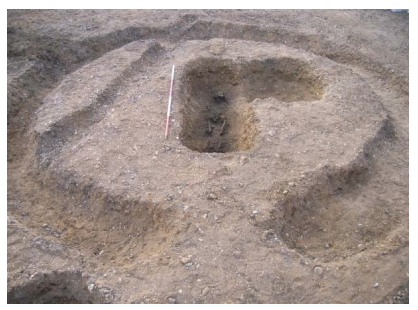
The earliest activities spanned the 7th and 8th centuries, with 20 burials and burial-related features, including barrow burials as well as a couple of pits in the centre of site. Activity from the later 8th and 9th centuries was identified through the recovery of Ipswich Ware pottery from several features, as well as an Ipswich ware pottery kiln; in addition, large quantities of fired clay that are related with the kiln’s operation were found in features associated with the industrial activity of ceramic making. These included pits, postholes, beamslots, ditches and wells, as well as some features attributed with a domestic function, such as rubbish pits, latrines and possible storage pits, ditches and 23 wells of this date.
Between the later 9th century and 12th century, an early medieval cemetery at the north of the site and a stone church, St. Augustine, were established, and both were solidly in use until the 15th century. A total of 1,181 burials were recorded from the cemetery, and although most were very simple, some were more ornate, with pillowstone burials, head niche burial and coffined burials all recorded, as well as one individual (possibly a priest) who was buried with a chalice and paten. A few rubbish or latrine pits and a few wells of this date may have been associated with extended backplots of tenements along the frontage of Great Whip Street, as well as the metalled surface of Great Whip Street itself within the excavations, but the variety of activities were sparse.
Activity following the end of St Augustine’s Church’s use spanned the 16th to 20th centuries, with stone or brick lined latrines and wells replacing the earlier, simpler designs as the King’s Cooperage and later a small shipyard, were later constructed. The Cooperage incorporated elements of the church building’s structure into its building, prior to its own replacement by the shipyard. Finally, Malting Houses, a retail warehouse, an engineering building and a public house were all later erected on the site.
Following the completion of the excavation, a full post excavation assessment was compiled. This was complete with further study into the stratigraphy, ceramics, metalworking, the pottery kiln, inhumation burials and intestinal parasites, waterlogged wood and fish remains, due to the information from these collections. This information was collated into a report released in East Anglian Archaeology 172, published in 2020, created by members of PCA and OA.