Thameslink and London Bridge Improvements
Southwark
Greater London
SE1 9SP
United Kingdom
Map
Sorry, no records were found. Please adjust your search criteria and try again.
Sorry, unable to load the Maps API.
Description
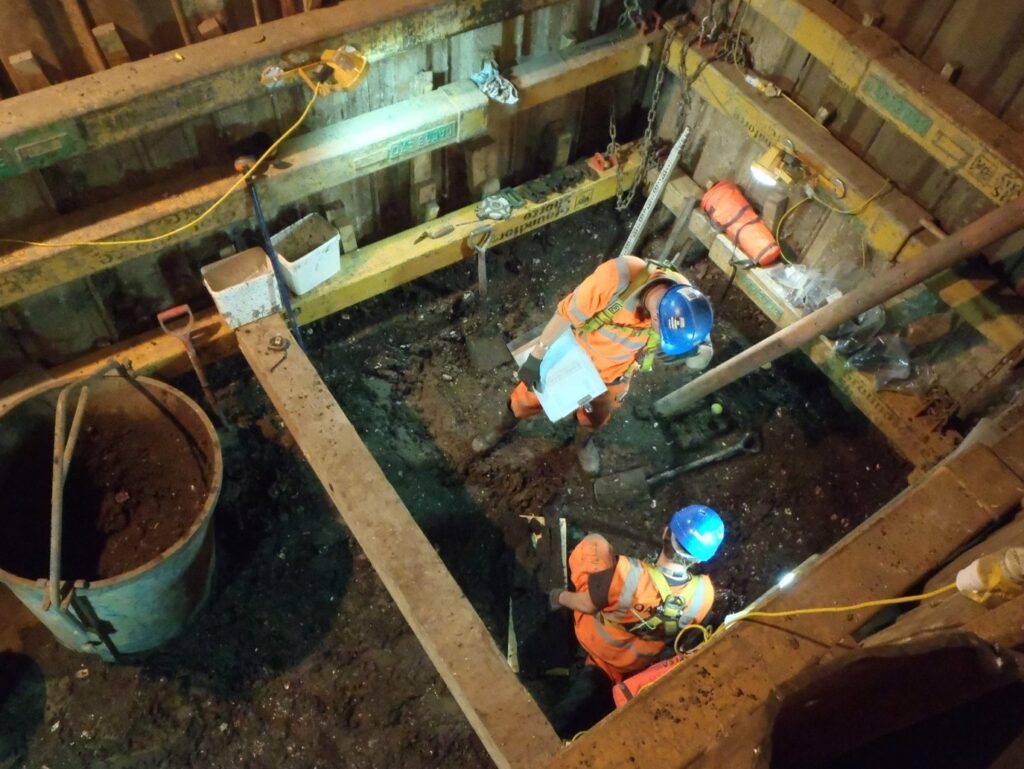
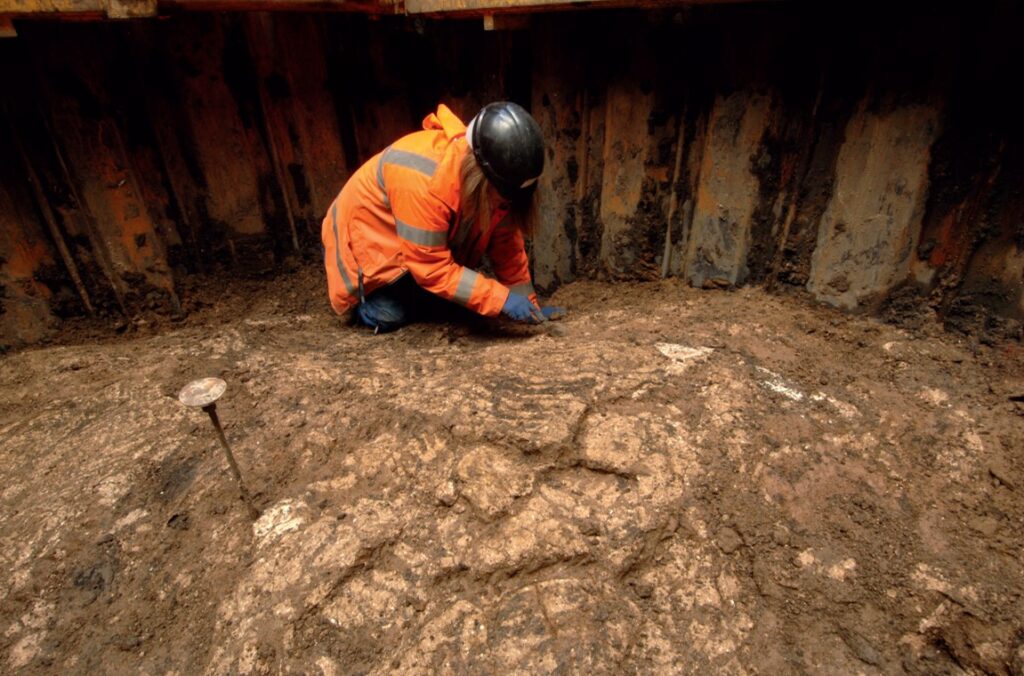
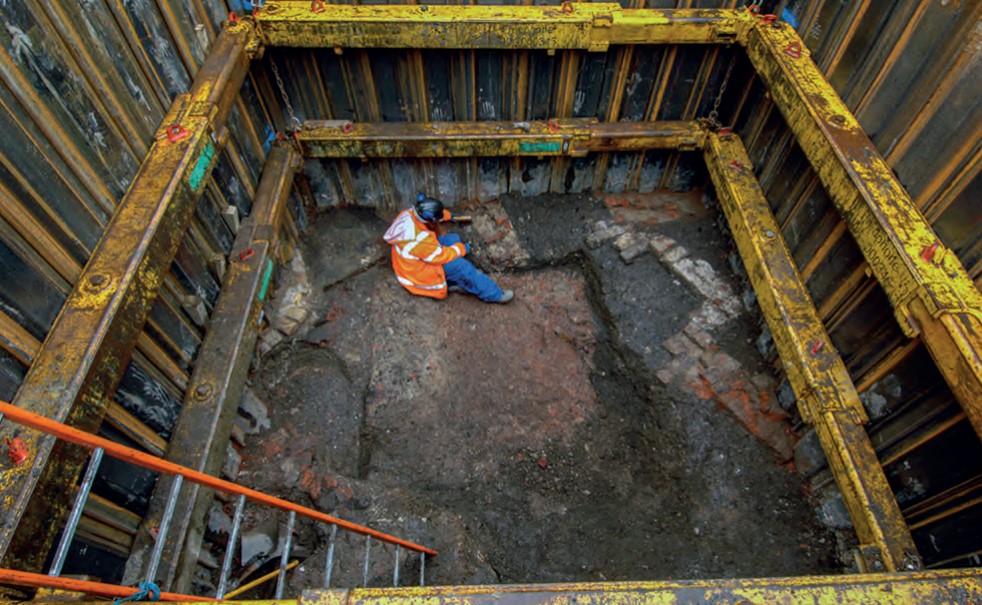
This project was undertaken jointly by Pre-Construct Archaeology London and Oxford Archaeology and involved numerous archaeological investigations between Park Street and London Bridge Station, as part of the infrastructure programme designed to reduce crowding on London’s commuter services
The work was logistically complex and involved teams of archaeologists working in partnership and alongside contractors using heavy plant and often in deep excavations, many of which lay under the busy station, working to fixed deadlines. As with all excavations, but perhaps more visibly given the scale and intensity of the programme, safety was the overriding priority.
The excavations revealed details of an area of Southwark just to the south of the River Thames from prehistoric times when it formed an island in the Thames surrounded by marshland up to the Victorian era when the railways were constructed.
The earliest human activity recorded dated to around AD 50 and comprised drainage and land reclamation features along the bank of the Thames, followed by the construction of clay and timber buildings. Extensive burnt horizons sealing the early settlement were interpreted as being caused by the destruction of Roman Londinium during the Boudiccan rebellion in AD 60-61. Following the destruction, rebuilding appears to have taken place at pace, with evidence for new stone-built buildings, well appointed, with elaborate decorative schemes including painted wall plaster. Remains of a bath house, residential houses and industrial workshops were found, with settlement lasting up to the start of the 5th century when Roman forces withdrew from Britain.
Although after the withdrawal of Roman administration in AD 410 settlement moved west to the Strand area of London, although the excavations revealed evidence for Saxon defensive works in the form of a north-south ditch crossing present-day Borough Market. This ditch may have persisted as a land boundary into later medieval times, marking the southern boundary of the Priory of St Mary Overy, now Southwark Cathedral.
Substantial structural evidence of pre-15th century date was scarce or fragmentary. Late medieval buildings were restricted to the vicinity of Tooley Street and Bermondsey Street. By the mid-16th century, buildings along Stoney Street had been robbed and replaced by less substantial structures and extensive pitting. Pits had been excavated in yard or garden areas of properties along Park Street, Borough Market and Green Dragon Court in the 17th century. The excavations revealed evidence for 18th century alms-houses surrounding College Yard, which eventually contained a substantial cemetery, and for further buildings, at Park Street, Stoney Street and Borough Market. These can be clearly correlated with buildings and yards shown on 18th-century maps.
To successfully deliver this, Pre-Construct Archaeology built a very effective working partnership with the Network Rail programme team, our archaeological partners at OA, works contractors, and oversight bodies such as Historic England. There is now a permanent display of finds at London Bridge Station, and a four-volume set of monographs detailing the results of the excavations has been produced jointly by Pre-Construct Archaeology and Oxford Archaeology:
Excavations along Thameslink Borough Viaduct and at London Bridge Station by Victoria Ridgeway, Joanna Taylor and Edward Biddulph, 2019. Thameslink Monograph Series No. 1
Bridging the Past: Life in Medieval and Post-Medieval Southwark by Amelia Fairman, Steven Teague and Jonathan Butler, 2020. Thameslink Monograph Series No. 2
Living and Dying in Southwark 1587–1831: Excavations at Cure’s College Burial Ground, Park Street by Louise Loe, Kate Brady, Lisa Brown, Mark Gibson and Kirsty Smith, 2017. Thameslink Monograph Series No. 3
From Blackfriars to Bankside: Medieval and later riverfront archaeology along the route of Thameslink, central London by Elizabeth Stafford and Steven Teague, 2016.Thameslink Monograph Series No. 4