The Mint Winchester
Winchester
Hampshire
SO23 9HJ
United Kingdom
Map
Sorry, no records were found. Please adjust your search criteria and try again.
Sorry, unable to load the Maps API.
Description
PCA Winchester was commissioned to undertake historic building recording, and watching briefs (monitoring and recording). The work was required as part of the conditions attached to the planning permission and Listed Building consent. The proposed development comprised the construction of a single-storey garden room against the north boundary wall of the garden, the construction of a swimming pool, remedial works to the building and the construction of a new access route to the building.
St Thomas Street lies at the heart of the historic core of Anglo-Saxon and medieval Winchester, at a short distance to the west of the scheduled Winchester Cathedral and to the east of the West Gate and the scheduled site of Winchester Castle.
The Mint, 24 St Thomas Street, is set back from the street frontage to the rear of the 18th century house and below a 15th-17th century range and rear wing. The oldest surviving structure is a 12th century, two bay undercroft of outstanding architectural importance, which forms the basement of a part of the house known to the present owners as ‘The Mint’.
The aim of the historic building recording was to provide a record of The Mint in advance of works and during relevant structural works, particularly to record those areas of the historic fabric which would be exposed, covered up or removed during the refurbishment. The aim of the archaeological watching brief was to monitor groundworks and investigate and record archaeological resources that are identified. A further aim was to prepare an archive of the results of the investigation leading to the preparation of a post-excavation assessment report and, if appropriate, a further programme of analysis and publication.
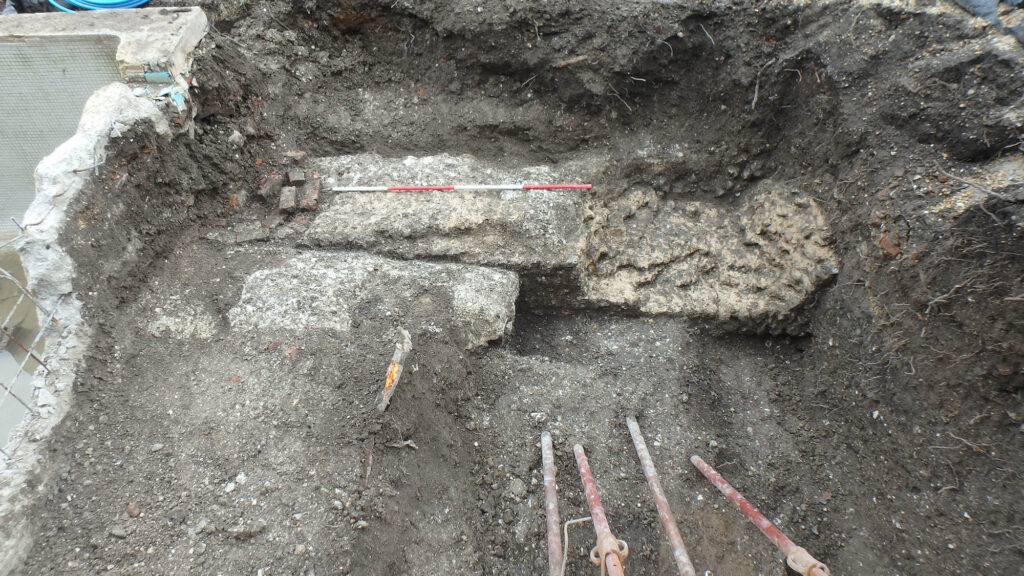
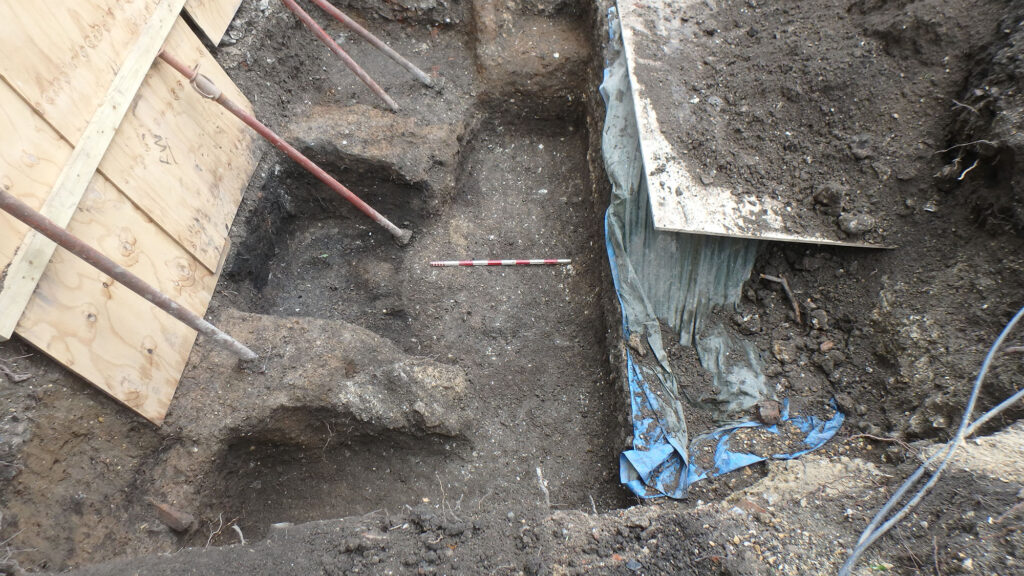
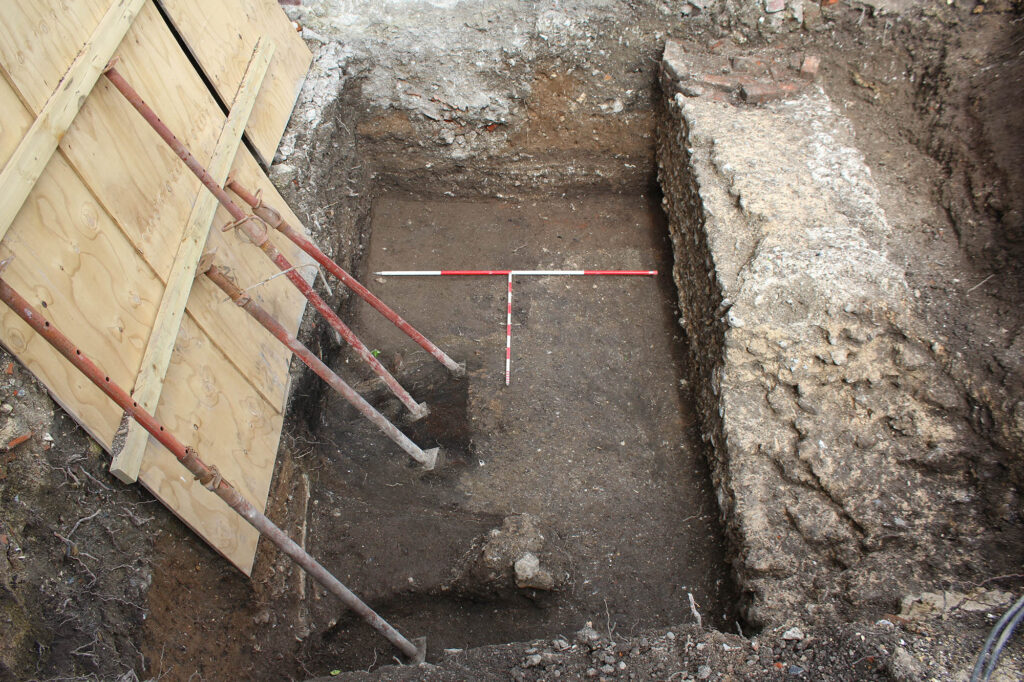
The archaeological watching brief revealed no archaeological deposits due to the shallow nature of the excavations. The watching brief at the garden room and swimming pool was more complicated. Removal of the upper deposits within the trench exposed a significant mortar-bonded flint wall running through the eastern edge of the trench. Hand excavation was then undertaken to the west of the wall down to the development foundation level. Features relating to the Roman period through to the post-medieval period were observed with later post-medieval and modern layers capping the archaeological deposits, although Health and Safey considerations restricted access in part of the trench.
On completion of the fieldwork a report for both the archaeological watching brief and historic building watching brief was written in line with the conditions of the Listed Building consent and planning permission.