The Mount, Silchester
Silchester
Hampshire
RG7 2HG
United Kingdom
Map
Sorry, no records were found. Please adjust your search criteria and try again.
Sorry, unable to load the Maps API.
Description
Silchester today is a small village in Hampshire, near the Berkshire border, however this little settlement has a big history. Originally named Calleva, it was a centre for the Attrebates tribe of Iron Age England from the 1st century BC. Following Roman conquest, the settlement became the important Romano-British town of Calleva Atrebatum. This process of alignment or colonization of Iron Age settlements is common in southern England, however what is unusual about the site is that it was never reoccupied or built over after it was abandoned in the 6th or 7th century AD.
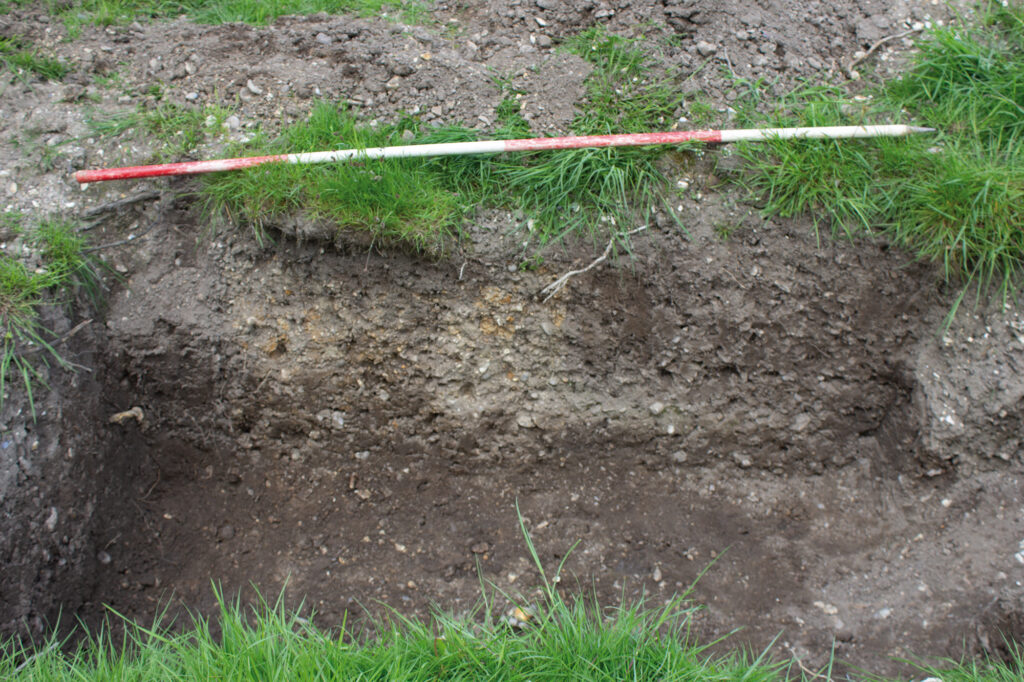
PCA Winchester was commissioned to undertake an archaeological evaluation or ‘trial trenching’ on land at The Mount ahead of the replacement of a water supply pipe that fed a small early 15th-century Grade II listed cottage which had been built immediately north of the Roman amphitheatre. The survival of any remains relating to the Romano-British amphitheatre, and its reuse as a defensive stronghold during the mid-12th century AD, would provide new and potentially valuable information relating to the Scheduled Ancient Monument. The client was therefore advised to obtain ‘Scheduled Monument Consent’ (SMC) from Historic England and undertake an archaeological evaluation to assess if any archaeological resources remained in the intended pipeline route.
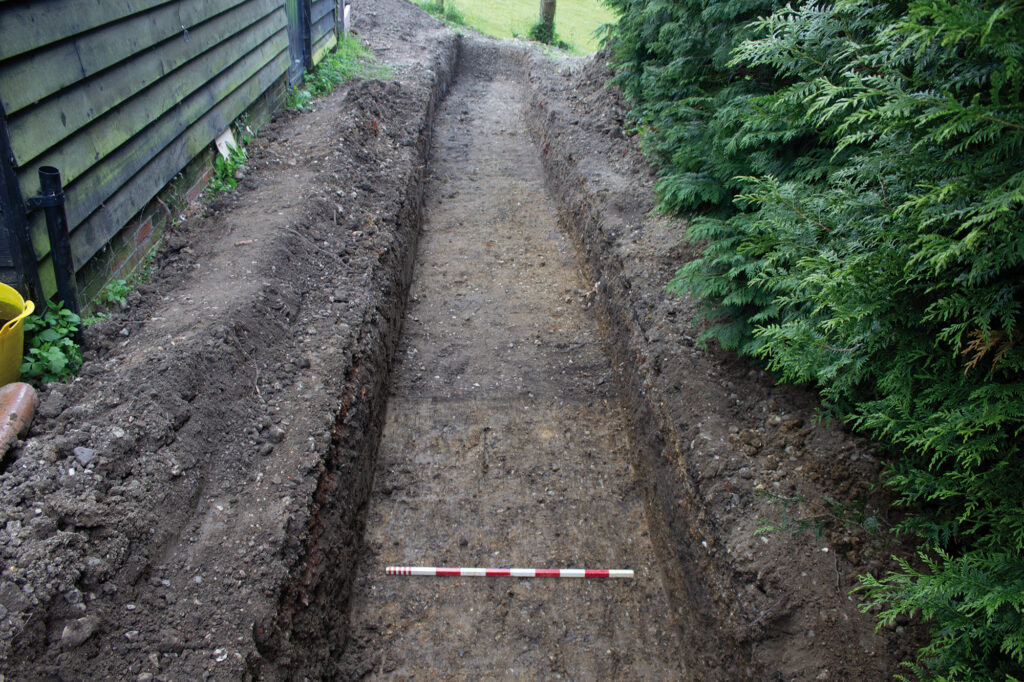
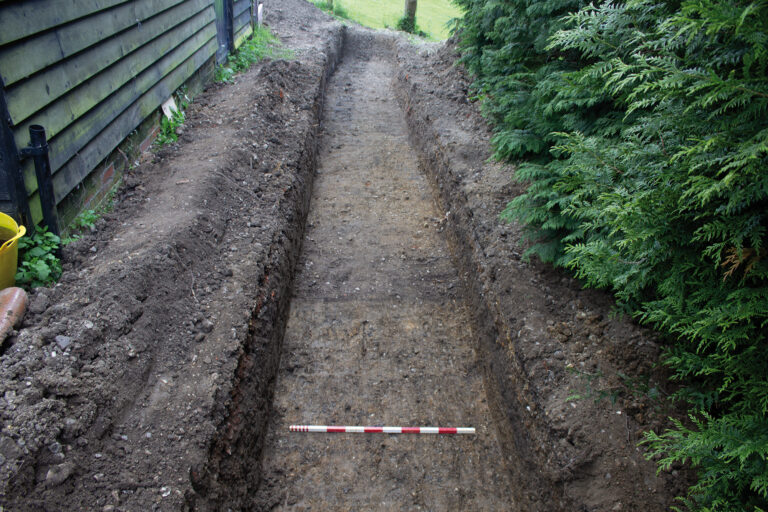
The archaeological works completed included two trenches, comprising a single 15m long trench, excavated to a depth of 750mm, located to the north of The Mount, and a second trench to enable connecting the new pipe to the mains water supply further south.
This project was critical due to the archaeological potential and sensitivity, and the immediate need to repair the damaged water pipe. The client requested swift and fast attendance, and the necessary works were conducted accurately and efficiently to enable the replacement pipe to be installed. The investigations revealed no significant archaeological remains, an evaluation report has been prepared in accordance with planning guidelines and the utilities work was able to continue efficiently.