Three Maids Hill, Hampshire
Winchester
Hampshire
SO21 2FT
United Kingdom
Map
Sorry, no records were found. Please adjust your search criteria and try again.
Sorry, unable to load the Maps API.
Description
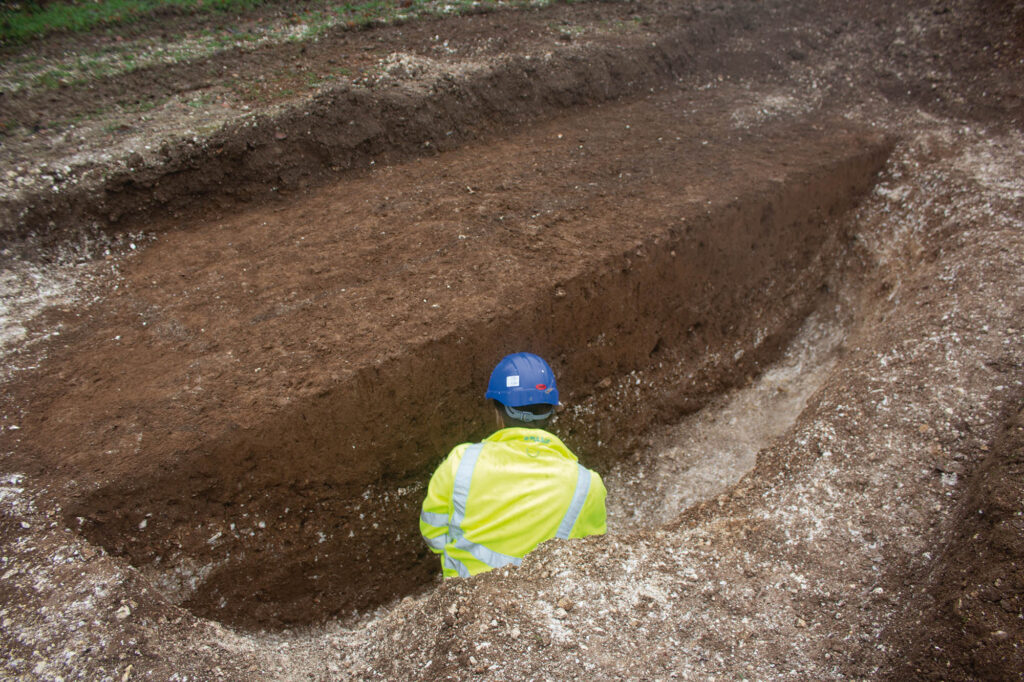
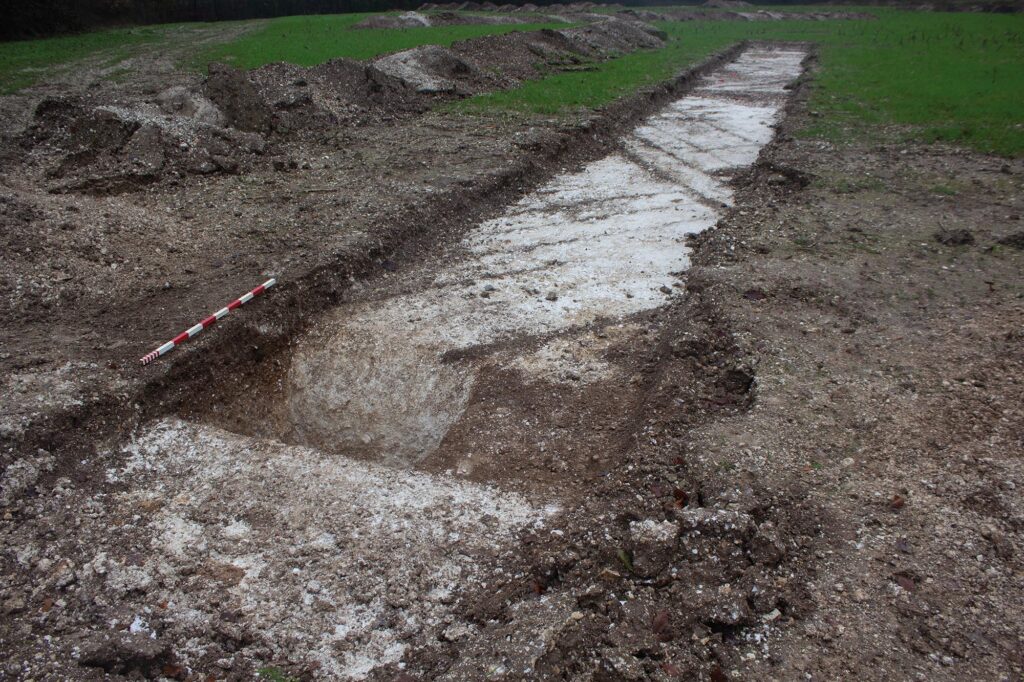
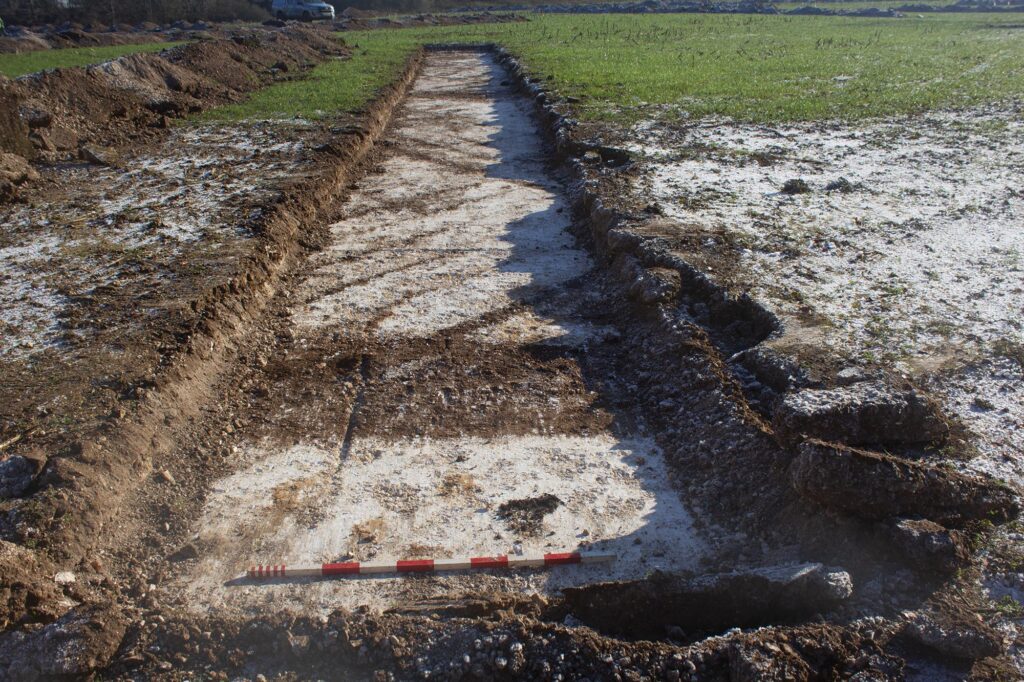
PCA Winchester was commissioned by to undertake an archaeological evaluation (trial trenching) on land at Three Maids Hill. The works were conducted as a part of the planning process, ahead of the construction of an anaerobic digester plant spanning 5.4ha. This development comprised a series of landscaping and ground reduction activities, along with foundations for multiple smaller buildings, silage clamps and digester tanks.
Following a heritage assessment in the form of a Desk-Based Assessment and a geophysical survey, the archaeological works were carried out because of the potential for survival of archaeological remains dating to the prehistoric, Romano-British and post-medieval periods. Such potential was proposed due to features revealed via the geophysical survey as well as worked flints being found during a site walkover. The site is situated adjacent to the Roman road from Winchester to Cirencester, as well as the Worthy Down Ditch Scheduled Ancient Monument, and a post-medieval trackway.
The site contained a high voltage underground electricity cable, which prevented trenching in the westernmost extent of the site. This led to adjustments in the positioning of some of the trenches to provide adequate coverage of the site and enable the collection of archaeological evaluation data. This dynamic and fast-paced management of projects, and negotiation of approach with the client and the LPA, is common at PCA and reflects professional competency in the face of difficult situations.
The archaeological works comprised thirty-one 30m trenches and two 50m trenches.
A total of eight out of the 33 excavated trenches revealed features of an archaeological nature. Struck and burnt flint, Iron Age and Romano-British pottery sherds, as well as glass from the Roman period, and post-medieval ceramic building material were all recovered from these features. The majority of the features were ditches that were linear in nature and each dated to one of the three aforementioned periods. A small, ditched enclosure is also postulated, although only partial remains were uncovered due to site constraints. The remaining features uncovered were more irregular in nature. Some of these are thought to be chalk or flint extraction pits due to their large size.
The programme of work was concluded, the development was then able to continue after a further phase of archaeological mitigation, and the results of PCA Winchester’s evaluation were publicized in line with planning regulations.