Trap Road
Guilden Morden
Cambridgeshire
United Kingdom
Map
Sorry, no records were found. Please adjust your search criteria and try again.
Sorry, unable to load the Maps API.
Description
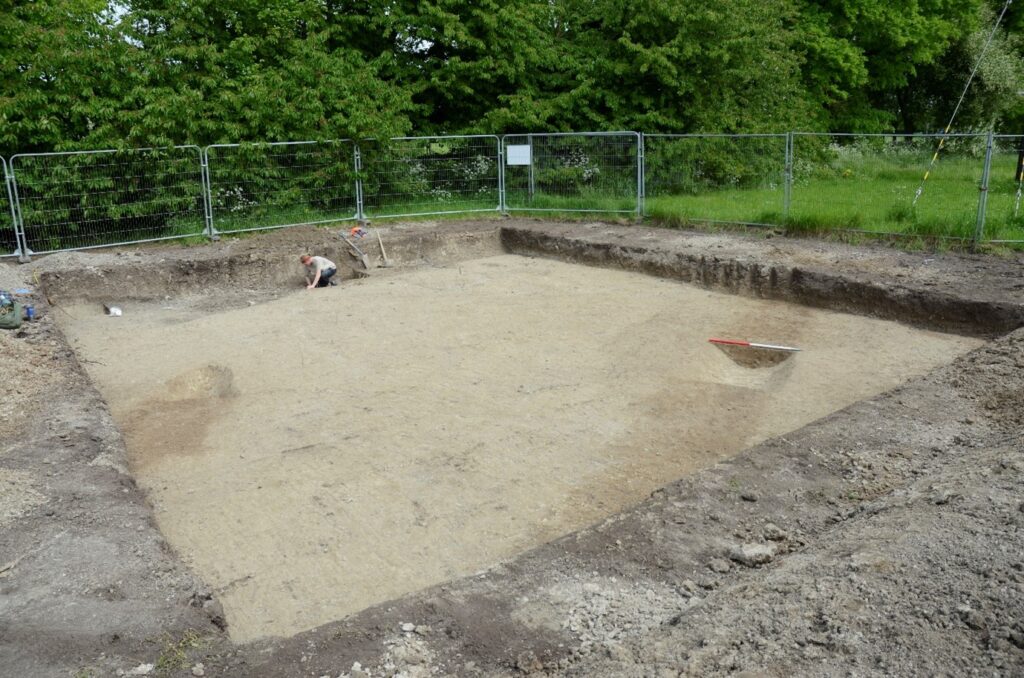
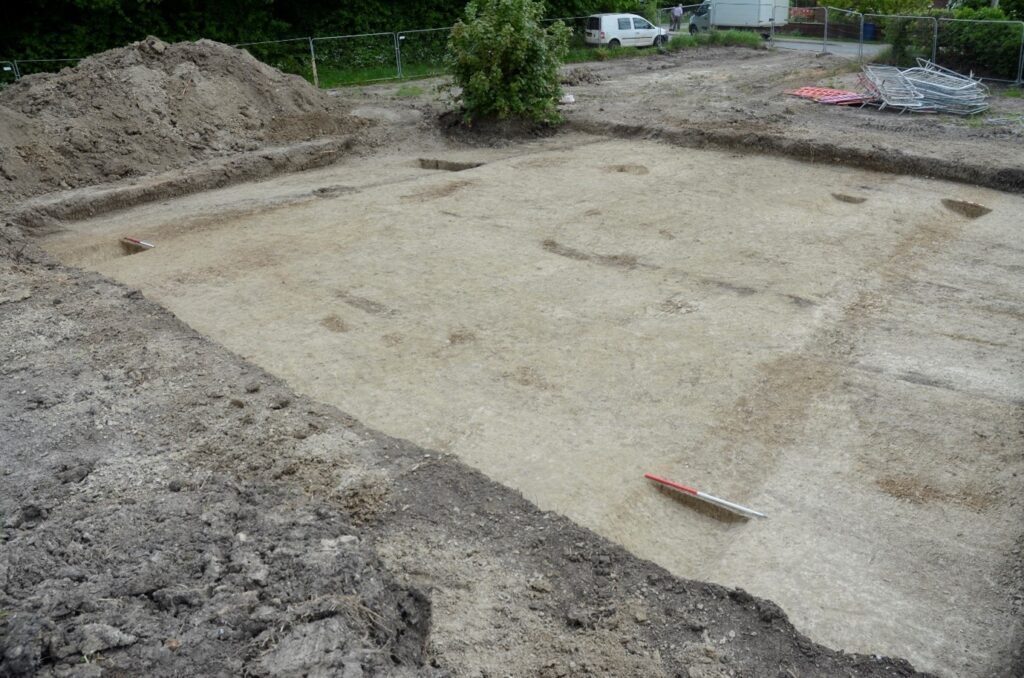
PCA Cambridge were commissioned to undertake a programme of archaeological work in response to a planning condition attached to the residential redevelopment on the site. The small-scale excavations conducted across two areas totalling 348m2 and followed a programme of trial trenching comprising three 30 x 1.8m trenches that revealed a group of undated north-east–south-west- aligned undated ditches. Whilst there was no dating evidence recovered from interventions placed in these ditches, they were noted as being on the same alignment as a Roman road that was identified on the Historic Environment Record and Ordnance Survey mapping. As such, it was expected that these ditches may have been horizontally truncated Roman roadside ditches, marking the alignment of the previous Roman road.
The excavation appears to have confirmed the presence of the rural road that was proposed by Ivan Margary in his volume ‘Roman Roads in Britain’ being one that connected Watling Street (which linked Wroxeter to Dover) with Ermine Street (which linked London to York and Lincoln). Although no remnants of the road were present during the excavation, presumably due to horizontal truncation, the bases of the parallel roadside ditches that would have bordered the road were still present. Fragments of Roman combed box flue tile, as well as Middle Saxon pottery were recovered from the ditch fills. Such dating reflects that not only was the road dated to the Roman period, but its use continued following the Roman departure from Britain by the Saxons who inhabited the land after they left.
Following an assessment of the significance of the site and preparation of a post-excavation report, and in line with planning guidance, a short publication regarding the findings from the excavations has been prepared for an appropriate local journal, reflecting the importance of a small-scale excavation in helping to piece together another section of the Roman road network in Britain.