Westminster School
London
Greater London
SW1P 3PB
United Kingdom
Map
Sorry, no records were found. Please adjust your search criteria and try again.
Sorry, unable to load the Maps API.
Description
PCA London was commissioned to undertake an archaeological watching brief followed by an excavation with further watching briefs in the north-east corner of the school estate which occupies much of the old monastic complex of Westminster Abbey and shares a common boundary with the adjacent claustral buildings of Westminster Abbey. This boundary is formed by the standing northern wall of the 11th-century Great Kitchen, built to the south of Edward the Confessor’s church.
The project involved the demolition of the Adrian Boult Music Centre and also included modifications to the adjoining Ashburnham House, drainage works and the excavation of a tree pit.
In May 2017 a watching brief undertaken on six test pits indicated that extensive remains of the medieval Great Kitchen were preserved intact and led to detailed discussions between the client’s project team, the Greater London Archaeology Advisory Service (GLAAS) as planning advisors to the City of Westminster, and PCA, followed by the preparation of a detailed Written Scheme of Investigation (WSI) which outlined the archaeological work. PCA subsequently began a programme of excavation and watching brief investigations between August 2017 to September 2018, working in close collaboration with the project’s main contractor, and with detailed archaeological advice provided by the school’s consultant archaeologist Tim Tatton-Brown.
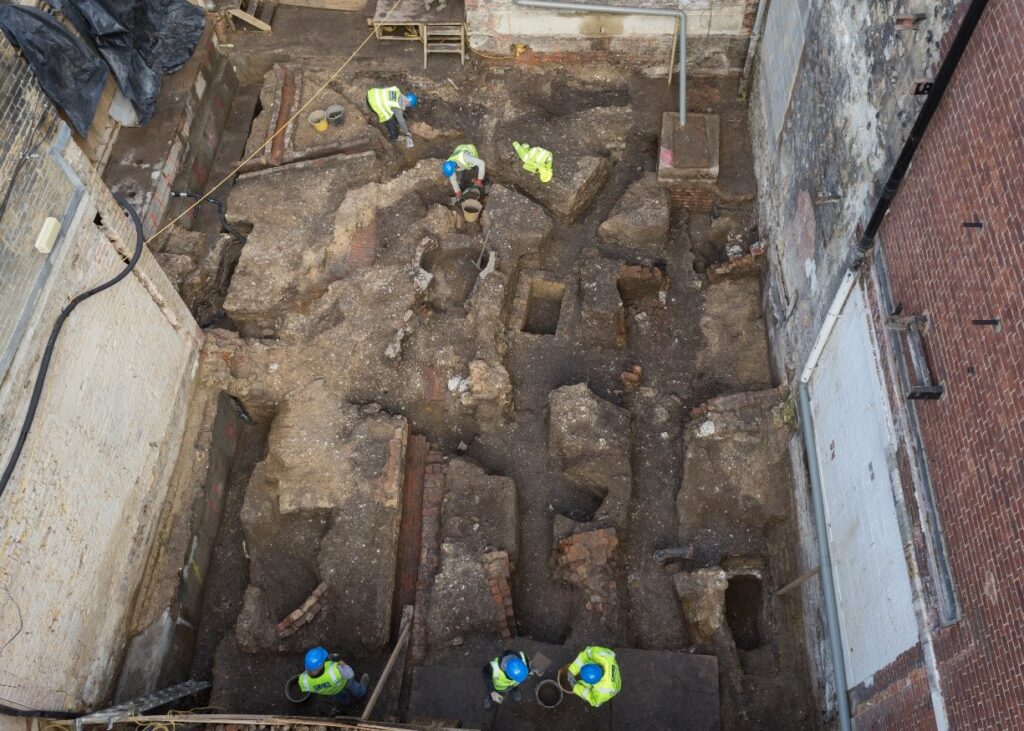
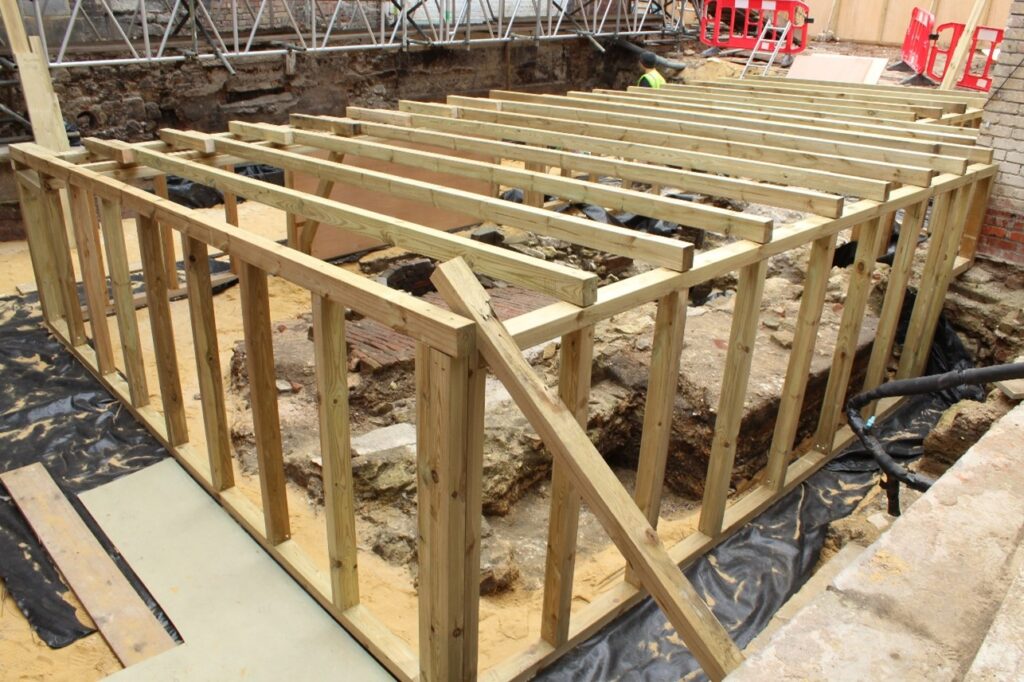
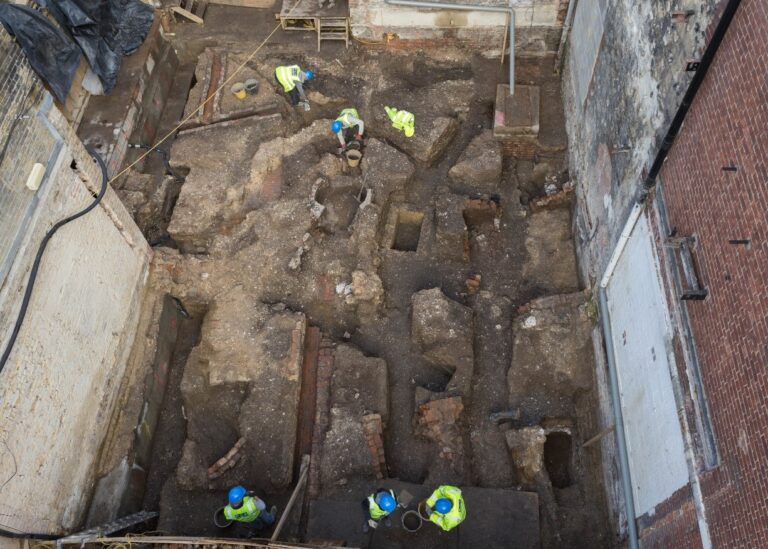
Initial works required the excavation of underpinning pits through highly complex, stratified archaeological deposits, to support retained historic internal walls and were followed by an open area excavation below the demolished Adrian Boult Music Centre, covering an area of around 15m by 15m, to a depth of approximately 2.5m. The work revealed well-preserved structural remains of the Great Kitchen which was built to serve the Confessor’s abbey, and required close discussions with Historic England and relevant parties about preserving much of the historic fabric in situ. PCA helped advise on the subsequent protection of these remains which have been displayed below a glass floor in the new reception building.
The excavations shed light onto the development of the monastic kitchen from its initial construction in the 11th century until its demolition in the 16th century, revealing a complete sequence of kitchen floors which were constructed of either poured chalky mortar or rammed clay. Each floor surface was sealed by an undisturbed occupation layer formed of charcoal and huge quantities of fish and bird bones, the specialist study of which has shed light on the medieval monastic diet.
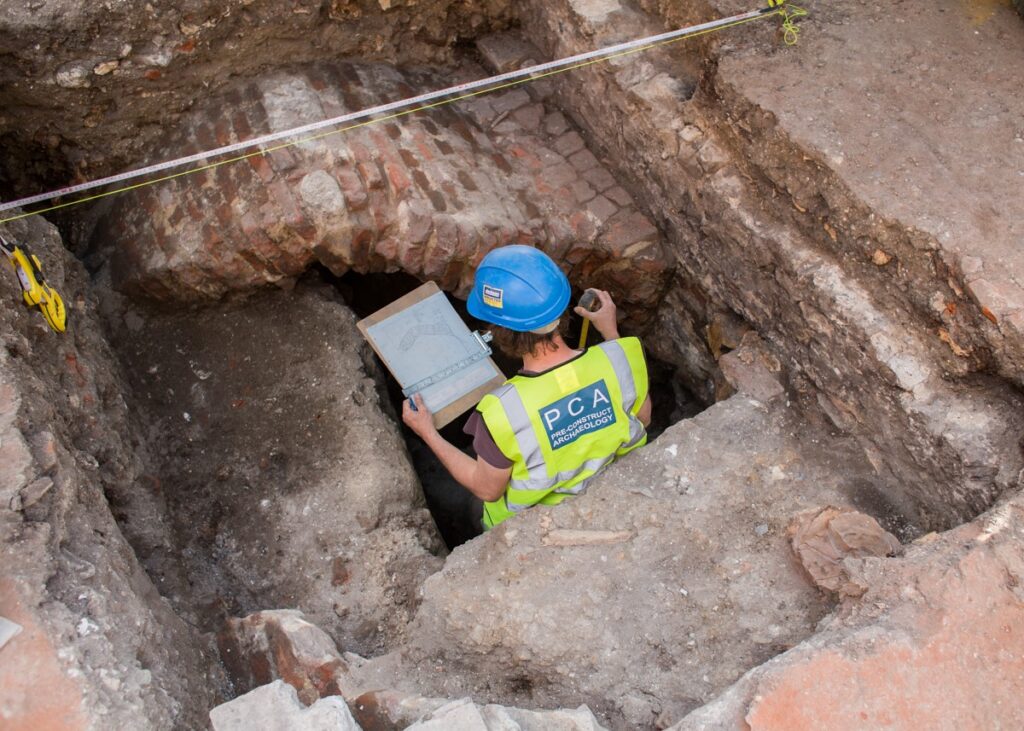
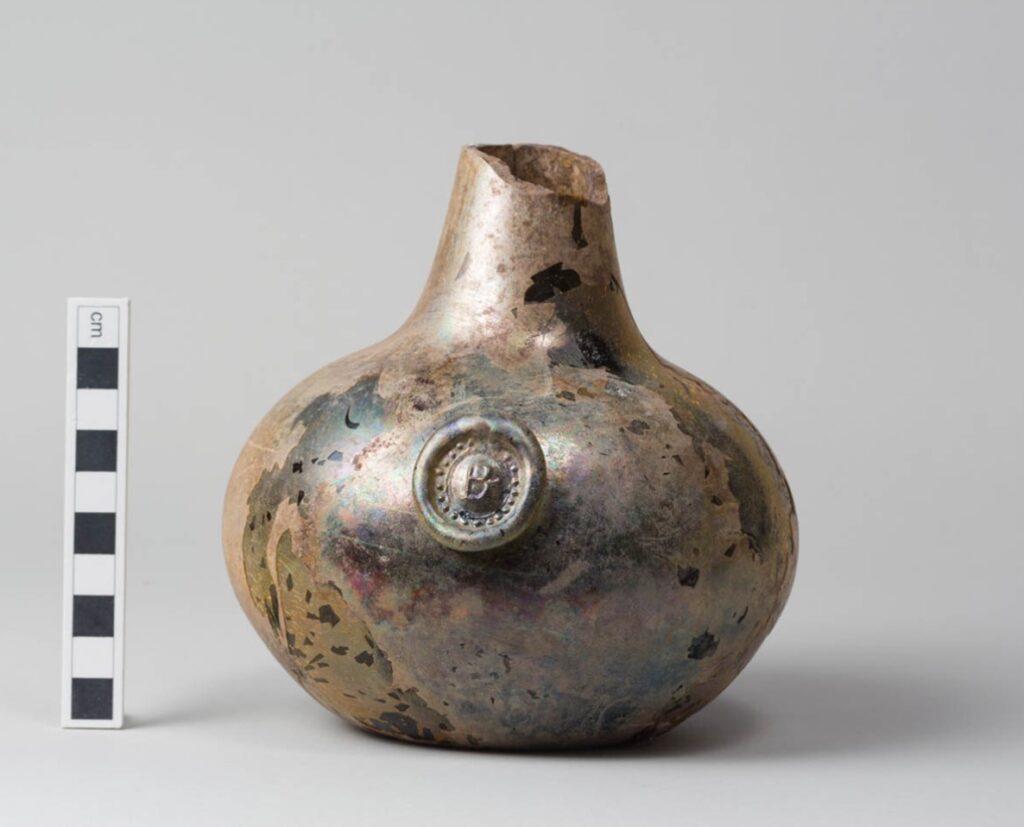
In addition, other kitchen features were discovered including several tiled hearths, drainage systems, the remains of a fireplace and internal walls. A characteristic ‘onion bottle’ has, tentatively, been identified as the same one referred to in a list of the possessions left by Mr Busby, master at Westminster School following his death in 1653.
The tree pit excavation revealed the structural remains of a masonry culvert, the presence of which was suspected but unconfirmed. This was identified as the Great Drain serving the monastic latrine known as the Reredorter or Necessarium; the drain crossed the abbey precinct to discharge towards the Thames.
PCA produced a comprehensive Assessment report at the end of the main works with an additional assessment produced for the works to the monastic drain. Several public talks have since been given by PCA staff including to the London and Middlesex Archaeology Society (LAMAS).
PCA has subsequently been commissioned by Westminster School to undertake watching briefs during groundworks on other parts of its estate including, foundation stabilisation works in the Dean’s Yard and a drainage upgrade for the school’s sports pitches in Vincent Square.
Publication work for this regionally significant project will begin soon.