Windsor Castle Horn Court
Windsor
Berkshire
SL4 1NJ
United Kingdom
Map
Sorry, no records were found. Please adjust your search criteria and try again.
Sorry, unable to load the Maps API.
Description
Pre-Construct Archaeology Ltd London has been involved in several projects at Windsor Castle, which is a Scheduled Monument with parts dating back to the 12th century, when Henry I began construction of the royal residence still in use today.
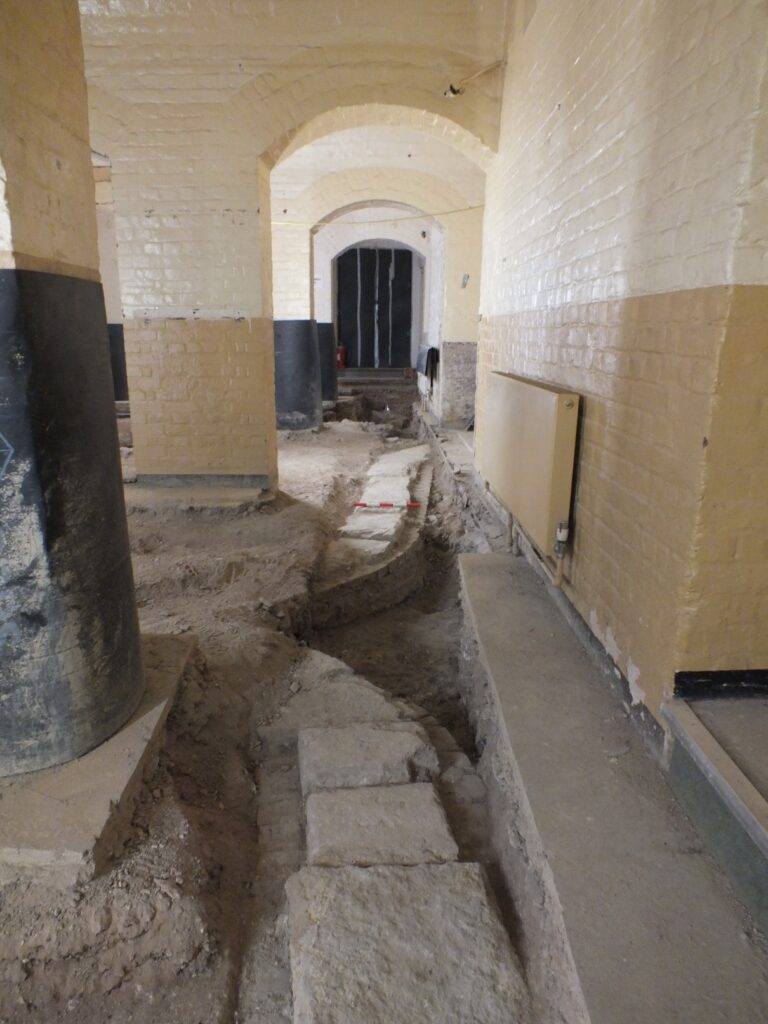
The Horn Court project involved the installation of new drainage, additional toilets and a refectory in the Upper Ward of Windsor Castle. The work required a number of trenches to be opened up in preparation for the works, which impacted Horn Court, North Room, The Quad, Black and White Corridor, Undercroft, Inner Hall and Dolls’ House.
The archaeological investigations revealed several phases of building, demolition and renovation within the internal areas. As well as the earliest buildings on the site, known as the King’s Houses, later structures such as the King’s Stairs, the Spiral Staircase, the Horn Court Galleries, the Office of the Yeoman of the Pantry and Servants’ Hall were also exposed
Once exposed, archaeological deposits and structures were surveyed and planned in detail, with artefact and environmental sampling.
Once recording was completed, areas were handed back to the specialist contractor to allow works to be continued.
The results of the archaeological monitoring revealed a complex archaeological sequence, perhaps including elements of a motte and bailey built in the 11th century. Residual Roman pottery fragments were also found, suggesting an even earlier presence in the vicinity.
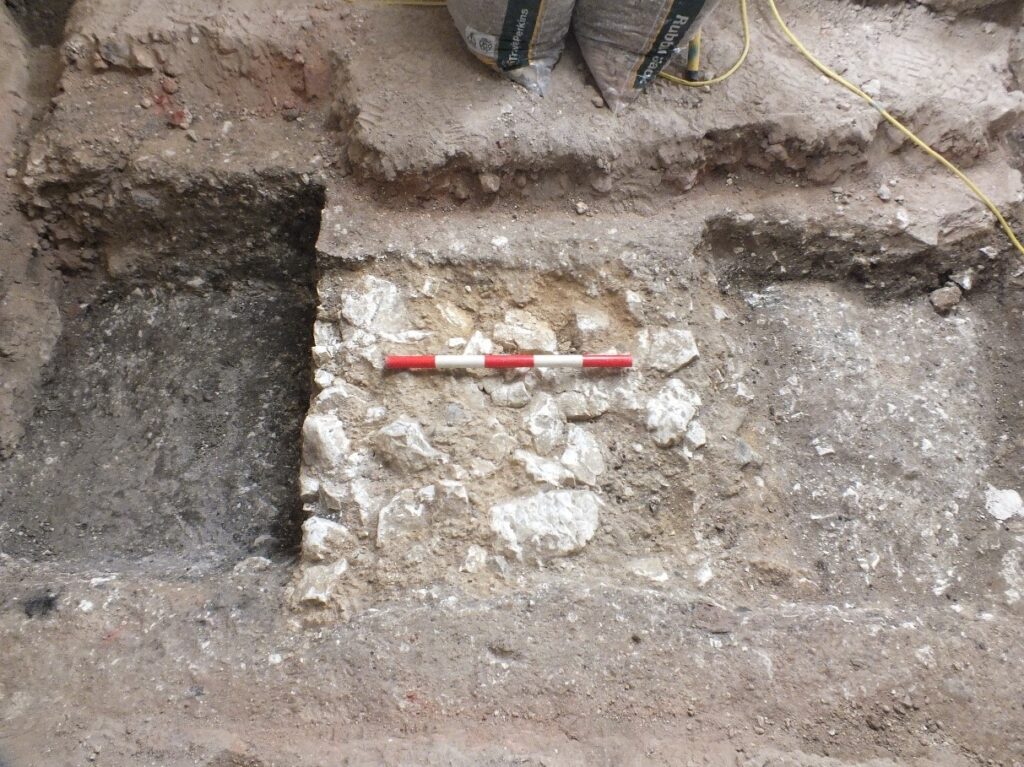
A number of chalk, stone and flint walls provisionally dated 1100-1600 and a series of compacted chalk and stone surfaces were encountered across Horn Court and within the Black Room. These are probably remnants of one of the early buildings within the Upper Ward, known as the King’s Houses. A probable doorway and possible step were also encountered within this structure, the doorway having shaped cornerstones. The southern wall appears to be a later addition, creating a passageway or cloister against the south of the building.
Layers of occupation debris were encountered sealed between the floor surfaces containing charcoal, building material, fish and animal bone. Analysis of the fish bones found here show the remains to reflect the high status of the inhabitants with the bones including those of large freshwater fish.
During the late 1600s a new gallery and the King’s Stairs were installed within Horn Court elements of which were found and recorded
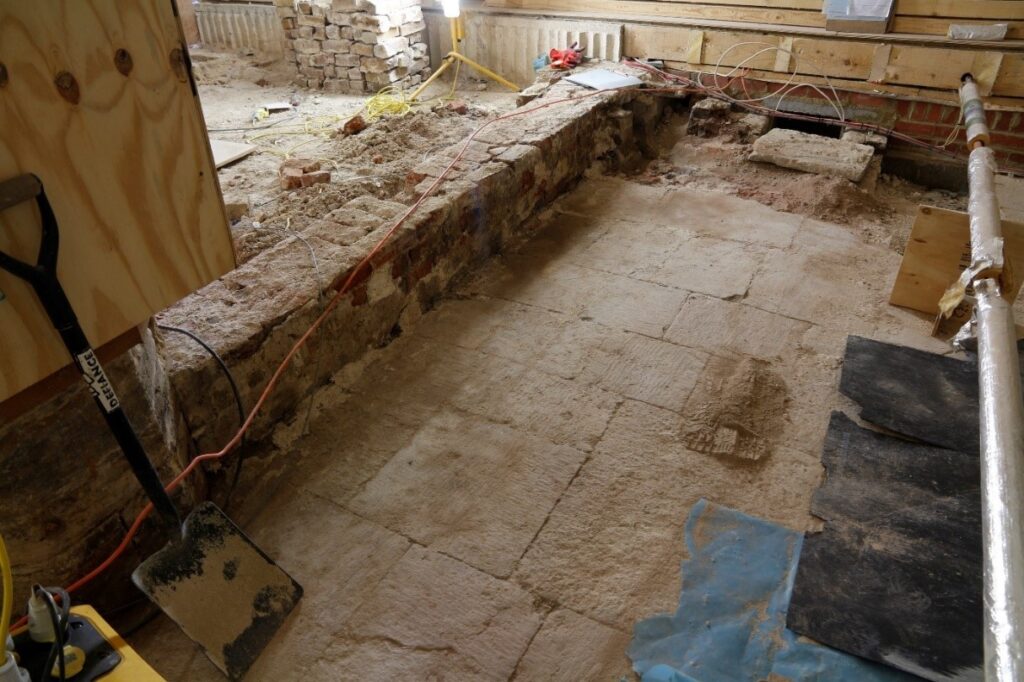
Within the Undercroft, several alterations of this period survive, including a stone floor to the west, an additional column to support his alterations to the Royal Chapel and St George’s Hall above and a number of walls built from a combination of stone and brick subdividing the large space into individual cellars and rooms for domestic functions.
The findings were written up in a series of technical archaeological reports.